


Save water in the garden with these three simple practices
The garden is the home’s largest consumer of water. So, as a savvy gardener, water conservation — no matter where you live — should be a concern. A well-designed, water-wise landscape that incorporates water-saving devices and techniques can still be a lush and inviting space without wasting water.
Here are a handful of water-smart garden hacks that will get you through the summer with minimal irrigation — and are guaranteed to make your life easier. Each of these tips is sure to save time (by watering more efficiently), money (on monthly water bills and maintenance) and, of course, our precious water.
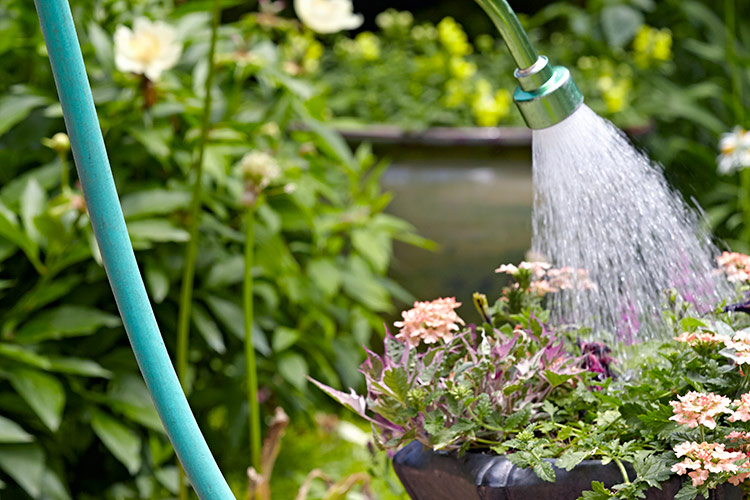
1. Choose the right watering tool for the job
Most everyone knows it’s best to water early in the day (to prevent unnecessary evaporation). But there are all kinds of simple ways to water more effectively. And often, it’s just a matter of having the right tool for the job, whether it's a good-sized watering can, the right hose attachment, a generous soaker hose or a timer to make watering more efficient.
A large, lightweight watering can — 2- to 3-gallon capacity, if you can carry it — will allow you to spot-water thirsty plants and smaller containers without dragging a hose around and splashing water.
High-quality hose attachments like extendable watering wands can help get water to hard-to-reach hanging baskets, into large containers and deep raised garden beds.
Soaker hoses are the simplest way to water specific spots. There’s no waste when the water goes right into the soil where you need it without spraying. Plus less moisture on plant leaves means less susceptibility to fungal diseases.
An irrigation timer and drip irrigation system deliver a slow, steady supply of water right when and where it’s needed. You can set up a simple system for watering plants in containers, raised beds, trees and shrubs. The easiest way to begin is with just a timer and a soaker hose.
For larger jobs, consider a drip irrigation kit, which comes with tubing, emitters, fittings to connect hoses and hold-down stakes to keep the tubing in place in the ground. Keep in mind that drip irrigation is not a set-and-forget-it solution: You’ll want to check your system regularly to be sure the emitters are not clogged and that rodents haven’t caused damage.
Use a water timer wisely
Use an irrigation timer to turn off the water. It’s easy to forget that the hose is running or that the drip system is turned on. A timer prevents accidental and wasteful overwatering by customizing when to water and for how long. Besides frequency and duration, you can adjust the timer based on future temperatures and weather forecasts. Smart water timers can adjust to the weather and water based on site conditions.
You Might Also Like:
Tips for Watering Perennials
Pros & Cons of Different Types of Garden Hoses
10 Best Drought-Tolerant Plants
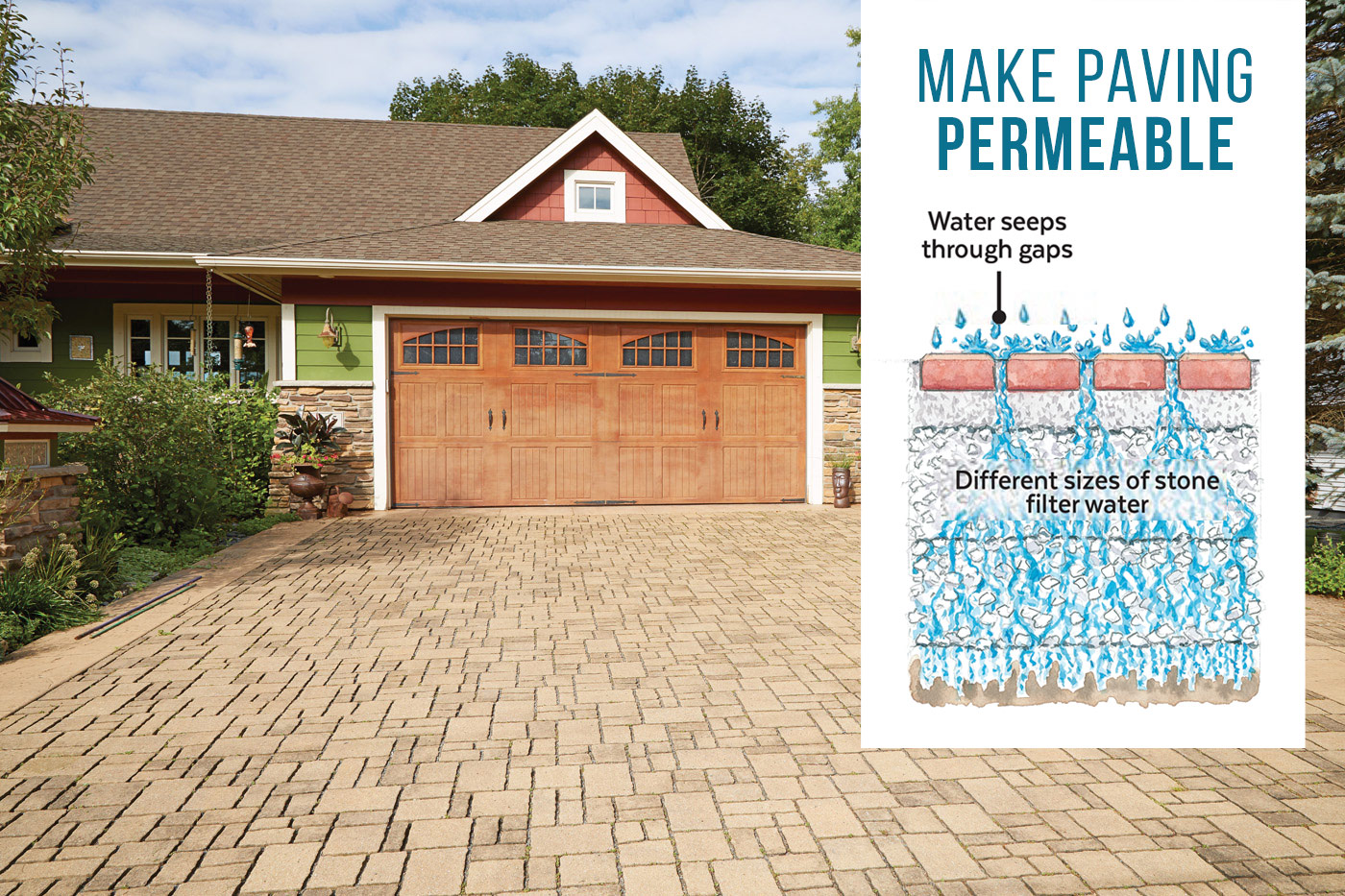
2. Use permeable paving
Ditch the poured concrete and consider other options that allow rainwater to percolate below the surface and reach the soil. There are three options to consider: permeable, porous and pervious pavers. Each possesses certain physical and aesthetic attributes that need to be considered before beginning a project.
Permeable pavers are composed of a layer of concrete or brick. The pavers are separated by joints filled with crushed stone. These are different from pervious and porous pavers in that rainwater passes around the paver as opposed to through it.
Porous pavers generally are a grid system filled with soil, sand or gravel. This system allows for grass reinforcement and ground stabilization. Concrete turf block for grass paving began in the mid-1940s, and plastic versions were introduced in the 1970s and 80s. Porous pavers are manufactured in a variety of designs and materials, including plastic and concrete. Concrete turf block for grass paving reduces compaction of the soil to maintain permeability, while the roots improve water filtration.
Pervious pavers allow stormwater to percolate through the surface rather than running off into surrounding areas or storm drains. As water runs through, the pavers filter out pollutants. Like grass, pervious pavers — manufactured from natural stone and organic polymers — allow the ground below to breathe.
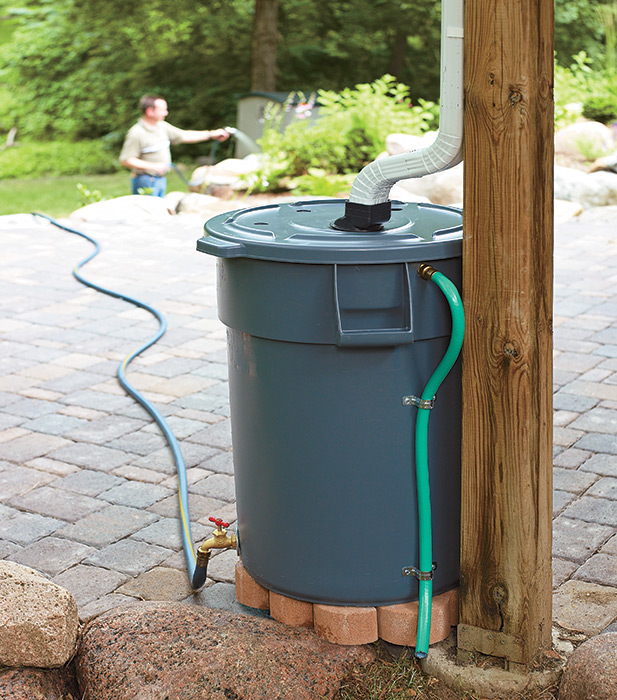
3. Harvest & save rainwater with a rain barrel
Rainwater harvesting can be as simple as installing a rain barrel under a gutter coming off a roof. It can be expanded to include a cistern to handle overflow. The only thing that differs between the two is the scale of the system. They both follow the same principles. A large system just captures water from more than one source.
There are a variety of commercially available rain barrels in a wide range of sizes, shapes and styles. Most have a 100-gallon capacity, but larger versions (up to 500 gallons) are available. Look for one with an overflow valve (it kicks in when the barrel reaches capacity) and a mesh screen filter to keep out residue.
Remember, a rain barrel will be outside during all sorts of weather, from baking sun to thunderstorms to freezing ice and snow. Heavy-duty molded plastics, such as resin, can withstand the elements and won’t crack, peel or rot. Find out how to make one from a heavy duty trash can like you see in the photo above with these simple instructions: DIY Rain Barrel Project.
What size rain barrel do I need?
1 inch of rain falling on 1,000 square feet of roof yields 623 gallons of water
Following this formula, a 500-gallon rain barrel will capture most of a typical rainfall.
Using cisterns to store rainwater
Cisterns hold a higher volume of water and are a good choice for climates with infrequent rainfall. A house, garage and outbuildings can all feed into a single large (underground) cistern. Cisterns are, of course, more expensive, and keep in mind that the storage tanks must be placed next to the house, whether they are above or below ground.
To use a cistern, it helps to calculate the total amount of rainwater you can collect year-round. To do this, you need to know the annual rainfall for your region. For annual precipitation rates of the United States, visit www.ncei.noaa.gov/ access/us-climate-normals/
Check local regulations before installing a rain barrel
Certain states have regulations around use of rain barrels; be sure to check local ordinances before you get started.
You Might Also Like:
How to Create a Rain Garden on Your Property
Backyard Rain Garden Plan Layout
Shop Our Garden Plan Collection