

From the Wild Side: Drinks All Around
One hot, sunny day last summer, I killed a bee. Not on purpose — I work hard to not kill bees — but it was my fault. I had walked outside to check the hummingbird feeder and to add water to the “ant well,” the little reservoir that keeps ants from reaching the homemade nectar farther down. And there she was: a bumblebee floating alone in the cup, looking terribly small and certainly dead. Her fluffy stripes were messy and matted, while the pollen she’d stored on her thighs was now melting into yellow sludge.
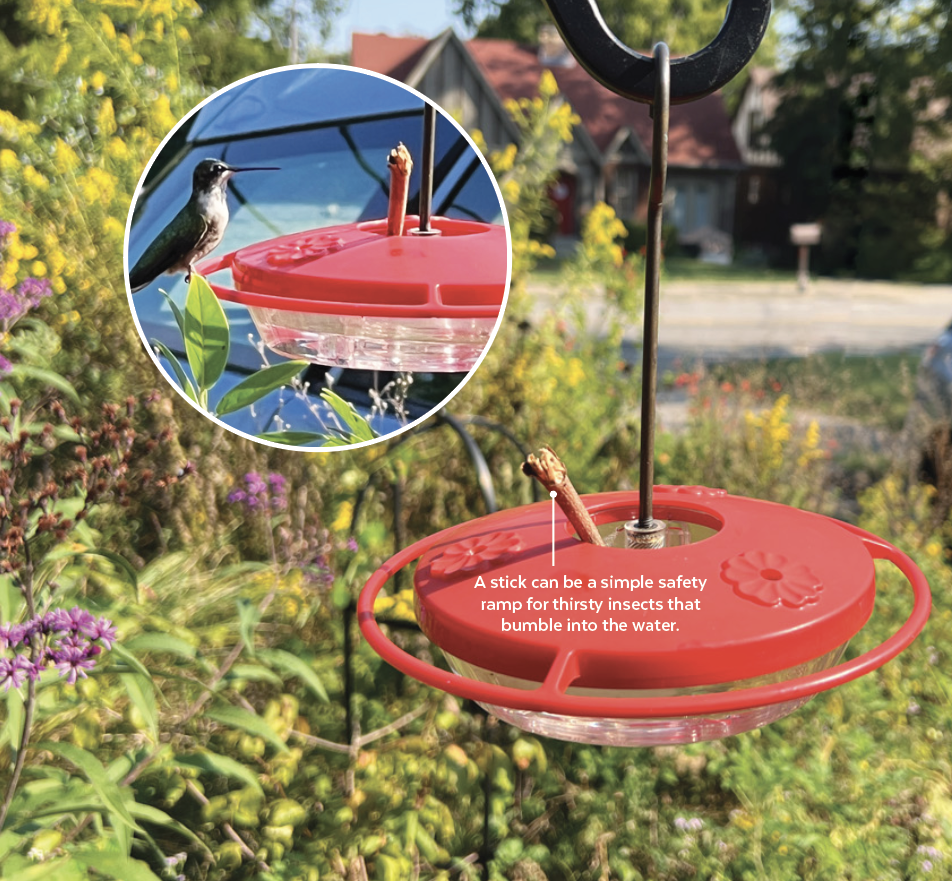
I’ve used that cup for years, not so much to discourage ants as to encourage chickadees. They and the goldfinches and tufted titmice all prefer to take private, dainty sips from the ant well rather than catch communal drinks at any of my birdbaths-of-the-masses. And who can blame them? Birds can’t take a bath or a dump in an ant well. But apparently, bumblebees can drown in one. I already use sticks as safety ladders in every other possible water source, but that was the day I learned that hummer feeders need one too.
Did you know?
A hummingbird’s diet is 80 percent meat (tiny insects and spiders), but fresh sugar-water is always welcome, especially during spring and fall migration. Clean the feeder every two or three days to avoid mold.
You Might Also Like:
Hummingbird Garden Tips
Avoid These Common Bird-Feeding Mistakes
How to Attract More Birds to Your Garden
Water for All Types of Wildlife
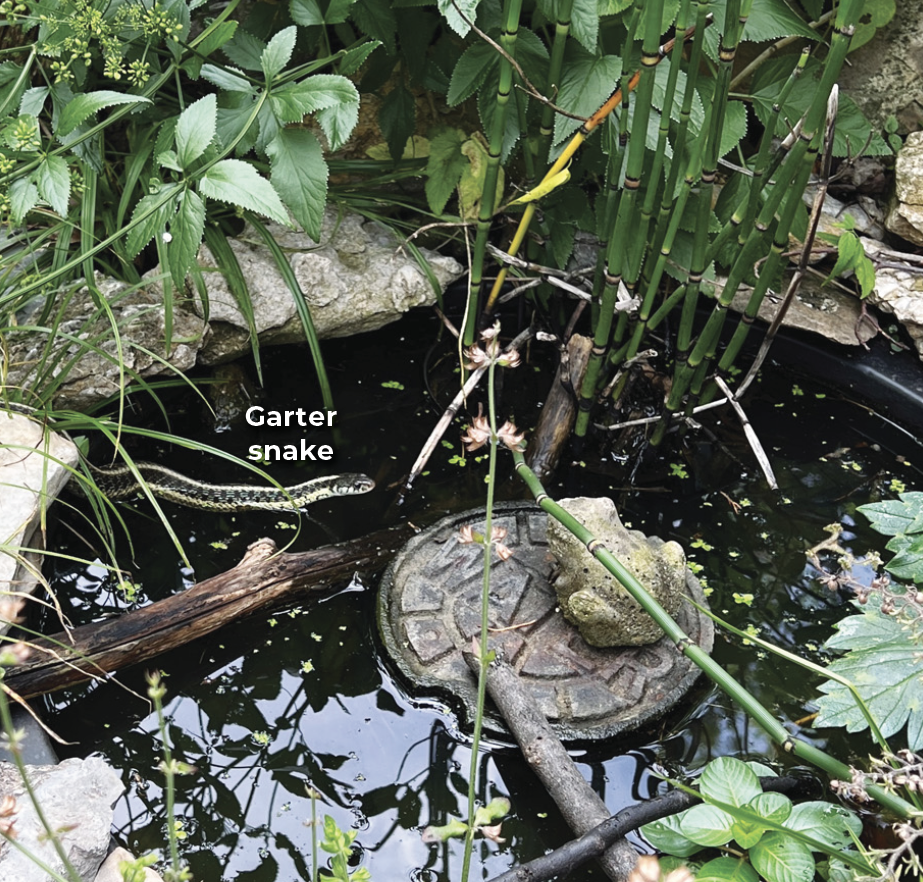
The thing is, no drowning should ever happen on my watch. Not when I pile bumpy stones in the birdbaths, angle sticks in the pond and heap gravel in the butterfly puddling dish. I cover water barrels with netting, tip saucers after rain and leave a scrap of chicken wire in the watering can. And I’ve spent untold hours tweaking ways to make it almost impossible for my Mosquito Buckets of Doom to doom anything but mosquitoes. I didn’t invent the mosquito-bucket trick, but I did invent the name, and my version was the first to feature an escape ramp, should anyone other than a mosquito fall in.
Simple solutions can save a life
Water is life, so I hate when my water kills things. I want every creature, whether bird, skink, snake, squirrel, possum, chipmunk or bug to come for drinks and then leave in one piece. Providing water, even one dish of it, is essential for adding habitat back to where we live. How did I fix the ant well? With a short stub of a stick rough enough for a bee to grab, but small enough for a chickadee to have room for his drink too.
Secret water sources: Weeping plants
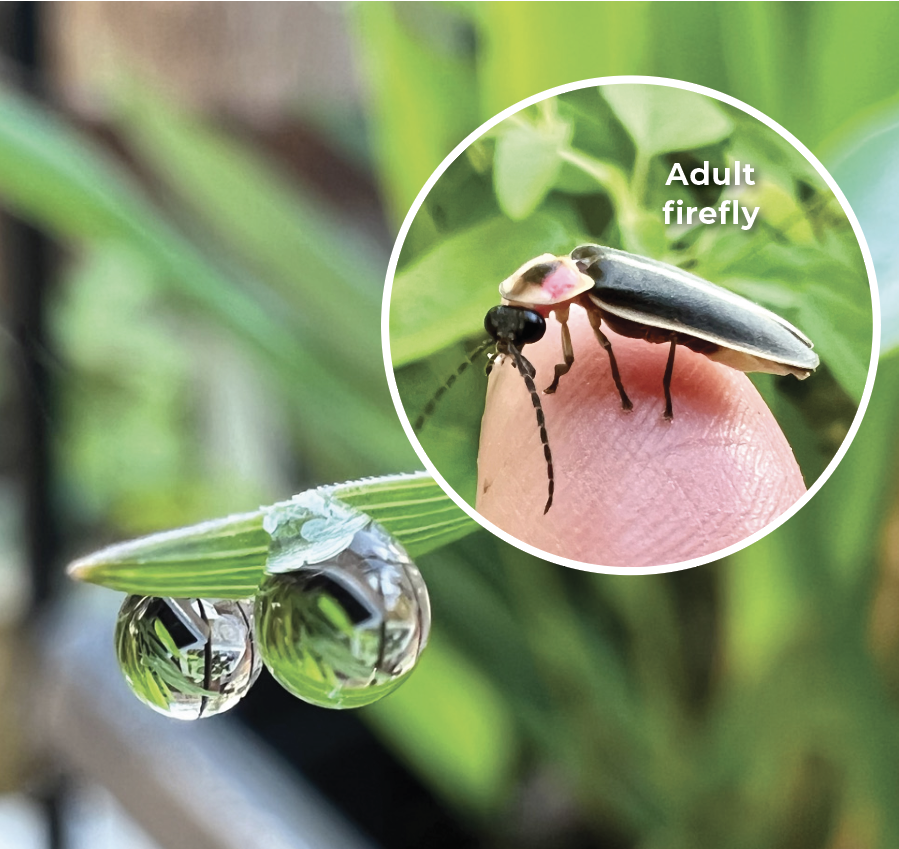
There is another source of water I should mention. Although it likely happens in everyone’s yard, it’s kind of a secret and kind of a miracle, and it never needs a safety ramp: plants that weep water. Some species have hydathodes, one-way nozzles that let extra water seep up and out of the leaf margins at night, and only when the humidity is right and the soil is wet, and only at leaves low to the ground. The process is called guttation.
Imagine the heart-shaped leaf of a wild violet rimmed with tiny, clear beads that sparkle in the sun. Or curvy columbine leaves fringed with droplets. I’ve seen guttation on tomato leaves, kale, grapevine, jewelweed, and bee balm, and some days on every single blade of grass.
Fireflies get thirsty too!
You know what else is low to the ground at daybreak? Thirsty fireflies. It’s now a highlight of a summer morning to run out and watch fireflies suck the violets and sip the grass. They must be tired after a night of trying to make more fireflies, and each guttation drop contains valuable carbs and protein — a breakfast of champions. And the best part is that no one can drown in a drop.
Joanna, author of "This Is How a Robin Drinks: Essays on Urban Nature," writes about everyday wonders in everyday habitat loss on Instagram @jo_brichetto and at SidewalkNature.com.