


Q: How do I overwinter a tree rose in a container?
A: There are a couple of easy methods to save your tree rose for next year
A tree rose (Rosa hybrids) has two grafts that must be protected. At the base, a straight stem, or standard, is grafted onto a root. And at the top, the blooming part is grafted onto the stem. That’s what makes tree roses so susceptible to winter damage in cold climates.
Here are two methods that will protect tree roses where temperatures fall below 0 degrees F:
-
First, you could simply grow it in a large container and roll it into your garage or a shed after several hard freezes. Try to keep it at 30 to 45 degrees F to protect the graft and prevent it from breaking dormancy. Reduce watering to a minimum — the soil should be almost dry, just barely moist. And do not fertilize. If the temperature in your storage area is too cold or fluctuates too much, wrap the tree and the container in layers of blankets. When you see new growth and the weather settles, you can move it outdoors.
-
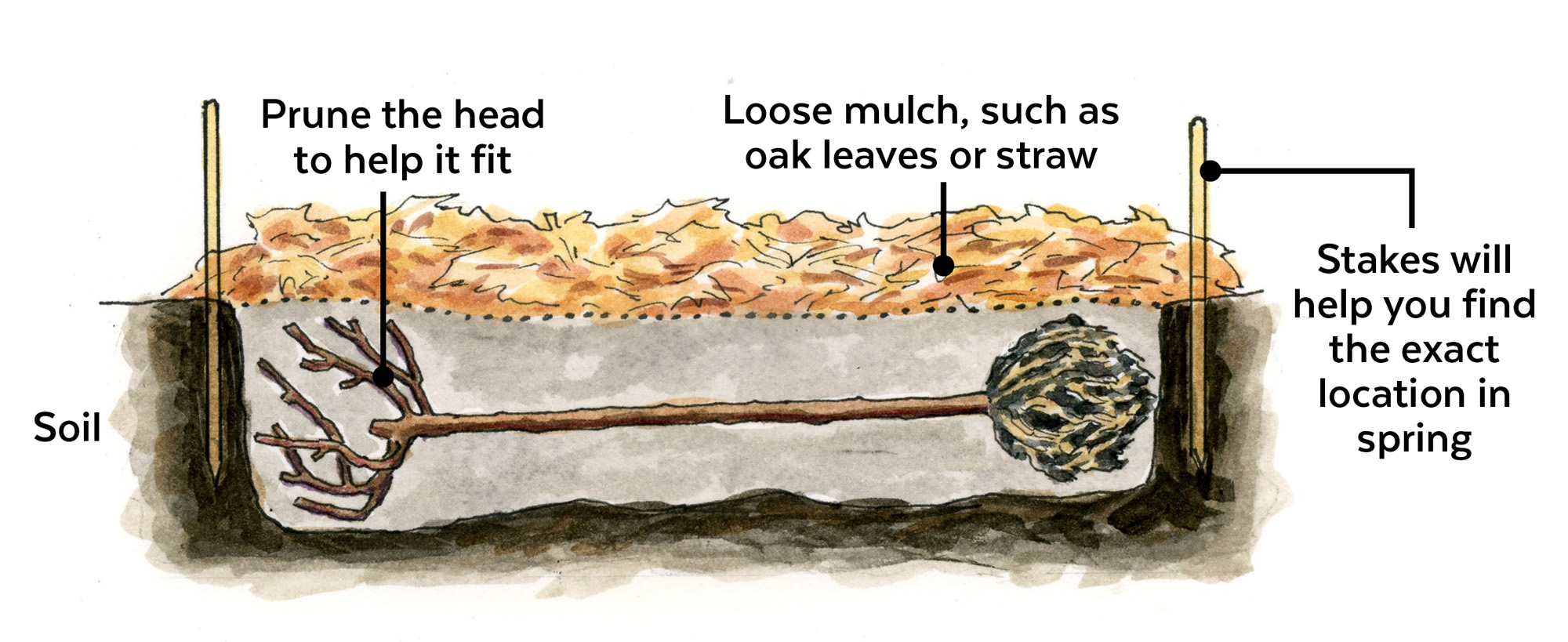
No shed or garage space? After the rose is dormant, carefully remove the plant from the container and bury it in another part of your garden. Once you’ve covered it following the method shown in the illustration below, lightly water. Lift the rose in early spring and replant it about the time you see other roses sprouting. With either technique, begin fertilizing when you see new growth.
Original question submitted by Roy Larson, ND
You Might Also Like:
How to Grow Bulbs on a Budget
Fall Clean-Up: What to Do and in What Order
7 Ways Winter Can Damage Plants
Q: How do I divide daffodils?
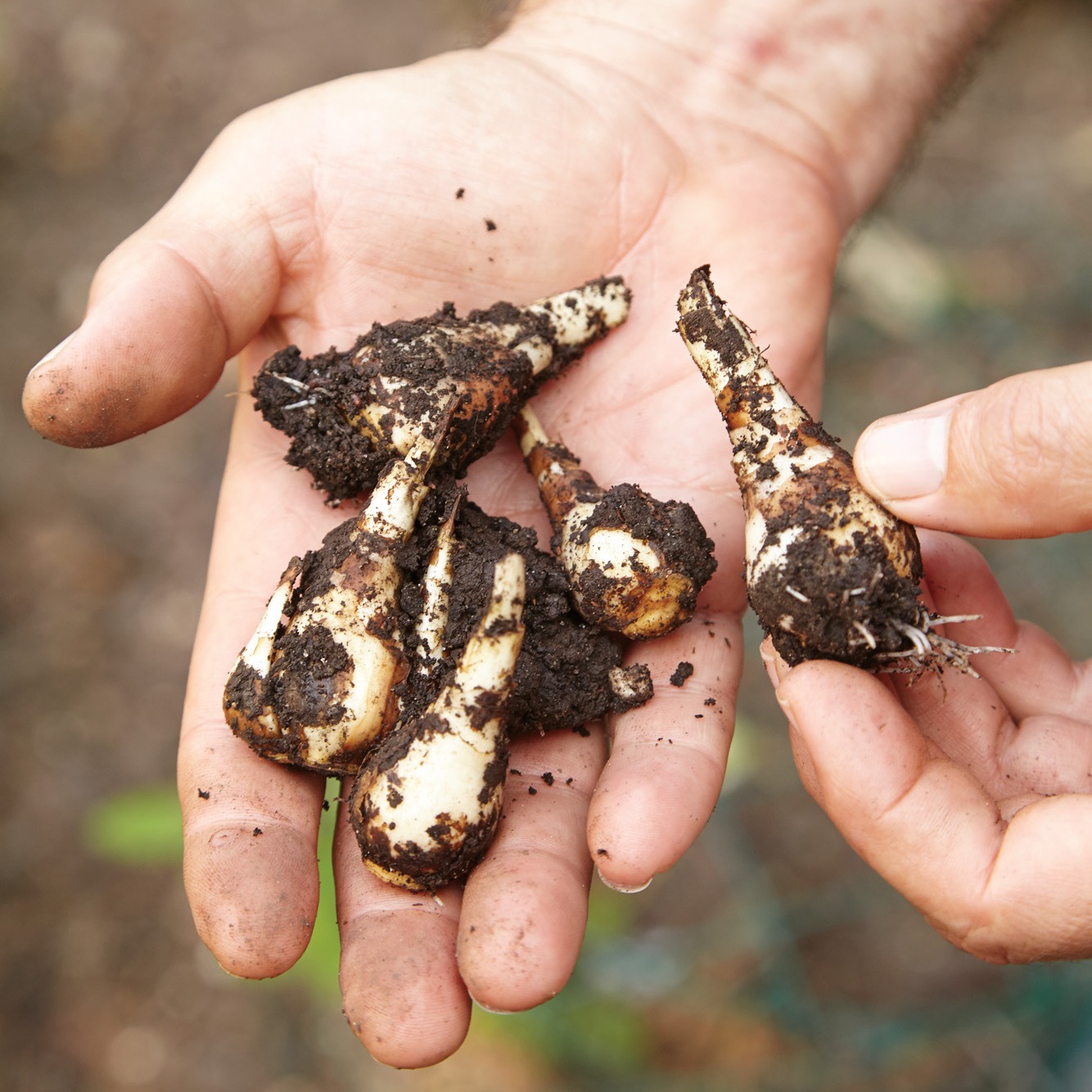
A: Daffodils (Narcissus hybrids) can be lifted and divided almost any time after the foliage has withered. To do it in late summer or fall, here’s how:
- Dig daffodils carefully
In fall, you may have to dig around by trial and error to find them. And the soil can be hard packed. Digging after a soaking rain helps loosen the soil. - Divide the bulbs
Brush away as much soil as you can and gently twist off the larger bulbs. Leave the small ones attached to the mother bulb to help establish new clumps. - Replant
Get the divided bulbs replanted as soon as you can. Set them at the same depth they were growing and sprinkle in some bulb fertilizer to get them off to a good start.
Original question submitted by Annette Pettigrew, NY
Q: I live in the country and don’t have trash service. Is it OK to bury weed seeds and diseased plants?
A: Yes, in most cases. Here are some considerations:
-
Dig a trench at least 2 feet deep in an out-of-the-way spot that you’re unlikely to disturb for a few years. At that depth, most weed seeds will not sprout, and will decompose. Foliar diseases, such as black spot, rust and powdery mildew will die if they have nothing to feed on.
-
But plants with root diseases, such as club root, should be sent away or burned, if possible. You can add woody branches to the trench along with weeds and leaves, but they will take several years to break down. If your community allows it, it’s better to burn them.
-
After you put a layer of debris into the trench, cover it with a couple inches of soil. Continue this pattern until the trench is filled to about a foot from the surface. Fill the last foot with soil, then find a new spot for a weed trench.
Original question submitted by Carole Barlowe, TN
Have a Garden Question? Submit it here!