




Garden pests affect every region
Stepping into the garden and discovering that the plants you’ve lovingly nurtured are now looking ragged, or even stripped bare, is incredibly frustrating. Voracious insect pests can quickly unravel your hard work and shatter your garden dreams.
Finding the culprit is the first step to getting your garden back on track. While many pests are widespread, I talked with experts from various regions to find out which ones were causing the most trouble in their areas and what you can do about them. One thing they all agreed on: Tackling pest problems with integrated pest management (IPM) is easier on the environment and helps prevent pesticide resistance.
What is IPM?
This decision-making approach for pest control starts with low-environmental-impact strategies first, then steps up the strength of the response if necessary. For example, when you notice damage, use an insect identification app or check your county extension resources to pinpoint the culprit. Then decide how much damage you can tolerate. If you’re willing to wait it out, many pest problems fizzle as the moisture or temperatures change, and most plants will bounce back with new growth in just a few weeks.
More About IPM Practices:
IPM Basics: Controlling Weeds
IPM Basics: Controlling Pests
IPM Basics: Controlling Garden Diseases
If you find that a problem returns every year, the next level of prevention could include cultural practices, such as growing resistant varieties, rotating crops or using row cover or landscape fabric to prevent pests from laying eggs. If all else fails, the final step might be a targeted chemical control, whether it’s organic or synthetic. The idea is to be strategic and only do the minimum necessary to deal with the most damaging pests in your garden.
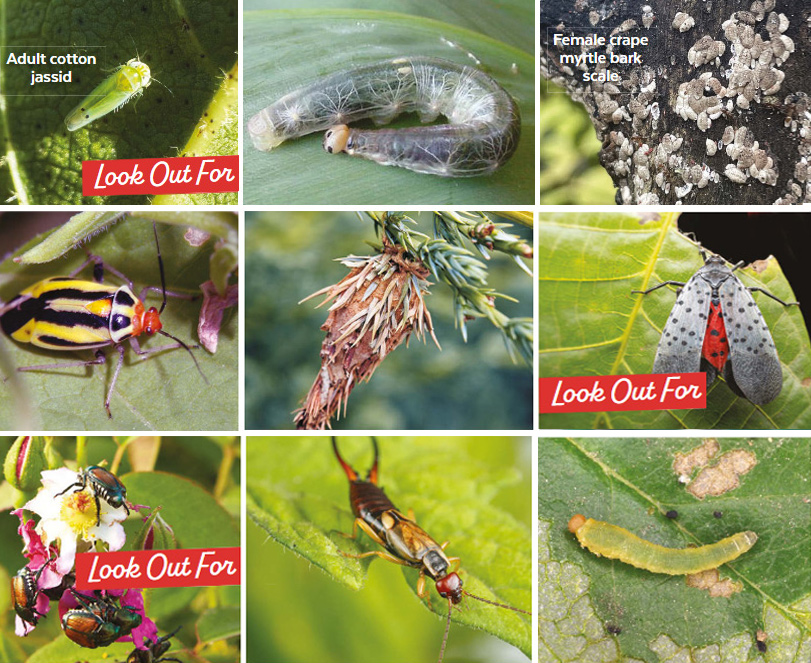
Find out which garden pests are causing issues in your region
We asked regional gardening experts which pests are causing issues in their part of the country and which ones to look out for. Click your region in the list below to find more details about each pest:
Pacific Northwest
- European earwig (Forficula auricularia)
- Bronze birch borer (Agrilus anxius)
- Lookout for this rising pest: Japanese beetle (Popillia japonica)
Midwest
- Roseslug sawfly (Endelomyia aethiops)
- Two-spotted spider mite (Tetranychus urticae)
- Lookout for this rising pest: Spotted lanternfly (Lycorma delicatula)
Southeast
- Larger canna leafroller (Calpodes ethlius)
- Crape myrtle bark scale (Acanthococcus lagerstroemiae)
- Lookout for this rising pest: Cotton jassid (Amrasca biguttula)
Northeast
- Four-lined plant bug (Poecilocapsus lineatus)
- Bagworm (Thyridopteryx ephemeraeformis)
- Lookout for this rising pest: Allium leaf miner (Phytomyza gymnostoma)