

Creating a flower-filled front yard from scratch
When Ellen Goldfarb first moved to her New Jersey home 40 years ago, the front yard was all lawn, with a few standard-issue shrubs skirting the foundation. Soon after, she removed many of those original shrubs and planted a cottage border along the driveway. Watch the Talk & Tour video above to hear more about how this front yard makeover came together.

Over the years, she added more garden space and removed lawn while establishing What’s Blooming?, a garden design and maintenance firm that she now runs with her daughter, Tracy Buttrick. Eventually, she says, “I was doing all of these nice gardens for people, and I wanted what they had.”

Front yard before
A sloping front lawn with a foundation planting of yews (Taxus spp. and hybrids), rhododendrons (Rhododendron hybrids), Japanese pieris (Pieris japonica) and other shrubs provided the blank slate for the front-yard showpiece you see below.
You Can Also Read this Feature on Ellen's Garden in the Summer issue of Garden Gate magazine!

Starting from scratch
So to divide up the 56-foot-wide by 35-foot-deep front yard and manage the slope better, Ellen had a curving 1-foot-tall stone wall installed that effectively created three distinct terraces. Then she converted the front yard into a garden filled with a variety of Japanese maples (Acer palmatum), boxwoods (Buxus spp. and hybrids), hydrangeas (Hydrangea spp. and hybrids) and other flowering shrubs and perennials, both for her own enjoyment and to showcase her work.
Creating levels in the garden
She likes to think of the levels that this change created as stages that allow the plants to show off better. However, even though the garden is full of plants, she takes care to position them so that the contrasting stone shows through here and there, even during the growing season, utilizing plants pruned into standards and a mix of different shapes and textures.
Want Ellen's List of Deer-Resistant Plants?
Download Ellen's Deer-Resistant Plant Palette

Smart plant choices
While she was initially drawn to flowers (and still is), Ellen recognizes that every good design needs structure. “I like organized chaos,” she says. Tidy ‘Wintergreen’ Korean boxwoods (Buxus sinica var. insularis), Japanese plum yew (Cephalotaxus harringtonia) and deodar cedar (Cedrus deodara) all frame exuberant plantings on each terrace. Although Ellen starts with a list of flowers that she wants to include in a new garden design, when it’s time to put the design to paper, she always places the evergreens and other structural plants first.
Everything in the garden shouldn’t be a diva, the way the tall urn, yellow standard lantana or stately ‘Seiryu’ Japanese maple (Acer palmatum) are in the photo above. You need plenty of supporting cast too. Some favorites for these roles include black-eyed Susans (Rudbeckia fulgida sullivantii), ornamental grasses, hydrangeas and ostrich ferns (Matteuccia struthiopteris). She frequently turns to chartreuse-foliaged plants, such as hakonechloa (Matteuccia struthiopteris), as supporting cast members. She says, “Chartreuse just makes everything else look better.”
You Might Also Like:
How to Add Structure to Your Garden
7 Ways to Use Conifers in Garden Design
Portland Talk & Tour: Dwarf Conifers and Japanes Maples

Dealing with the deer problem
Walking through the neighborhood, you might not suspect that deer would be such voracious pests. But in recent years she’s had to work hard to keep them from eating her garden and her clients’ gardens as well. After much experimentation (and heartbreak), she’s discovered that evergreen shrubs like boxwoods, many junipers (Juniperus spp. and hybrids) and cherry laurel (Prunus laurocerasus) tend to be deer-proof. She’s also had relatively good luck with bigleaf hydrangeas and roses like those in the Drift series.
But some years are worse than others. Last year a persistent doe and her two fawns even ate the black-eyed Susans and heleniums, which they usually avoid. Find a few of Ellen’s favorite deer-resistant flowers below.
Site deer-susceptible plants in protected areas
Over the years, she’s moved the most susceptible plants to more protected spots, such as the windowbox full of lettuce in the photo above, and many of her beloved David Austin® roses, which she has relocated to the fenced-in backyard. But nothing is foolproof, so in addition, she has a local deer-control service spray their proprietary solution at least once a month during the growing season. She follows up with a spray bottle every week or so, covering tender new growth.
Ellen’s favorite easy-care shrub roses
- Drift®
- Knock Out®
- Julia Child
- Easy Does It®
- Bonica® (she's had one for 40 years!)
You Might Also Like:
Deter Deer in the Garden With These Products
Shrub Roses for Tricky Spots in the Garden
Deer-Resistant Garden Layout
Subscribe to Garden Gate magazine
6 of Ellen’s Favorite Deer-Resistant Flowers
Want to see a bigger list of deer-resistant perennials, shrubs and trees? Download the full guide from Ellen here. Download her Deer-Resistant Plant Palette PDF here.
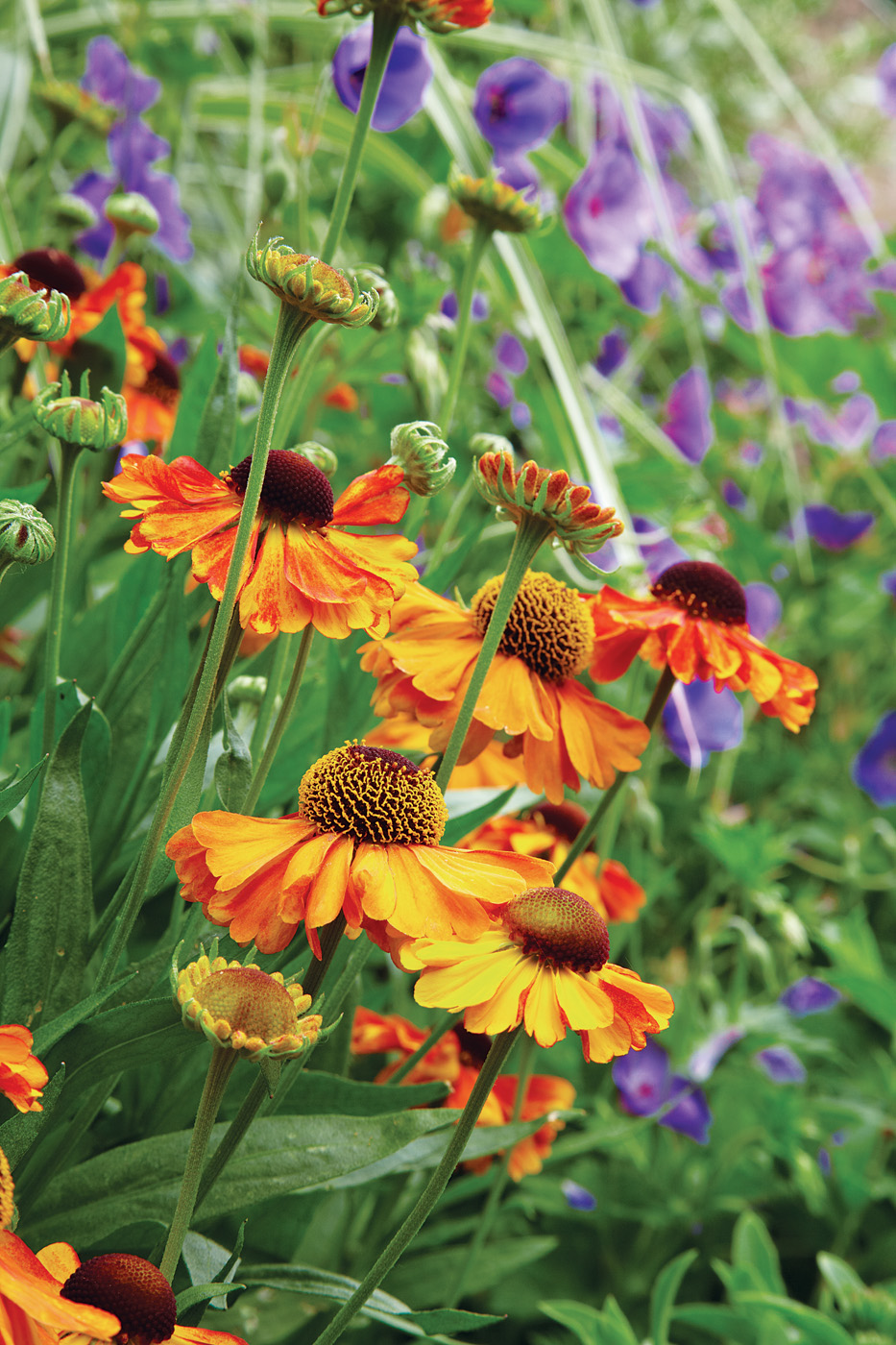
1. Helenium (Helenium spp. and hybrids)
These long-blooming perennials tolerate heavy soil well.
- Type: Perennial
- Blooms: Yellow, orange or red daisy-shaped flowers summer to fall
- Light: Full sun to part shade
- Soil: Average to wet well-drained soil
- Size: 2 to 5 ft. tall, 2 to 3 ft. wide
- Hardiness: Cold hardy in USDA zones 3 to 9
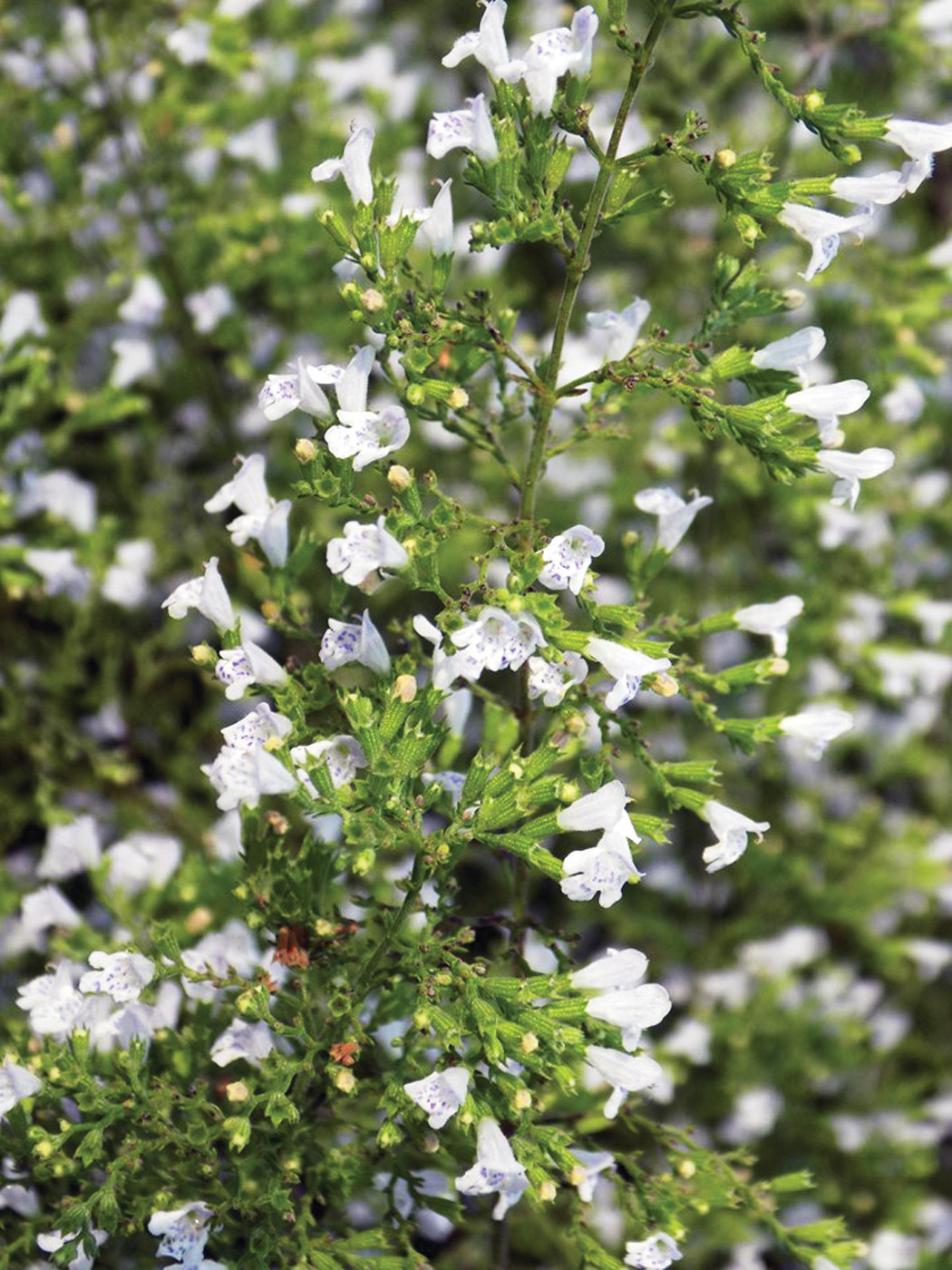
2. Calamint (Calamintha nepeta)
The white, frothy flowers of well-behaved ‘Montrose White’ calamint complement so many plants and bloom from May through frost.
- Type: Perennial
- Blooms: Tiny white flowers late spring through frost
- Light: Full sun
- Soil: Dry to average well-drained soil
- Size: 12 to 24 in. tall and wide
- Hardiness: Cold hardy in USDA zones 5 to 9
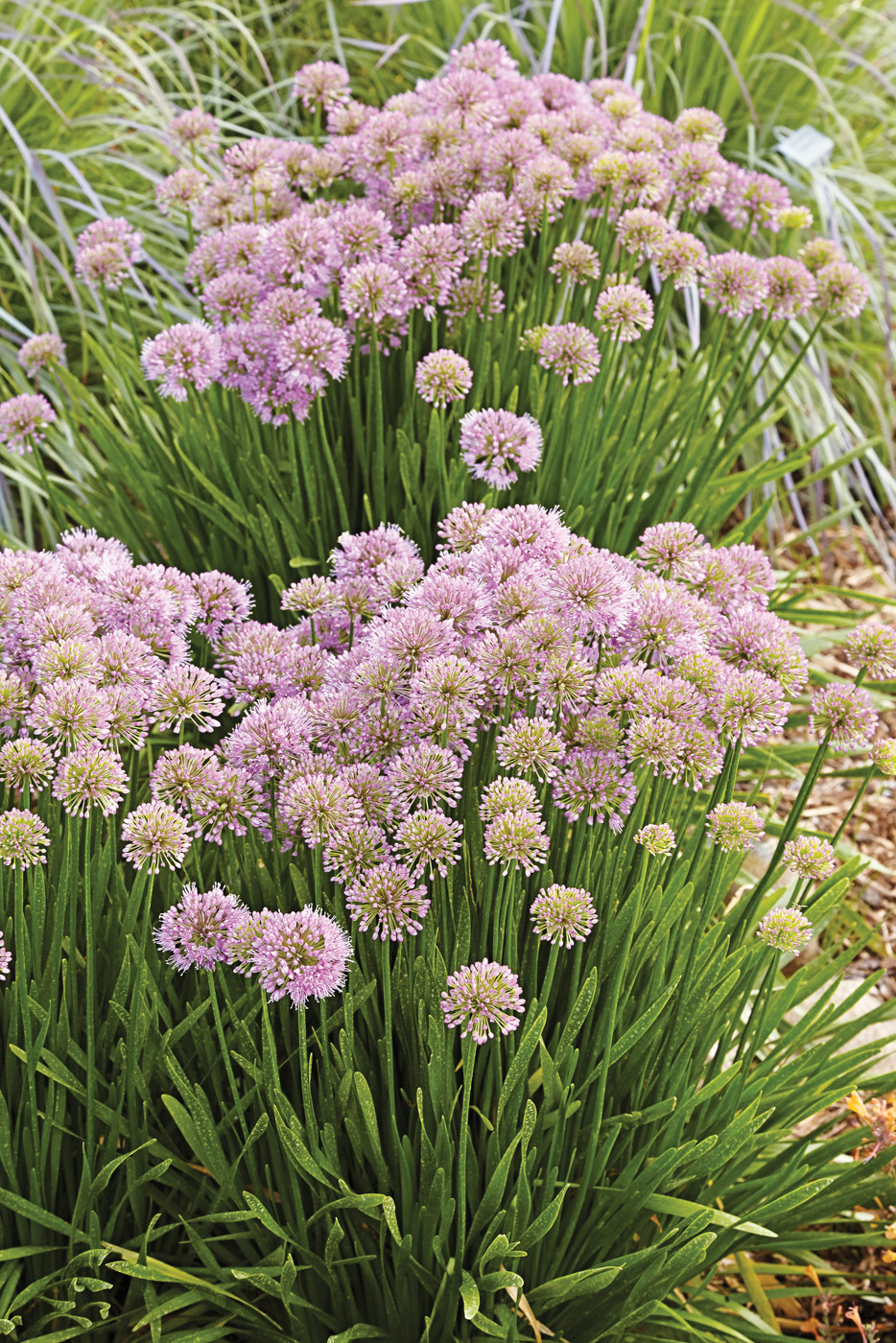
3. Allium (Allium hybrids)
After the jaunty purple lollipop blooms of ‘Millenium’ allium have faded, the dried seedheads still have garden interest.
- Type: Perennial
- Blooms: Small globe-shaped lavender or white blooms in early to late summer
- Light: Full sun
- Soil: Dry to medium well-drained soil
- Size: 12 to 18 in. tall and wide
- Hardiness: Cold hardy in USDA zones 4 to 8
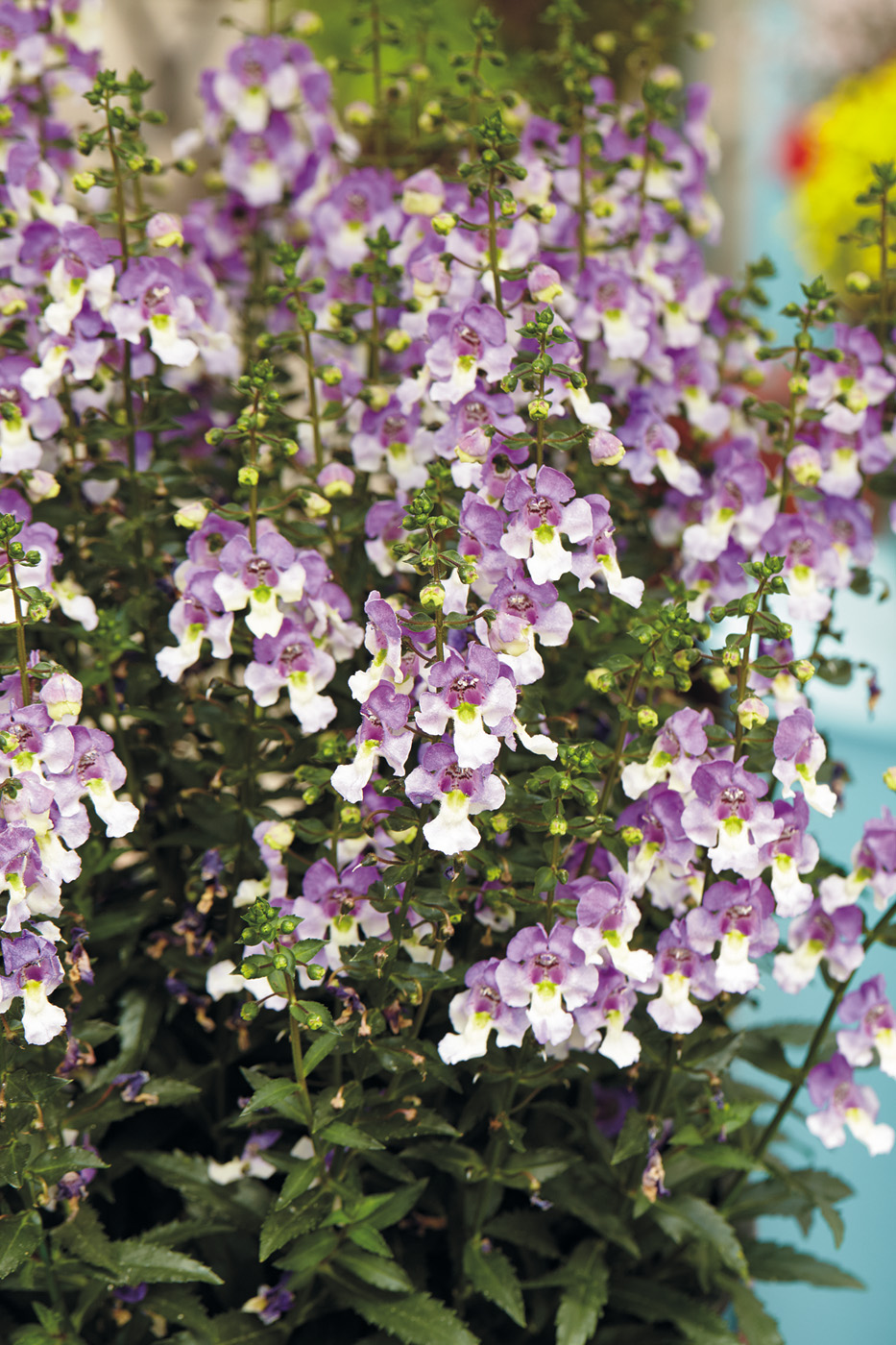
4. Angelonia (Angelonia angustifolia)
These flowers are everblooming, never reseed, seldom fall over and perform well with or without deadheading.
- Type: Tender perennial (usually grown as an annual)
- Blooms: Spiky white, purple, pink or raspberry blooms from spring through fall
- Light: Full sun
- Soil: Moist, well-drained soil
- Size: 12 to 30 in. tall, 10 to 18 in. wide
- Hardiness: Cold hardy in USDA zones 9 to 11
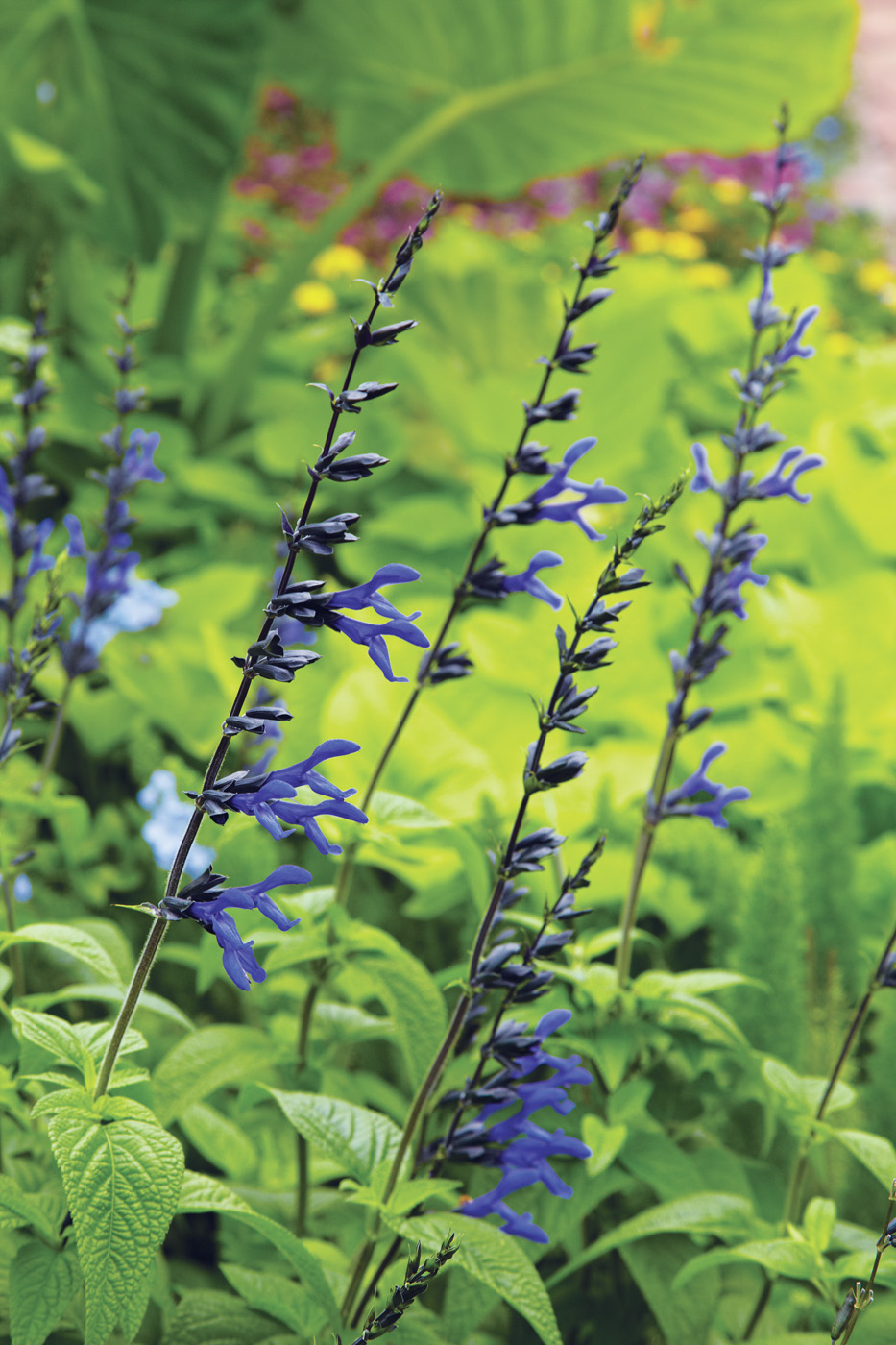
5. Salvia (Salvia spp. and hybrids)
Hummingbirds adore the tubular flowers of salvia, especially the red varieties.
- Type: Tender perennial (usually grown as an annual)
- Blooms: Blue, purple, white, red or pink flowers in summer through fall
- Light: Full sun to part shade
- Soil: Moist, well-drained soil
- Size: 2 to 5 ft. tall and wide
- Hardiness: Cold hardy in USDA zones 7 to 11
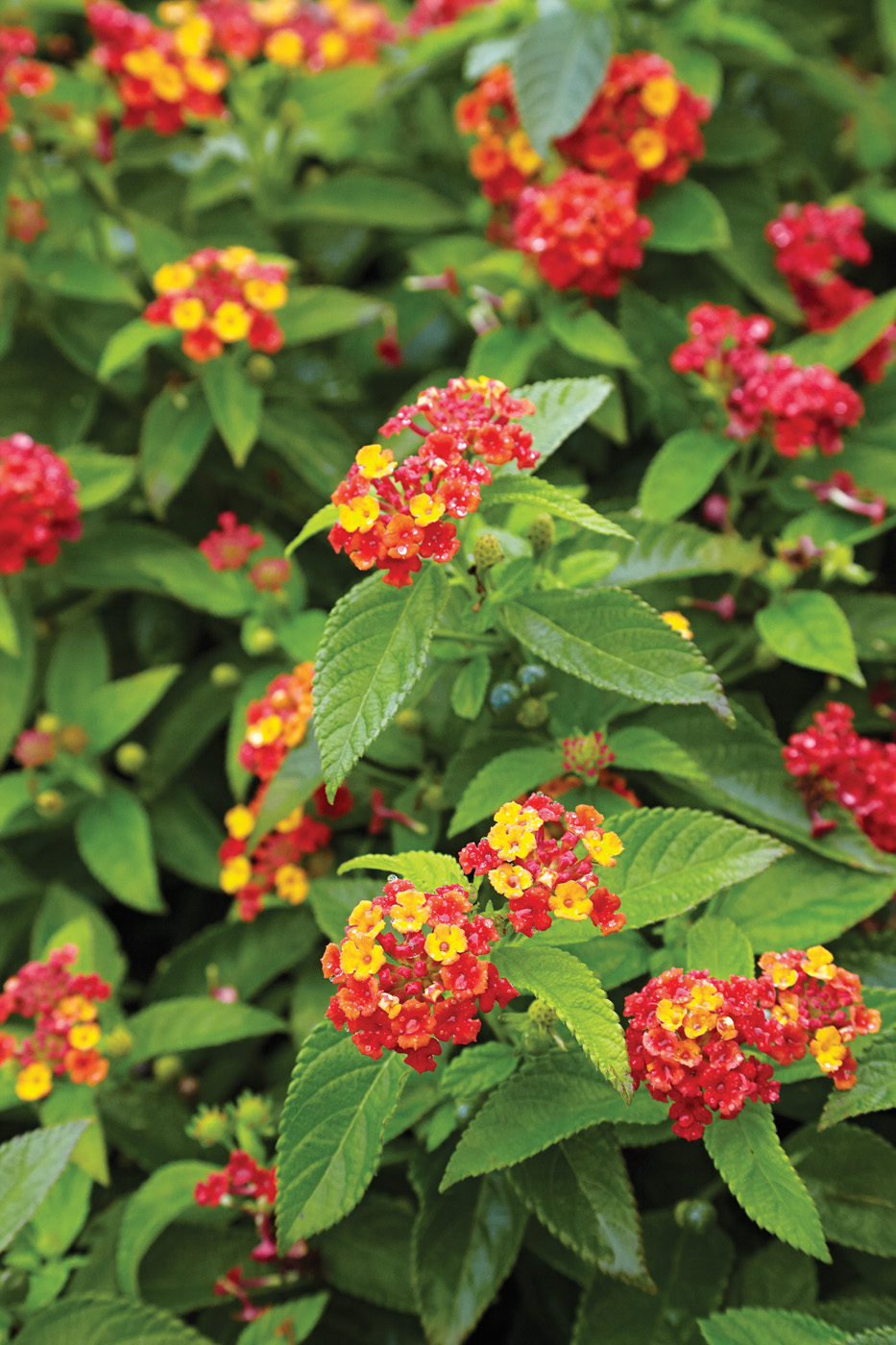
6. Lantana (Lantana camara)
Reliable nonstop bloomers and standard forms provide height in just the right spots.
- Type: Tender perennial (usually grown as an annual)
- Blooms: Small white, yellow, pink, purple, red or orange flowers from spring through fall
- Light: Full sun
- Soil: Dry to medium well-drained soil
- Size: 1 to 4 ft. tall, 1 to 3 ft. wide
- Hardiness: Cold hardy in USDA zones 9 to 11