


Meet our 2026 Reader Garden Award Winners: Mary Anne Chadwick & Leon Cudnohufsky
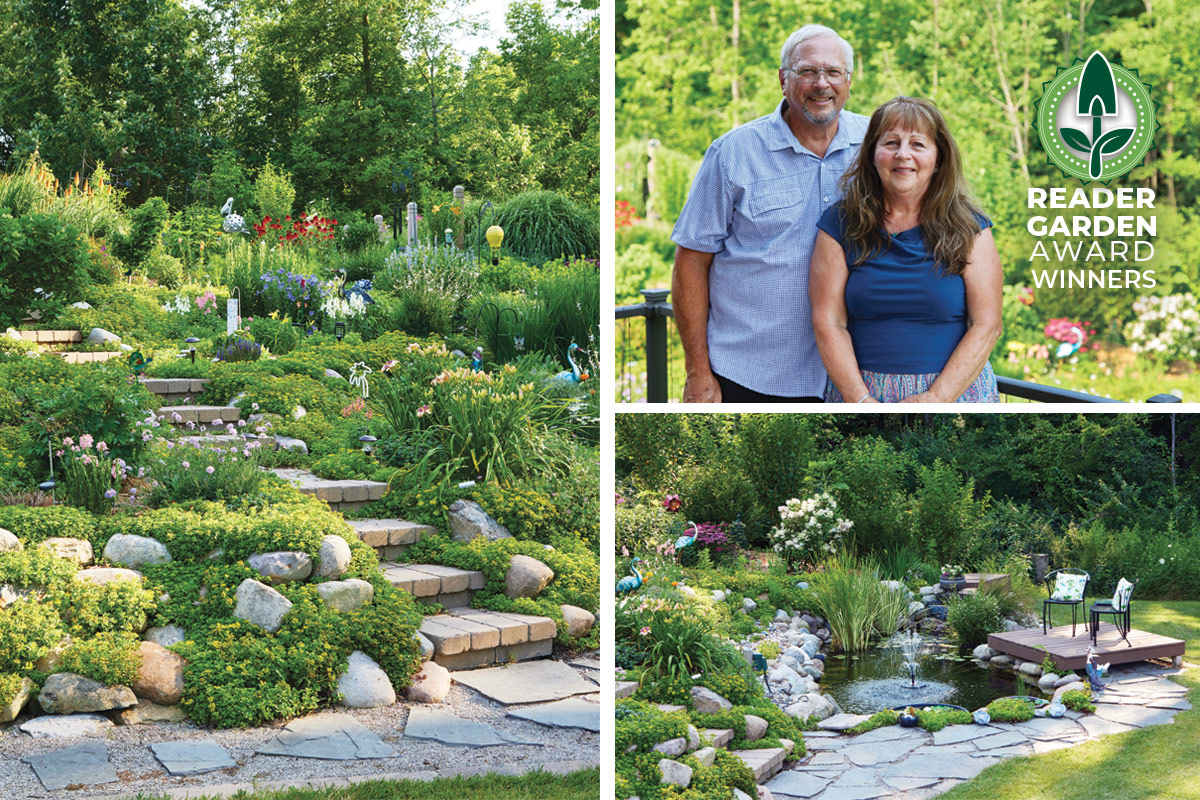
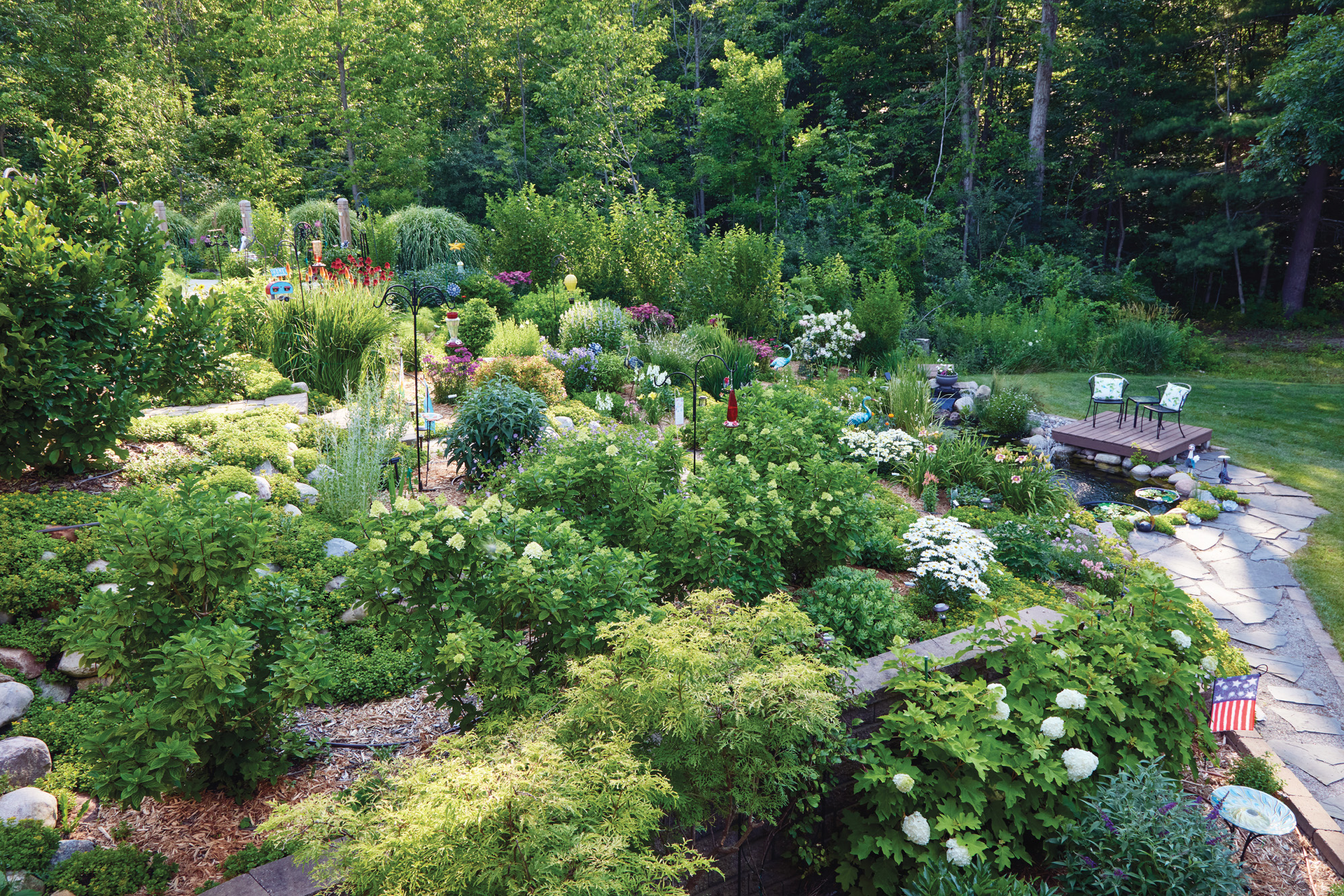
Walk through Mary Anne Chadwick and Leon Cudnohufsky’s rural Michigan garden, and you’ll see why we chose this tireless husband-and-wife team as our Reader Garden Award winner. With only a foundation planting to start with, they tackled one project after another, gradually filling the yard with multiseason borders, a small pond, stone retaining walls and the large, terraced garden in the photo below.
Up for the Challenge
Of course, there were challenges along the way — the clay soil and a steep slope covered in weeds and construction debris are two of the most notable — but they’ve worked together to find solutions. Mary Anne is the idea person and a Master Gardener, while Leon is the expert planner and does the heavy lifting. Watch our Talk & Tour video above or on our YouTube channel to learn more about how this award-winning garden came to be.
Enjoying the View
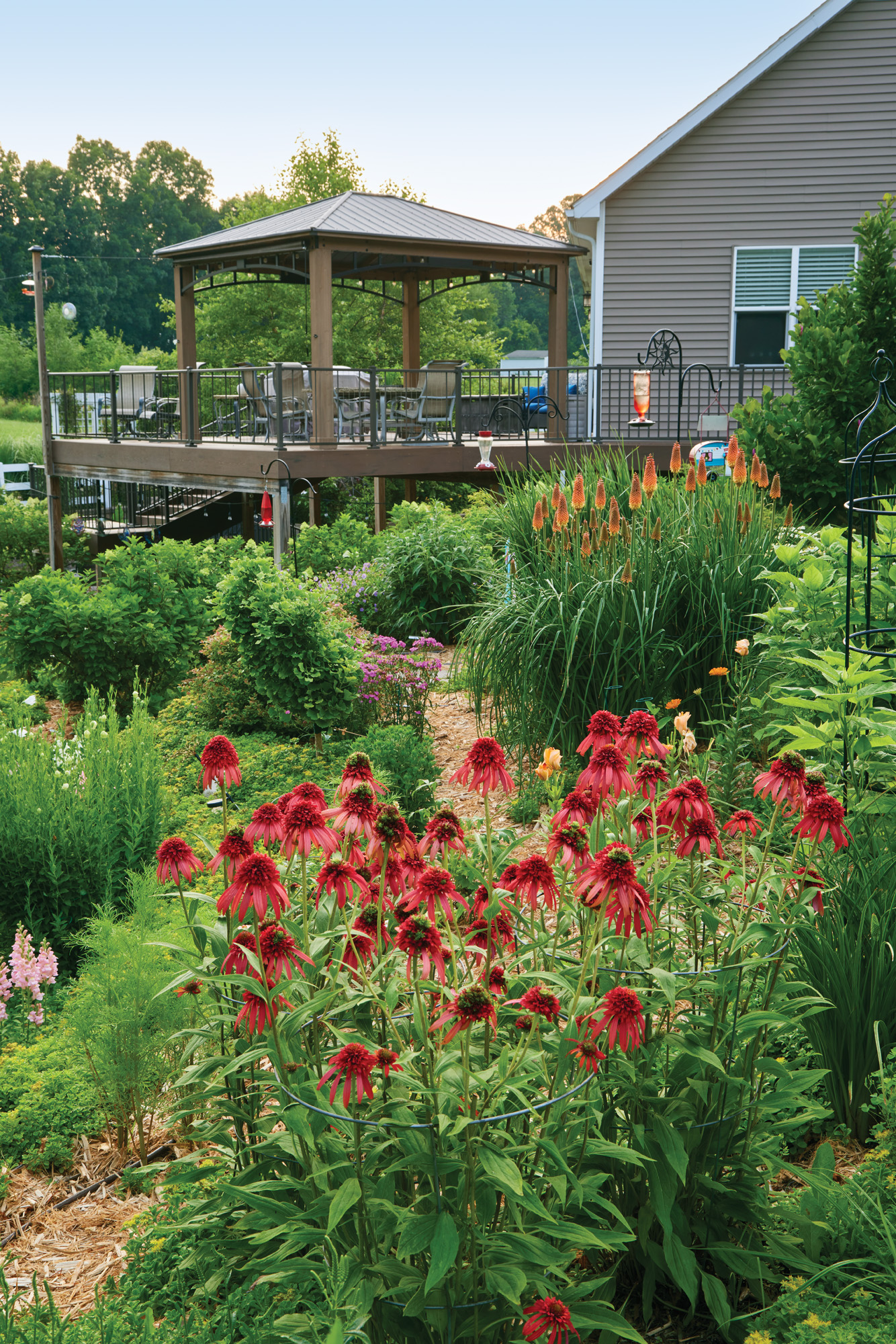
With all the big jobs taken care of (for now), Mary Anne and Leon can spend a bit more time enjoying the amazing views they’ve created from the deck and patio instead of digging, planting and hauling stones. These outdoor living spots provide a wonderful setting for entertaining family and friends — or even other garden enthusiasts.
Subscribe to Garden Gate Magazine!
A stunning hillside terrace
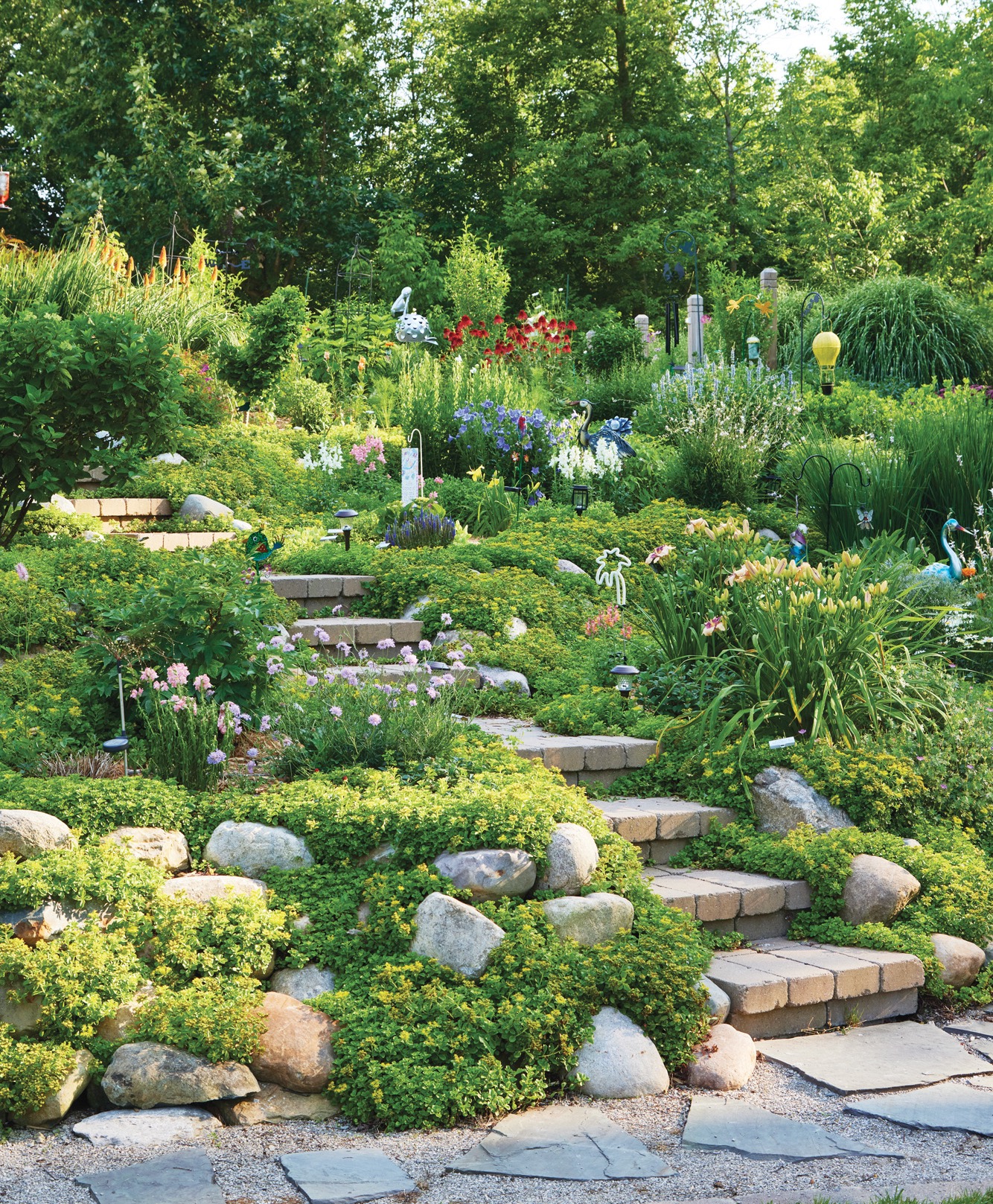
Mary Anne and Leon participated in a local garden tour a few years ago, and after “oohing” and “aahing” over the front yard, visitors literally stopped in their tracks when they came around the corner of the house to the backyard and the terraced slope came into view. Let’s take our own tour and discover how Mary Anne and Leon took a yard that was almost a blank slate and turned it into their own peaceful retreat.
You Might Also Like:
2026 Reader Garden Runner-Up: Teresa Angotti
2026 Reader Garden Runner-Up: Shelly (Bell) Schnettler
Submit Your Garden for a Chance to Be Featured!

Perennial Entry Garden
The first thing you’ll see when you pull into Mary Anne and Leon’s place is the garden that runs almost the length of the residence. Originally, it was limited to a foundation planting right next to the house. But then Leon built the 55-foot-long and 3-foot-tall stone retaining wall made of Michigan fieldstone in the photo above so he wouldn’t have to mow this steeper section of the front yard. With more level planting area, they could expand the entry garden’s footprint to the other side of the walkway. Leon used his compact tractor with a front loader to get the stones close to the workspace, then carefully set them all in place by hand.
Plants worth hanging on to
At the entrance to the front walk in the photo below is what they call the “Mary Anne garden.” These are the plants from her previous home that she couldn’t bear to part with when they got married. Some peonies, daylilies and bush clematis all came with her when she moved in. There’s also a ground cover sedum she likes because it’s so easy to transplant. Mary Anne snips a few stems, pokes a hole in the soil with her finger, inserts a stem and it takes off in no time. Now this easy-care perennial is growing throughout the garden. Planting it on the retaining wall has saved them lots of time and effort as its dense growth keeps weeds from taking hold.

Remedying clay soil in existing garden beds
Mary Anne and Leon started noticing that some of the plants in the original foundation planting were struggling, but others, such as the buttonbush, were doing really well. After digging several holes to check the soil, they found water pooling at the bottom — clay soil was the culprit. The plants in “5 Favorite Clay-Tolerant Plants” below were thriving, but the couple wanted to do something to help the other struggling perennials. They hated to get rid of them as they were such a big part of the foundation design.
Some targeted soil amending was their solution. To do this, they dug out the plants that looked weak or anemic and refilled the holes to overflowing with a mix of 45 percent topsoil, 45 percent certified compost and 10 percent sand, spreading it around the nearby area. This generous application in some areas but not others created a somewhat undulating surface for the border. But Mary Anne and Leon don’t mind; they feel that it adds character and visual interest.
You Might Also Like:
9 Tough Perennials for Clay Soil
Entry Garden Plan for Clay Soil
Garden Compost Basics
5 Favorite Clay-Tolerant Plants
Even with dense clay soil, these five plants thrive in Mary Anne and Leon’s garden.
-
Buttonbush Cephalanthus occidentalis
Shrub; globe-shaped white flowers in midsummer; full sun to part shade; 3 to 12 ft. tall and wide; cold hardy in USDA zones 4 to 10 -
Cardinal flower Lobelia cardinalis
Perennial; red, white or pink flowers in summer to early fall; full sun to part shade; 2 to 4 ft. tall, 2 to 3 ft. wide; cold hardy in USDA zones 3 to 9 -
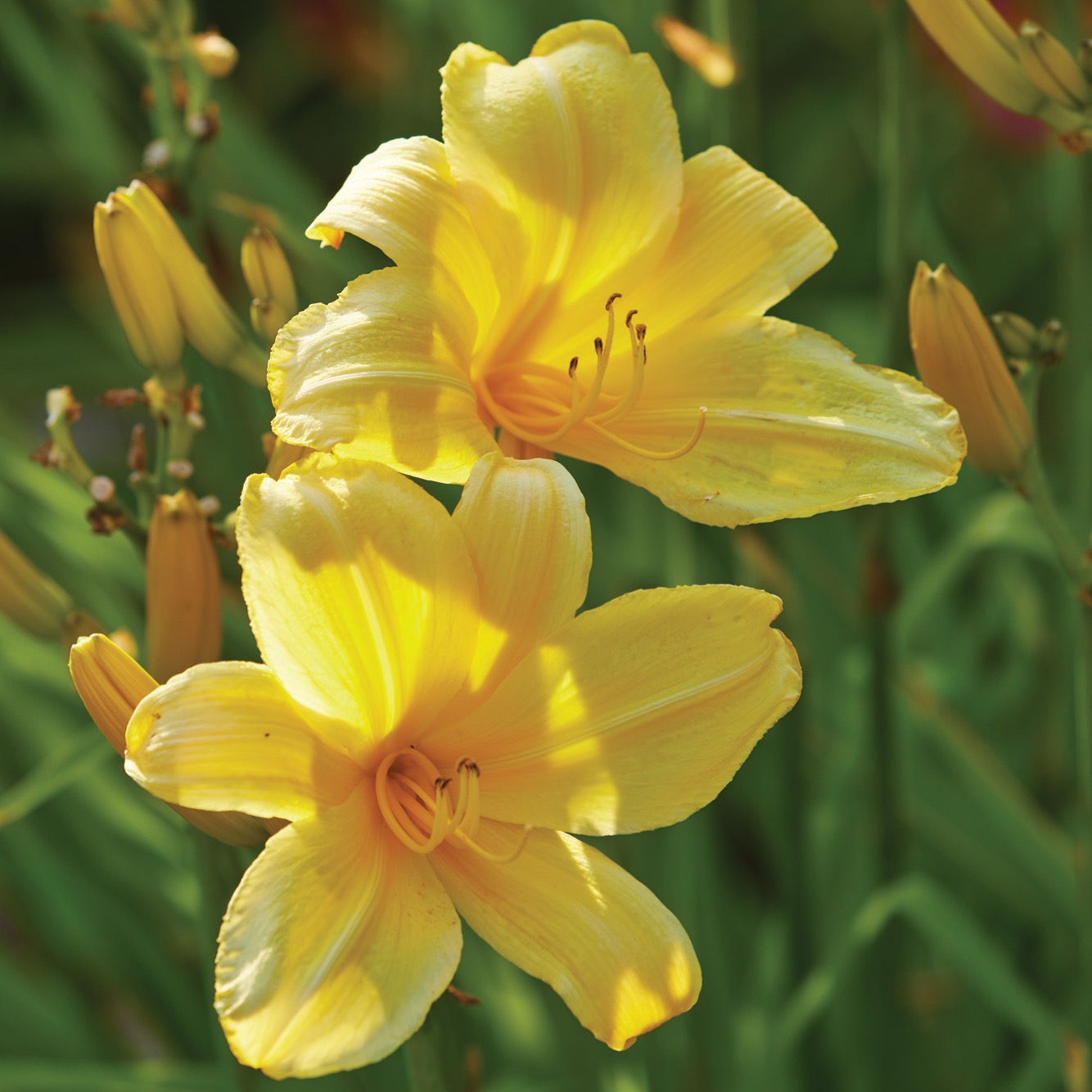
Daylily Hemerocallis spp. and hybrids
Perennial; trumpet-shaped blooms in all colors but blue in early summer to early fall; full sun to part shade; 12 to 72 in. tall, 12 to 40 in. wide; cold hardy in USDA zones 3 to 10 -
Hardy hibiscus Hibiscus moscheutos
Perennial; red, pink, white, lavender or cream flowers in summer to fall; full sun to part shade; 2 to 12 ft. tall, 2 to 6 ft. wide; cold hardy in USDA zones 4 to 10 -
Siberian iris Iris sibirica
Perennial; white, yellow, violet, blue, pink or maroon blooms in late spring; full sun to part shade; 24 to 48 in. tall, 18 to 24 in. wide; cold hardy in USDA zones 3 to 9
From Overgrown Hillside to Stunning Terrace Garden
Make your way to the backyard, and you’ll find the terrace garden that provides stunning views. It all started with one of Mary Anne and Leon’s favorite evening routines — sitting on the deck in the photo above. Mary Anne casually mentioned to Leon that the unsightly slope nearby would make a great terraced garden. The next thing she knew, he was out there with his compact tractor moving soil around.
Leon was an engineer by trade before retiring, so he knew how to make the calculations needed to safely work and build on a steep slope. It took 70 yards of compost and 25 tons of rock to build. Each level is about 50 feet long with a 2-foot-tall stone retaining wall for support and varies in depth from 4 to 6 feet.
You Might Also Like:
How to Calculate How Much Topsoil, Compost or Mulch You Need
Problem Solving Garden Book Collection
Talk & Tour: Beautiful Hillside Garden | 2021 Reader Garden Award Winner
Finding the right plants for the sunny hillside garden
Once the terracing was complete, they added drip irrigation to make watering easy — it’s simply too big to water by hand. The system stays in place even through the cold Michigan winters. Leon just has to blow out the system in fall, and it’s good to go until the following spring.
With the hardscape in place, Mary Anne got busy planning and planting this full-sun site. She chose plants that she liked and has experimented with various annuals and perennials over the years to see what grows best here. Panicle hydrangea, balloon flower and Shasta daisy are just a few of the successes. The ornamental grasses they planted grew a little too well and blocked the view when they sat on the patio at the bottom of the slope, so those were moved over to the property line.
Dividing plants from other areas of the yard saved a little money and provided plants that Mary Anne was certain would thrive in their landscape. Many of them grow even larger than the parent plant in the compost-rich soil here.
Add a water feature
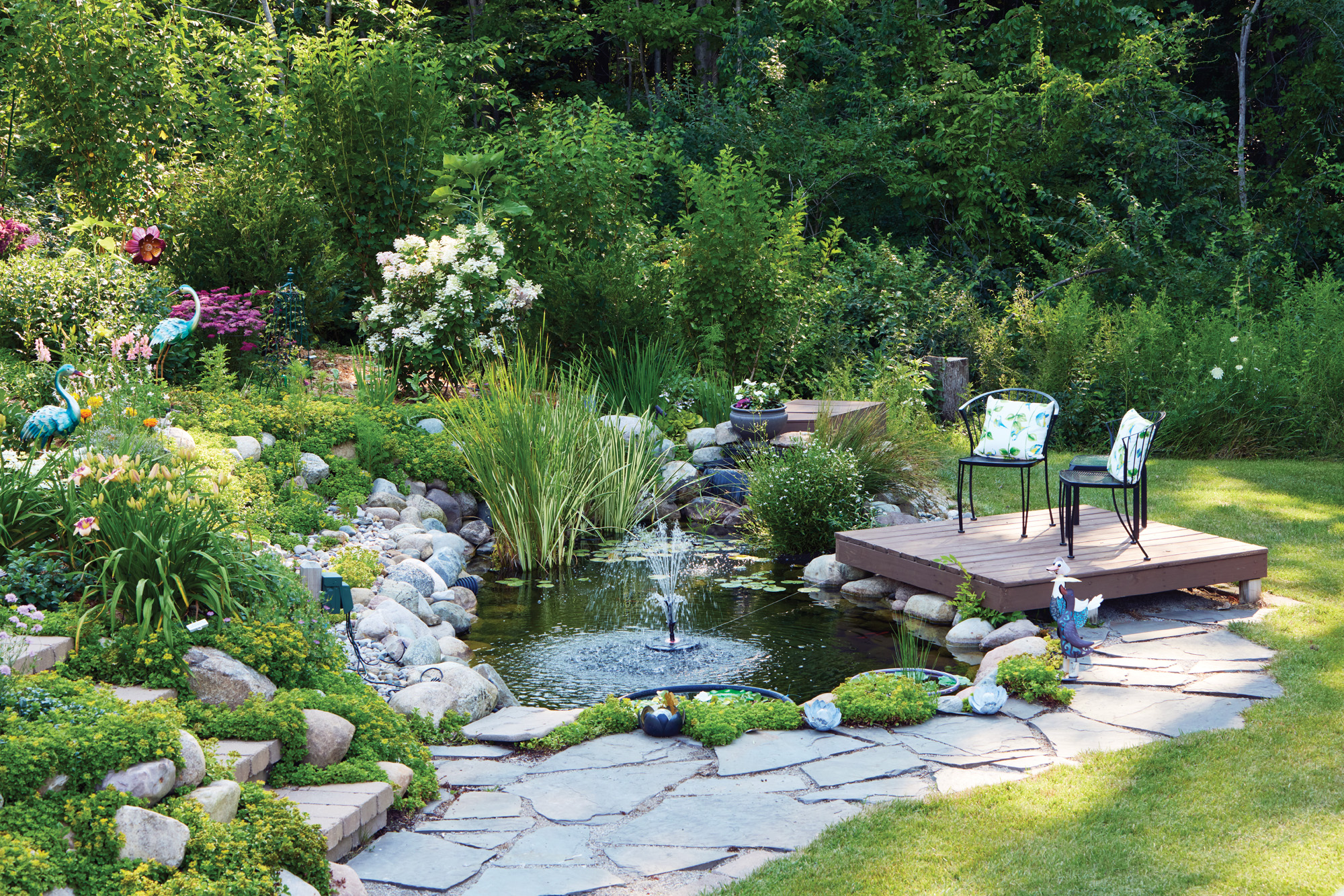
With a slope like this, a waterfall seemed like a natural addition. But after some research, Leon found that the large pump needed would require a lot of electricity and the overall maintenance was much more than that of a small pond. Instead, he dug a pond, 2 to 5 feet deep, at the bottom of the slope. It’s now home to a handful of koi and a few goldfish.
Seated on this cozy deck right next to the water, Mary Anne and Leon savor quiet evenings watching the koi and listening to the fountain in the shelter of their color-filled terrace garden. Looking around, they can take satisfaction in all the hard work they’ve put into creating this garden oasis, then breathe a sigh of relief and enjoy a well-deserved break.
Are you a DIY gardener? Enter for your chance to win the Reader Garden Award next year! See entry guidelines here.