


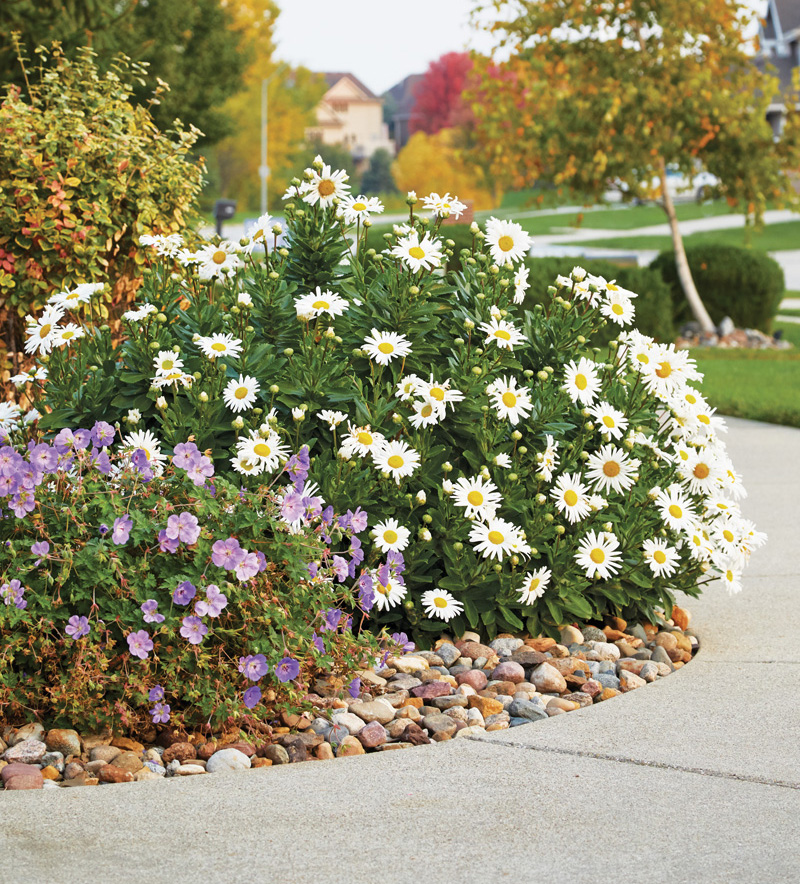
Montauk Daisy
Nipponanthemum nipponicum
Type: Perennial
Blooms: White flowers with a yellow center summer to frost
Light: Full sun
Soil: Well-drained
Pests: None serious
Size: 18 to 36 in. tall and wide
Hardiness: Cold hardy in USDA zones 5 to 9
Montauk Daisy Will Refresh Your Fall Border
Tired of garden mums for your fall combos? Give Montauk daisy a try. This underused perennial is covered in 2- to 3-inch white flowers from summer to frost, makes a great cut flower and has saw-tooth leaves that add texture to the garden until it blooms. Paired with 'Rozanne' geranium, it provides a cheerful greeting along this path to the front door.
How to grow Montauk daisy
Montauk daisy grows best in full sun but can tolerate part shade. It does need a spot with well-drained soil. Let the plant dry out between waterings to avoid rot — Montauk daisy is quite drought tolerant.
You might think that with all those flowers you'd have to feed Montauk daisy a lot, but not so. You can add a shovelful of compost or some slow-release fertilizer in spring but it's not essential.
Keep Montauk daisy looking good
There is a chance your Montauk daisy stems will flop as they grow taller, especially if the plant grows to its maximum height of 3 feet. You can use a hoop stake to keep it upright if having that height midborder is important to you. Or avoid those flopping stems by cutting them back by a third in early summer. This encourages branching, which means more flowers and a more mounded habit.
Dividing plants every 3 to 4 years is a good idea to keep Montauk daisy vigorous and flowering well. To do this, dig the plant out of the ground, split it into several pieces and replant the new divisions at the same level they were growing in the soil. Or pot some up to share with friends.
You Might Also Like:
How to Grow Better Gerbera Daisies
A Softer Palette for Fall Flower Beds
Shop Our Collection of Garden Design Books
Where to plant Montauk daisy
With loads of those sweet flowers and the attractive, pest-free foliage, Montauk daisy is a no-brainer for just about any spot that needs color or texture — the front door, next to the patio or even in containers. Check out the list below for a planting that provides you with lots of color and interest all season and will help a few pollinators, too!
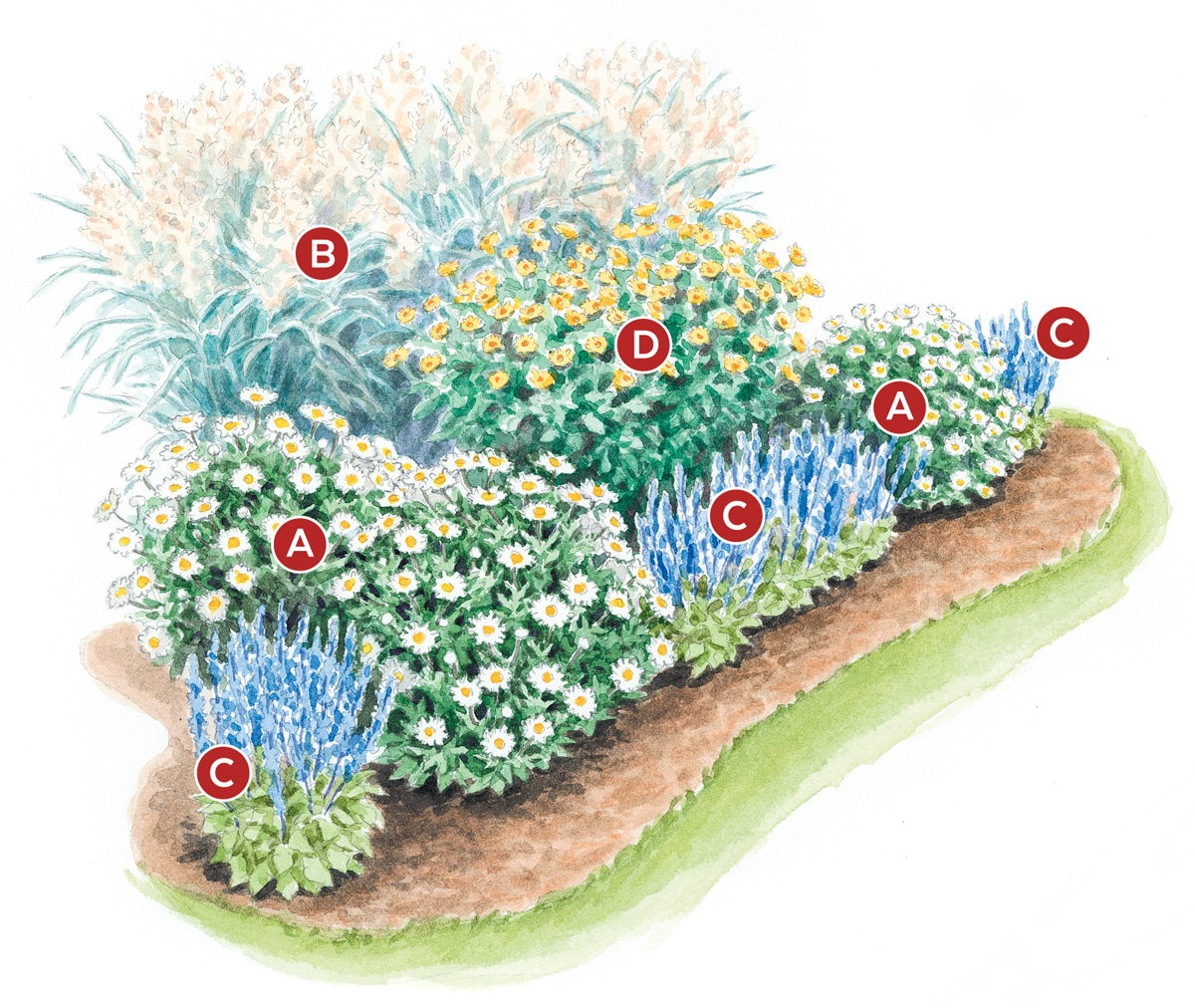
What to plant with Montauk daisy
This easy-care group of late-season flowers will provide a one-stop buffet for migrating butterflies, and the salvia is a hummingbird favorite, too. Deadheading the salvia and sunflower keeps things tidy and the flowers going.
A) Montauk Daisy (Nipponanthemum nipponicum)
Perennial; white flowers with a yellow center summer to frost; full sun; 18 to 36 in. tall and wide; cold hardy in USDA zones 5 to 9
B) Switchgrass (Panicum virgatum 'Gunsmoke')
Perennial; tan flowers in midsummer, blue-green foliage; full sun; 48 to 54 in. tall, 36 to 42 in. wide; cold hardy in USDA zones 4 to 9
C) Salvia (Salvia 'Mystic Spires')
Tender perennial (usually grown as an annual); blue-violet spikes from late spring to frost; full sun; 18 to 24 in. tall, 12 to 18 in. wide; cold hardy in USDA zones 7 to 10
D) False sunflower (Heliopsis helianthoides var. scabra 'Summer Sun')
Perennial; semidouble yellow blooms in mid- to late summer; full sun; 24 to 36 in. tall, 18 to 24 in. wide; cold hardy in USDA zones 3 to 9
You Might Also Like:
Tips for Growing Lady’s Mantle
How to Grow Cinnamon Fern
Subscribe to Garden Gate magazine