

Just like humans, plants thrive when they're well-nourished. Elevate your gardening game by incorporating worm castings into your soil. These fertilizers are a powerhouse of nutrients, containing essential elements like nitrogen, phosphorus and potassium, which foster robust plant growth and high yields. By enriching your soil with worm castings, you're giving your plants natural nutrition for healthy roots and vibrant blooms. Embrace sustainable gardening practices and say goodbye to chemical fertilizers, as worm castings offer an eco-friendly alternative that promotes soil health and biodiversity. Explore our picks for reliable worm castings before you start gardening. With Wiggle Worm leading the way, you can trust that you're getting the best worm castings for your garden, ensuring lush and thriving plants season after season.
The Best Worm Castings
Best Overall
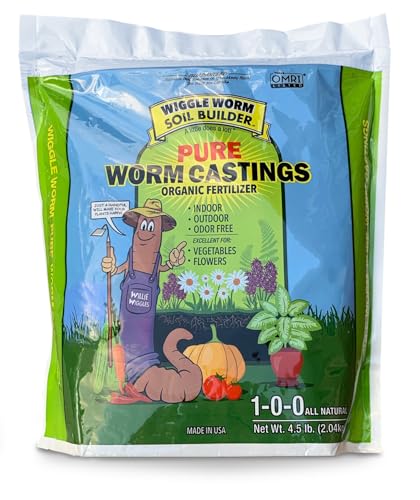
Of course you’d like your plants to bloom and thrive, and with UNCO worm castings, they can. This fertilizer is packed with tons of nutrients that provide plants with what they need slowly, unlike other products that do so only in the short run. Applying a small amount of this fertilizer to your flowers or vegetables will result in beautiful growth and yield throughout their life cycle. It's available in a 4.5-pound bag, meaning you’ll have enough all-natural, organic fertilizer for a large garden. These worm castings are also odor-free. We’re giving this bag of worm castings our best overall slot for its great nutritional value, affordable price, and long-term focus.
Pros
- Feeds plants over a long time period
- Only a small amount required
- Perfect for both indoor and outdoor plants
Cons
- Using too much can attract root aphids
Great for Large Lawns
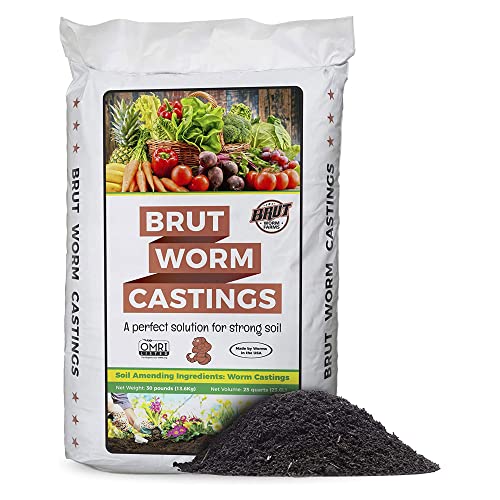
Gardeners who tend large gardens will love BRUT worm castings. It comes in a large bag and the worm castings are less than a week old, meaning you get both quality and quantity. It also contains beneficial microbes, minerals, and nutrients, and provides long-term, natural nourishment. In addition, this nontoxic, odor-free product is suitable for both indoor and outdoor use.
These dark, rich and pure worm castings will allow your plants to thrive and bloom to their full potential. It comes in 5, 12 or 30-pound sizes; bundle your purchase to get 300 pounds of pure fertilizer goodness.
Pros
- Product is perfect for large gardens
- Worm castings are fresh
- High-quality fertilizer at a great price
Cons
- Fertilizer might contain more water than necessary
Most Fresh Castings
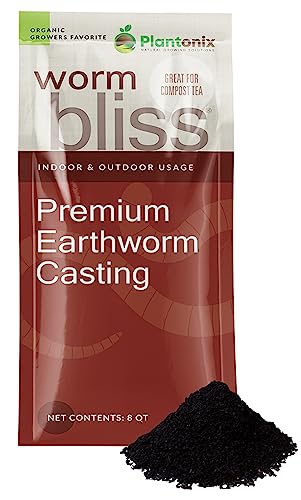
Your plants will grow to their full potential if you use Dr. Verm’s worm castings. This fertilizer contains castings from worms that were fed an organic GMO-free diet and will condition your soil for optimal germination and root development.
If you want healthy plants, this product will help. The microbes will nourish your plants, allowing them to thrive even in harsh conditions, and help protect them from pests and diseases. It is a complete plant care product. Select from 5 different size options.
Pros
- Will make your plants’ growth skyrocket
- Great for gardens, yards and more
- Product is safe for all types of plants
Cons
- Easy to overfertilize with
Best for Fruits and Veggies
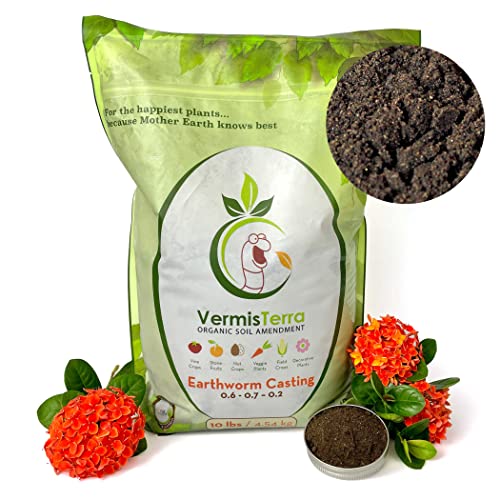
If your soil is unsuitable for planting and you’re looking for a solution, VermisTerra is a good option. This product helps improve your soil’s aeration and water retention. Plants grow faster, yield more and taste better when grown in soil with this fertilizer. And because it is nontoxic, it is safe for children, pets and even pollinators. It also contains no fillers – only pure worm castings. Pick up this resealable bag for simple storage, convenient application and good plant health.
Pros
- Helps improve your soil structure
- Safe, 100% organic fertilizer
- Filled with tons of nutrients and minerals
Cons
- Need to measure out when distributing
Most Eco-Friendly
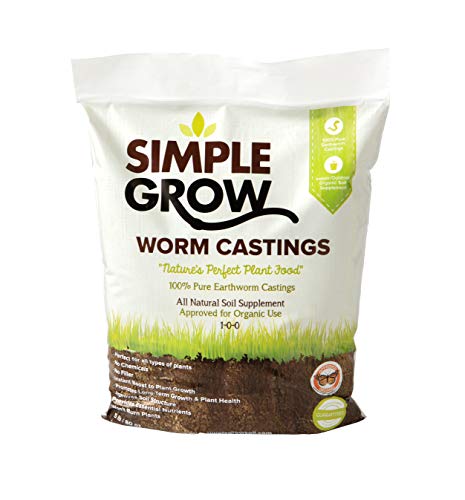
Chemical fertilizers can sometimes be harsh on plants, which is why we’re recommending Simple Grow worm castings. It doesn’t contain chemicals, fillers, additives, dirt or stones. It is safe for all plants, farms and garden soil. In addition, this nutrient-rich organic soil supplement contains beneficial microbes, powerful multivitamins and trace minerals, all of which provide your plants with 100% natural nutrition. Pick up this 5-pound bag of pure worm castings for great results.
Pros
- Will meet your plants’ soil requirements
- Very healthy and eco-friendly option
- Can use it for all types of plants
Cons
- The earthy smell may be unpleasant
Finding the Best Worm Castings: A Buyer's Guide
To treat your soil and plants with nutritious fertilizer, get a bag of worm castings. Worm castings have numerous advantages over other fertilizers. To learn about those benefits and worm castings in general, take a look at this helpful buying guide.
Worm castings are essentially worm manure. When earthworms eat compost, they excrete waste high in minerals and beneficial microbes. Also known as vermicast, this manure is collected in a controlled environment via a process known as vermicomposting and is used as a natural fertilizer for gardens, potted plants, flowers and vegetables. Farmers and gardeners can improve soil aeration, water retention, plant yield and plant growth with this organic product. Worm castings are great for growing healthy plants and are often much better than chemical fertilizers.
How to Pick the Right Worm Castings
Nutritional value
Before you purchase any worm castings, make sure they have the right nutritional value for both your soil and plants. Ideally, your worm castings should contain a healthy combination of trace minerals, enzymes, fungi and microbes.
Organic composition
The best worm castings are pure and unfiltered. Some products use fillers like sand, dirt and other manure to bulk up the package, while others use chemical additives to make the fertilizer more potent. You want to get only pure, organic worm castings for your plants. Using pure worm castings instead of relying on harsh chemical fertilizers will ensure the best results for your soil and plants in the long term.
Moisture content
Another important factor is the moisture content. This is mostly affected by the production timeline. For example, if the product has been sitting on a shelf for a long time, chances are the water level has reduced and become insufficient. The ideal moisture content should be about 55%–70%.
Size
Package size should be entirely determined by the size of the garden or farm. If you have a large garden, a 30-pound bag will cover the soil adequately. However, choose smaller sizes if it's for a home garden.
Benefits of Worm Castings
Increased organic nutrients
The best soil will contain 5% organic material. However, most fields have less than 1%, resulting in lifeless soil and, ultimately, limited plant growth. Worm castings add organic matter to your soil and potting mix, which serves as a food source for soil microbes.
Faster and improved plant growth
Worm castings are known to help with plant growth. In other words, adding worm castings to a growing plant improves seed germination, allowing it to thrive and grow to its full potential.
Improved aeration, water retention and soil structure
Another major benefit of worm castings is improved water retention and soil structure. Worm castings act as glue that connects sand, silt and clay together.
Long-term nutrition
Worm castings don’t just provide nutrients to your soil; they do it long-term. In other words, when you add vermicompost to your potting mix, it will remain active throughout the plant’s life cycle.
Stronger roots and plant health
Plants fed with worm castings have much stronger roots and general plant health than those without. Their roots grow thicker and generally spread throughout the surrounding soil to absorb nutrients.
Plant protection
Vermicompost has been known to protect plants and soil from several pathogens. For example, worm castings can protect seedlings from diseases caused by attacks of zoospores of common pathogens like Pythium.
Harvesting Your Own Worm Castings
While it’s certainly much easier to buy your worm castings online, you can create your own worm farm and harvest worm castings on your own. To do so, you’ll need to start with a worm bin or two. Luckily, worms don’t need a fancy setup, so a plastic container will work just fine. After a while of feeding them, you’ll be able to harvest castings from your worms.
How to Use Worm Castings on Your Plants
Use only a pinch for seedlings
Seedlings already have everything they need to grow within them. So, if you use too much worm castings on them, you might suffocate the seed. The ideal move will be to add a pinch of worm castings to each seedling; you can also treat the soil with a small amount. Also, when transplanting them to your garden, add one or two teaspoons of vermicompost for optimal results.
Add a cup or two for full-grown plants
Full-grown plants need a lot more fertilizer and organic matter to realize their full potential. Add one to two cups of worm castings to the soil around the plants. Remember, sunlight kills the microbes in worm castings. So be sure to get the fertilizer into the soil instead of leaving it on the surface.
Make it into worm tea
If you have a large garden, you may end up spending more than you anticipated. One way to manage this is by making worm tea. This aerated tea can be applied as a spray over the lawn. This gives plants the required nutrients but saves money.
Summary
The best fertilizers are from organic sources, like worm castings. Start giving your plants everything they need to thrive today.
People Also Asked
Can you use too many worm castings?
Yes, worm castings are organic fertilizers, and they will not affect your plants negatively unless you use way too much. Ryan Farley, CEO of LawnStarter, says, "It's important to note, though, that it's difficult to overdo this type of fertilizer (worm casting), so you don't have to necessarily worry about harming your lawn by applying worm castings too frequently." Farley likes using worm castings and says, "I would generally recommend adding worm castings to plants and your lawn every three or so months."
Are worm castings better than compost?
Yes, worm castings make better fertilizers than compost. However, they are also more expensive and cannot be produced easily.
How much do worm castings cost?
If you buy worm castings in bulk, it can cost as little as 40 cents per pound. However, if you get them in small bags, you can pay as much as $5 per pound. The price varies depending on the manufacturer, worm casting quality, moisture content and other relevant factors.
Should I add worm castings in the winter?
Worm castings don't make your plants grow; they only help plants grow. Therefore, you don't want to apply it at times when your plants wouldn't naturally grow.
Can I mimic worm castings with standard fertilizer?
You can somewhat mimic worm castings with standard fertilizer, but it likely will not be organic and all-natural, and may not work as well as worm castings. Plants like worm castings because they improve the environment of the soil naturally; other fertilizers may not do so in the same way.