


Maintaining a lawn takes a lot of time and effort. The mowing process alone requires consistency and precision, and mowing is only the beginning. But with the best string trimmer heads, you can enhance the natural beauty of your yard. Our number-one recommendation for string trimmer heads is none other than the Husqvarna Universal T35 String Trimmer Head. To help you find a string trimmer head that makes your outdoor space look perfect, check out the options below, and don't forget to read the buying guide as well.
Our Top Picks for String Trimmer Heads
The Best String Trimmer Heads
Best Overall
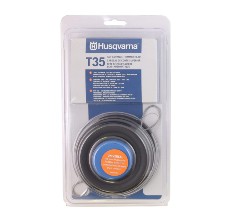
Our first pick is a trimmer head specifically designed for string trimmers. This product is extremely versatile, as it works with several brands and comes with an adapter to fit accordingly. The string inside the head can range from 0.065 to 0.105 inches in thickness. You can choose the option according to the length and spread of grass across your lawn.
We also love the two keyholes at the end which allow the user to take off the cap and replace the lines without unwrapping it.
Pros
- Head capacity for 28 feet of string
- Comes with titanium force string line
- Lines will never tangle
Cons
- Doesn’t work with thick strings
Most Effective
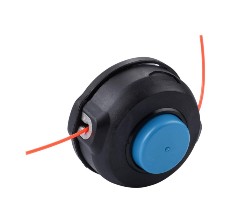
Are you tired of constantly struggling to attach and detach trimmer heads? Well, this option solves that problem. At an ideal height of 6 cm., this trimmer head is perfect for dealing with small weeds in your lawn. It has been specifically designed to fit over a Husqvarna string trimmer and will work with almost every model.
The string lines inside can vary from 0.065 to 0.095 inches in thickness. You can also easily replace the strings by following the simple arrows on the head.
Pros
- Made of highly durable materials
- Versatile and compatible with various models
- Comes with a three-month warranty
Cons
- Trimmer string might be too short
Most Versatile
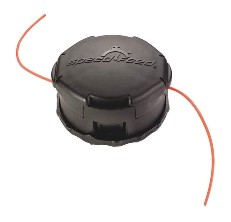
If you have an ECHO SRM trimmer, then look no further—this is the perfect product for you. This head will easily hold 20 feet of trimmer string and ideally reach all the edges of your lawn to give it a perfect look. It works with an advanced bump-feed system that allows you to use as much string as required.
The head supports 0.08-inch line thickness and works perfectly with all 25cc trimmers of the same brand. In fact, it is preferred over the original heads that come with many of the models.
Pros
- Offers control over quantity of string used
- Works with products from Dewalt and Stihl
- Lines won’t tangle inside head
Cons
- Confusing instruction manual
Most Long-Lasting
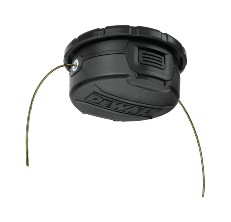
This pick also functions with a precise bump-feed feature. You can easily put the head over your trimmer and simply tap it on the ground for regular maintenance in the garden. This will help keep a check on the quantity of string line being used and also make it easier to replace with just one tap of the cap on top.
We also loved the aerodynamic string line that comes with the head. It's stiff and works perfectly on every corner without tangling or malfunctioning. You can replace these strings with a line as thick as 0.095 inches and trim your lawn to a perfect length.
Pros
- Head is compatible with Dewalt models
- Very large string capacity caters to a midsized lawn
- Comes with thorough instruction manual
Cons
- String lines wear out over time
Most Reliable
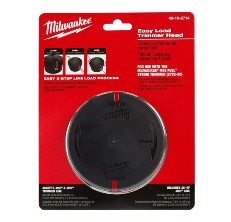
Finally, here's a product more suitable for professional needs. This trimmer head is the latest addition to the Milwaukee product line and works better on the latest models. The installation process is clearly explained and easy. You can choose between a 0.08- and 0.095-inch-thick string line for the head to trim weeds in your yard.
We love its 20-foot capacity, which allows you to trim 16 inches of an area in a single pass. Simply place the trimmer on the ground and you’re good to go.
Pros
- Preferred over original models
- Easy to use for beginners
- Resistant to physical wear and tear
Cons
- Cap might come off sometimes
The Best String Trimmer Head: A Buying Guide
Types of String Trimmers
Beginners find it hard to distinguish between the different string trimmer heads. Recent advancements in technology have led to a revolution in the designs and functions of gardening tools. Newer products have more convenient features that make the cutting and weeding process much easier. You’ll generally find three types of string trimmer heads on the market.
Fixed-line trimmers
This is the most basic model. String lines can be cut down according to the length required for the given task. The cut piece is then placed inside the trimmer head, which is installed over the trimmer. You can simply tap the trimmer head to the ground, and the strings will do the rest. We recommend this model for thicker trimmers so that none of the strings go to waste and the manual replacement time is reduced.
Bump-feed trimmers
These are slightly more advanced but great tools for homeowners. Skip the tedious task of cutting an exact length of a string. Instead, place the entire line within the weed eater head, making the installation process quite simple. The string line can also be replaced when it wears out. Just like the fixed-line trimmers, the trimmer head is placed against the ground and ready to work on your lawn. We prefer bump-feed weed eaters due to their affordability, effectiveness, and ease of use.
Automatic feed trimmers
This type is generally used by professionals in larger commercial gardens. The threads are placed inside the trimmer head, which is then controlled by a motor. The machine helps pull the thread rather than cut it. Although very convenient and effective, these heads are generally quite expensive. They also use a greater quantity of string threads and are challenging to repair.
What are dual-line trimmers?
You might be wondering why we didn’t suggest any dual-line trimmer heads. These work with two spinning strings, creating more pressure and cutting out stiffer weeds quickly. However, they are expensive and also hard to load; the process can be complex and painstaking. Single-line weed eaters are usually good enough for maintaining a home-based lawn.
Features to Look For
No matter which type of string trimmer head you opt for, there are certain features that shouldn't be ignored. These pointers help you make the right choice and select the ideal weed eater for your lawn.
The trimmer you have
String heads are specifically designed to fit certain trimmer models. You might find some designs to be appealing, but they’re worthless if they're not compatible with your weed eater. Consider the size, model number, capacity and functional support of your trimmer. Always check these details before making a purchase.
Trimmer head size
Be sure to look at the density and general size of the trimmer head you’re interested in. Extremely light products may not be good enough and won’t cut through rougher grass. Similarly, extra-large weed eaters are not worth the money. They’re generally designed for fields with bigger weeds. A midsized weed eater will perfectly suit your lawn requirements.
Thread thickness variety
Some options are more versatile than others. They work well with a wide variety of spool threads ranging in length and thickness. This thickness determines how effective the weed eater will be while performing various tasks. While lighter options work better on edges, thick lines can easily wipe out the larger weeds in the center of the lawn. We suggest going for trimmer heads that support multiple string line options for a better experience over time.
Replaceability
String lines can either run out or wear out. You need a trimmer head design that can easily open up to place new spool threads every time this happens. This occurs frequently, so it’s a key feature to look for. We love models that come with a cap, ready to open with a single tap. It makes the entire process effortless.
Durability
This is a key feature for any good product. Most trimmer heads are plastic and can get damaged easily. We suggest trusting the more reputable brands to ensure quality and excellent customer service in case of mishaps.
Instruction manuals
Gardening is an art. Some garden tools can appear complex to beginners. New trimmer head models might have various methods of installation, so the best products come with detailed guides with clear instructions.
Value for money
Simple fixed-line trimmers can cost as little as $20. More complex auto-feed options are available for $200 to $400. Don't get overwhelmed by the variety of choices. Know your requirements, and buy what you need for your specific issues.
People Also Asked
Is a thicker string trimmer line better?
This generally depends upon the task at hand. Thicker lines are more effective at trimming long and rough grass. A 0.08-inch-thick spool thread would work just fine for a regular home lawn. However, the thicker options are more durable for covering larger areas.
Should I soak the trimmer line in water?
This is a great idea. String lines spin rather quickly, which causes them to dry out. From there, the string lines become weaker and more susceptible to wear. That's why some professionals soak the trimmer lines in water before use. This gives the thread a better grip while making it more flexible overall.
Will the grass get stuck inside a trimmer head?
It depends. Sometimes, grass will get stuck if the trimmer head has a compact design. You'll notice the lines start to tangle, and in that case, it's more likely to get stuck in rough grass edges. More advanced models offer greater space and a better grip on the strings, allowing you to avoid this issue.
What is the best material for making string lines?
Nylon is generally considered the most durable material for this. Some manufacturers also add aluminum to further enhance longevity and functionality. And polyethylene and Teflon are commonly used to make more flexible strings.