



Low voltage wires are an easy and safe way to power many devices around your home. While not all devices can run on low voltage, those that do will benefit from its cost-saving qualities and safer performance. These are some of the highest-rated low voltage wires of 2024 that you’ll want to have in your own home.
While a lot of your home appliances run on relatively high voltage, not all of them do. Some of the simpler devices, such as doorbells and garage door openers, require barely any power to function. Because of this, it’s often unnecessary to give these devices the full voltage, and in many cases, it’s even safer to just use low-voltage wires instead.
Our Top Picks
Comparing the Premium Low Voltage Wire of 2024
Best Overall

Coming in lengths of 50, 100, and 200 feet, all with a wire gauge of 14/2, Firmerst’s low voltage landscape wire is a solid option to work with. You can use the cable for low voltage applications outdoors thanks to its durable material quality, allowing you to hook it up to solar panels, path lights, and more. And, because it’s made with weather-resistant material, the wires won’t tangle or crack due to temperature changes. It’s not the best-looking set of wires, but it does combine an affordable price with reasonable build quality, making it a great middle-ground pick.
Pros
- Great value for the price
- Weather-resistant material
- Durable, tangle-resistant design
Cons
- Doesn’t look the greatest
Runner Up
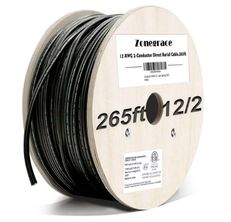
Wires aren’t designed for show, and this set of wires is perfect for burying the outdoor underground. Zonegrace’s Low Voltage Burial Wire is made out of industrial-grade material that makes it resistant to all sorts of weather conditions. The long-lasting nature of the copper wires inside ensures that your devices will be powered reliably for months, and possibly years, to come. In fact, thanks to how reliable they are, you won’t need to dig up and do repairs on these wires. A lifetime guarantee policy also means you can return the product in the event you are not satisfied with it.
Pros
- Long-lasting copper wires
- Weather-resistant, industrial-grade build
- Lifetime satisfaction guarantee policy
Cons
- Only one wire gauge option is available
Easiest to Use
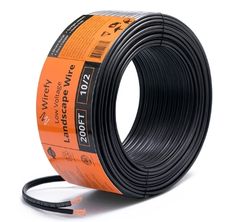
One of the most commonly used devices that requires barely any power to function is the humble light bulb. Light bulbs, or most electric lights for that matter, don’t require a whole lot of voltage to actually function. That’s why this set of wires by Wirefy is easy to set up for beginners and great for installing lights outside. You can use this wire on all sorts of lights with the right tools, and with a lifetime warranty, you’re guaranteed to have working wires or your money back. Because of their ease of use, they’re the best overall choice for beginners who want to try setting up wires on their own.
Pros
- Easy to set up for beginners
- Works with various types of lights
- Perfect for outdoor use
Cons
- Designed primarily for lights only
Honorable Mention
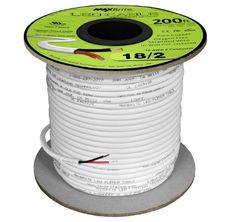
LED lights are commonplace these days, replacing LCDs as a more affordable and more economic option. Plenty of people love lining their rooms and homes with LED lights, and this LED cable from MaxBrite is perfect for that sort of job. It’s made for indoor use only, which means that you can’t use it outside due to weather conditions, but other than that it’s perfectly usable. You can string lights all over the place with ease thanks to its white PVC jacket that blends well with most walls. So unless white looks bad in your room, this wire won’t appear out of place at all.
Pros
- The color blends well with most rooms
- Oxygen-free copper conductors
- Multiple length options
Cons
- Only for indoor use
Also Consider
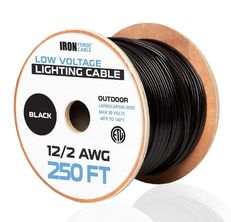
Landscaping requires a lot of work, and you’ll eventually consider adding lights somewhere along the way. The problem is that not all low voltage wires are meant for landscaping, but Iron Forge Cable’s products are perfect for the job. Made to withstand all weather conditions, you can remain confident in the wire’s durability come rain or shine. It’s made with a water-resistant material that’ll keep the wire safe any time of the year. And, if the product is not up to your standards, you can always get a replacement with the company’s lifetime replacement warranty.
Pros
- Weather and water-resistant
- Available in different lengths and gauges
- Lifetime replacement guarantee
Cons
- Quite expensive
Buying Guide: Low Voltage Wires
What Is a Low Voltage Wire?
A low voltage wire is a wire that doesn’t use the same voltage as a regular wire found at home, also known as a line voltage wire. You see, not all electronic appliances use the same amount of voltage. Some devices are perfectly fine with the voltage in your home, whereas others may require less of it. The latter type of device would have to use low-voltage wires to properly run.
The Advantages of Low Voltage Wires
They allow certain types of devices to work
There are quite a few devices designed to work only at low voltage. This can vary from device to device, but generally, electronics that can run on low voltage do run on low voltage. Of course, there are options for those that do not have low voltage wires, but if you want to use a device that only runs on low voltage, you’ve got no choice but to get some.
They’re cheaper to operate in the long run
One interesting thing to note is that low voltage wiring is actually cheaper to use in the long run. Due to the low voltage, you can save quite a lot of money, and this can be used to buy other things or save up for stuff you’ve been looking to add to your home.
The Limitations of Low Voltage Wires
They cannot power regular appliances
Appliances that run on regular line voltage will likely not run on low voltage wire. This is because the low voltage is too unstable and doesn’t offer enough power for the device to work. It’s especially dangerous when using old devices — the motors and components can overheat when subject to the low voltage, which can damage the appliance and cause it to overheat.
Fortunately, that scenario won’t happen with new appliances. Virtually every modern appliance uses an electric motor with components that detect whether or not the voltage is too low. In the event that the voltage is too low, the device will simply cease its functions. It’s a lot safer than before, but you’re still left with a powerless device until you plug it into a regular line voltage outlet.
They are generally more expensive
Despite being cheaper to use, low-voltage wires cost more upfront. This is also true with low-voltage appliances and devices — they generally cost a little more than those that do not run on low voltage. This means that, while you will save a bit in the long run, you will have to spend a little extra to get things going.
Types of Low Voltage Wire
Indoor low voltage wire
An indoor low voltage wire isn’t meant to withstand the harsh environmental conditions of the outside world. That said, it does offer great insulation and looks nice even when exposed. You’ll notice that many indoor low voltage wires look a little more presentable than their outdoor counterparts. They’re slightly more premium in terms of looks and some come in a white color that blends well with most walls.
Indoor low voltage wires are easy to set up and can look great when properly wired and installed. As long as you know what you’re doing, indoor low voltage wires can help set up your devices nicely without taking away from the beauty of your home.
Outdoor low voltage wire
Outdoor low voltage wires are a lot tougher than indoor wires. They’re usually buried underground for lighting and other purposes, which exposes the wires to a lot of water and moisture. Fortunately, outdoor wires are water-resistant and weather-resistant, ensuring that nothing short-circuits or gets damaged just because of a rainy day.
People Also Asked
What are low voltage wires used for?
Low voltage wires are used to power certain lights, doorbells, garage door openers, and other simple electronics.
Do light bulbs need low voltage wires?
Not all of them do. Many light bulbs run on line voltage, which is the voltage that comes from your power outlet. Some bulbs, on the other hand, require low voltage only, such as landscape lights.
Are low voltage wires necessary?
While not exactly necessary per se, they are safer and more affordable to own than regular line voltage wires.