


Looking for the best window box planters in 2024 to brighten up your living or office space? Well then, you’ve arrived at the right place. Flowers have a way of infusing beauty and color into our homes, and window box planters take up very little space on your deck, porch, or window. We've compared the best window box planters on the market based on material, design, and durability. The Classic Home and Garden Wood Window Box is our top pick on the list, but we've also gathered alternatives for those who want options!
Our Top Picks For Window Box Planters
The Best Window Box Planters
Best Overall
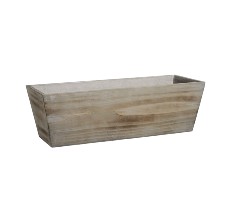
Made with wood construction and a plastic liner, the Classic Home Window Box Planter is a sturdy yet lightweight choice. Around 16” wide, 5” tall, and 6″ wide, the planter weighs 14.9 lbs with a whitewash color. Meant to be mounted on the countertop, this planter has a classic design and a great finish. It’s also suitable for outdoor and indoor and can be used to plant not just flowers but herbs and other succulent plants. Because of its overall properties, this window box planter gets our vote as the best box planter of 2024.
Pros
- Can be painted or stained in any color of your choosing
- Insulates plants from cold weather
- Material and construction allow plants to breathe
Cons
- Quite heavy, especially when wet
Key Features
Runner Up
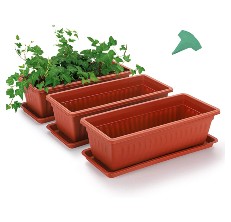
The Growneer Store Window Box Planter comes in a three-pack of terra cotta-colored planters with 15 plant labels. It’s suitable for window sills, patio, and indoor home décor as well. The planter is made of plastic and is rectangular shaped at 16.8″ long, 15.7″ wide, and 4.9″ tall. It even has a raised pot, can be easily stacked, is environmentally friendly, and extremely lightweight. The bottom has four opened drainage holes and six reserved drainage holes for you to puncture if you feel the need to, promoting airflow and water drainage.
Pros
- Great value for the money
- Comes with three packs and 15 plant labels
- Lightweight
Cons
- It may not be durable
Key Features
Most Eco-Friendly
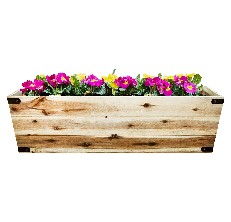
The Thirteen Chefs Box Planter is made from 100% certified natural and untreated acacia wood. This window box planter can be used indoor, outdoor, deck, patio, and basically anywhere you’d like to put it. It does not require any assemblage and has drainage holes to promote the growth of your plant and reduce excess water from the soil.
It’s durable and weather-resistant. At 31″ long, 10″ wide, and 9″ tall, it is capable of holding large and tiny plants. This wooden rectangular planter is constructed in a manner that would complement the design of any home. Aside from planting flowers, it can also be used to plant herbs and vegetables, it should be placed on the window sill, patio, or deck.
Pros
- Aesthetic wooden material
- Eco-friendly and organic
- Large size can hold many plants
Cons
- Can be quite heavy if at full capacity
Most Unique
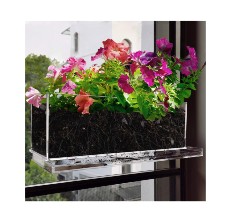
The NIUXX Window Box Planter is transparent and is made with acrylic and plastic material. It comes with an equally transparent saucer and can be mounted on the windows. This planter is 3.9″ long, 12″ wide, and 4.3″ tall. It’s shaped like a rectangle, has no chemical odor, and is eco-friendly. Designed for both indoor and outdoor use, this planter is quite durable. It comes with some drainage holes at the bottom to remove excess water and has sticky suction stickers that allow the planter to be stuck to the window or other smooth surfaces.
Pros
- Eco-friendly
- Beautiful design
- Comes with suction stickers and a drainage saucer
Cons
- It is only suitable for medium and small plants
Key Features
Most Durable
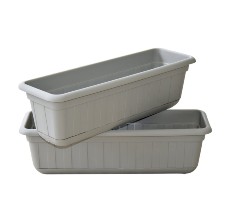
The Matri Window Box Planter is made with polypropylene plastic and weighs 1.4 lbs. It’s 5.12″ long, 17.71″ wide, and 5.5″ tall. This product is a set of two and comes with two saucers. It also has drainage holes in the bottom and can be used both indoor and outdoor. They’re UV resistant and are mostly suited for small and medium plants, flowers, or herbs.
Pros
- Anti-fade
- Set of two
- Lightweight and can be easily moved around
Cons
- It may break during a fall
Key Features
Best Design
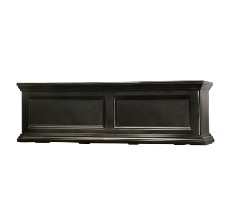
The Mayne Window Box Planter is made from 100% high-grade polyethylene plastic, making it quite durable. It can be used both indoor and outdoor. This planter has a powder-coated black color and is 15.5 lbs, 36″ long, 11″ wide, and 10.8″ tall. It also has a double-wall design that creates a water reservoir that can hold up to approximately 3 gallons (11 liters) of water. It even comes with 3 wall mount brackets and is UV-resistant.
Pros
- Comes with three wall mount brackets
- Has an inbuilt water reservoir
- Suitable for all kinds of plants, flowers, and herbs
Cons
- It is quite heavy
Key Features
A Buying Guide for the Best Window Box Planters of 2024
Whether you’re an expert gardener with a bunch of healthy, thriving plants under your belt or you’re a newbie looking to test out your green thumb, window boxes are a perfect and easy way to add an instant curb appeal. Aside from the fact that they take up little space, they also add color and beauty to your home. A beautiful array of flowers sitting pretty in a window box is a sight for sore eyes and is a great way to improve the appeal of your home exterior.
Despite what it is called, window box planters aren’t limited to just decorating windows. They can be used anywhere around your home, mounted on fences, lining the rail of decks, at the front entry, or even spicing up your patio. And some people use them indoors as well. The wide variety of choices can be a little intimidating as window boxes come in different sizes, styles, and materials. We’ve prepared this buying guide to help make your choice easier.
What Do I Need To Know Before Buying a Window Box Planter?
Size
The size of your window box planter depends on the size of your window. A window box that’s too big or too small will give an unbalanced and uneven look. As a general rule of thumb, the length of a window box planter should be long enough to cover the entire length of your window.
Typically, a window box planter’s depth and height have the same measurement. The minimum standard height required to support healthy plant growth is eight inches. You can use that as a yardstick for choosing your window box. Anything less than that would not be ideal for your plant needs.
Style
Every architectural or landscaping style has a window box planter to match it. Window planters for traditional houses usually have architectural designs and may come with or without frills or embellishments. Window planters for modern homes are usually made of metal or fiberglass and are shaped with straight lines. Farm-style houses are usually complemented by embellished iron window boxes. Some styles of window box planters could also come in beautifully designed wooden, terracotta, or plastic. The best window box planter for you is the one you like best, so factor in your preference before anything else.
Self-watering
The best planters for windows have a self-watering feature requiring little or no supervision. They usually have a small pop-up indicator that lets you know when the reservoir is empty. Most self-watering window box planters have a reservoir at the bottom for water. This reservoir can be easily refilled by pouring water into the access tube located in the corner of the window box.
Liner
Window box liners are trays used to line the bottom of window boxes before placing soil and planting. These essential elements extend the durability of the window box by ensuring that the box has no direct contact with the water and other organic materials used by the plants.
The general rule of thumb for most liners is that there should be holes underneath to help drain excess water. Liners are usually made of two materials. Plastic liners prevent flooding and ensure that your plant remains dry irrespective of the number of times watered. Coconut fiber liners are designed to hold and slowly release water to allow the plants to take root. The plastic and coconut liners make transferring plants from one container to another easier.
Mounting
Some window box planters are usually mounted directly on the wall, but brackets offer an additional advantage. Mounting brackets before window boxes makes it easier to lift when it is time to change the flowers inside.
There are four main methods for mounting your planters. They include; direct mount, cleat mount, wall brackets, and railing brackets. Heavy window boxes require L-brackets for sturdy support. These brackets are bolted into the wall and have enough strength to support the window box planter.
The mounting brackets are usually made of metal or wood and have styles ranging from basic to more elaborate designs. Window box planters that are longer than three feet should have three to four brackets for extra support.
What Are the Different Types of Materials?
Wood
The wooden window box planters range from rusty pine to elaborate teak. The most popular wood used for window boxes is cedar and redwood. Wooden planters would suit any architectural style because of their classic look. Most wooden boxes are heavy hence, they should be mounted on brackets.
Terracotta
Terracotta window box planters are clay planters that are usually orange in color. They can be repainted, however. These window boxes suit any landscape or architectural theme and complement any type of plant. They are quite heavy and even heavier when wet hence, an amount with sturdy brackets is needed.
Plastic
The plastic window box planters come in a wide variety of colors, sizes, and styles. They can also be designed to look like other materials. Plastic window planters are inexpensive, lightweight, and can generally be nailed directly into your home’s exterior.
Metal
Metal window box planters are usually made with different types of metal such as; copper galvanized steel, wrought iron, and aluminum. They are also designed in different styles as well. Metal window planters are durable, add considerable style to your home, and can be painted in any color of your choosing.
Fiberglass
Window box planters that are made of fiberglass are extremely durable in all weather conditions. They will not crack or rot under any type of weather conditions such as; high heat, rain, and snow. These planters are patterned to resemble other materials and are lightweight.
How Much Does a Window Box Planter Cost?
The prices of window box planters depend on some important factors such as size, material, and features. On average, a window box may cost as low as $13 and as high as $50 or even more.
Setting Up Your Window Box Planter
Now that you know all about how to choose a window box planter, it’s time to learn how to set up plants to add to your curb appeal. This video from The Lawrence Garden Farm will help you set up your window garden box with healthy, lively, beautiful flowers and plants.
People Also Asked
What are the best flowers for window boxes?
The best flowers for a window box are the ones you like best and are best suited to the weather conditions of your vicinity. Flowers such as; tulips, nasturtiums, petunias, ivy geraniums, begonias, etc., are some varieties of flowers that grow well in window boxes.
Can I grow vegetables in my window box?
Absolutely! Although most people grow flowers in their window boxes, vegetables and herbs can also be planted.
Are mounting brackets compulsory?
No, it isn't. However, it is advisable to use one instead of directly attaching your window box to the wall. Reasons have been provided above in this buying guide.