



Blue hostas add unique color to shade gardens
In the garden, the color blue can create a mood of calm serenity, cooling a vibrant scene and providing a spot to rest the eye. Combining it with bright colors brings depth and contrast. Some plants have near-blue flowers to fulfill these garden duties, but many hostas have near-blue foliage, which makes them indispensable in a shade garden.
Enter for a Chance to Win 3 Blue Hostas from NH Hostas this Summer!
What makes hostas blue?
Blue hostas are glaucous, meaning the leaves have a white, waxy or powdery coating (often called a “bloom”) that reflects light. Dark green foliage will appear more intensely blue than a lighter shade under this bloom. And new growth has a thicker glaucous layer than mature leaves, resulting in a bluer color.
Hostas are some of the easiest and most rewarding plants in the shade garden. They thrive in part to full shade with average soil that is kept moist but not wet. Morning sun promotes the best color because hot afternoon sun can degrade the glaucous layer and fade the blue.
Divide blue hostas to get more plants
Since hostas rarely come true from seed, your blue hosta’s seedlings won’t necessarily be blue. To ensure that you keep the color going, divide when clumps become overcrowded. And don’t be fooled by those internet posts advertising royal blue–colored hostas from seed that practically glow — it’s a scam. No blue hosta is ever that blue.
Now let's take a look at 11 hostas with naturally blue foliage — there’s more variety than you might think!
You Might Also Like:
Top Picks: More of Our Favorite Hosta Varieties
Shade-Garden Collection
Subscribe to Garden Gate for Top Picks Every Issue!
Best blue hostas to grow in your garden
Look for varieties marked with the American Hosta Society: Hosta of the Year Award
This designation is awarded to time-tested varieties that have shown excellent garden performance. Visit the American Hosta Society at americanhostasociety.org for the complete list.
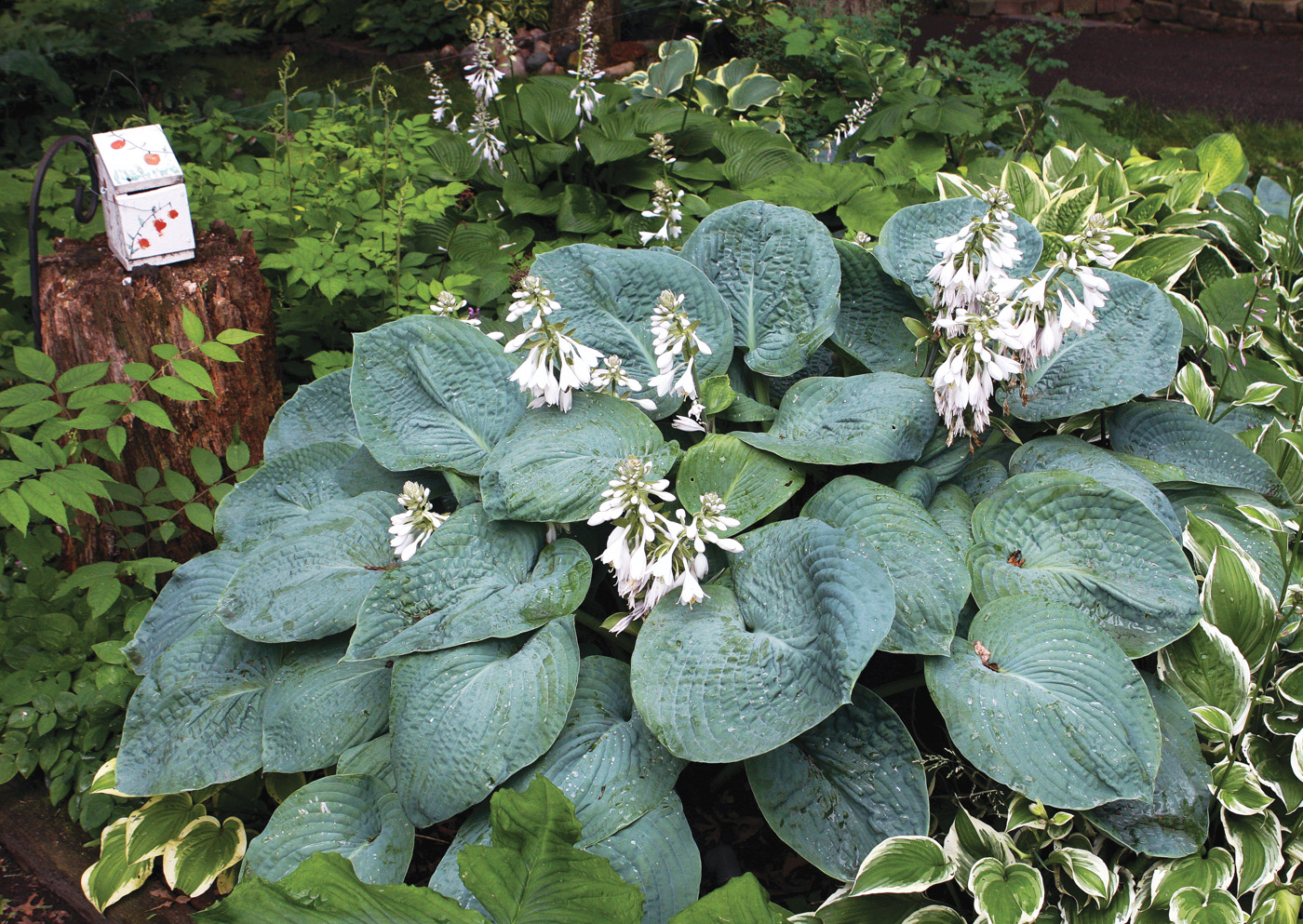
‘Elegans’ Hosta sieboldiana
Introduced in 1905, ‘Elegans’ is a time-honored garden favorite and the parent of hundreds of cultivars of blue-foliaged hostas over the years. The large, rounded leaves emerge blue-gray in spring and turn smoky as the glaucous coating fades in summer, remaining dark green by frost. As plants age, the leaves become more corrugated, growing in thick clumps. Slow-spreading ‘Elegans’ can eventually fill a space 4 feet or larger. White midsummer flowers have a slight lavender tinge and sit just above the mound of foliage.
Since ‘Elegans’ grows up to 3 feet tall, put it in a shady border with old-fashioned bleeding heart or tulips, where it can fill in space vacated by these plants as their foliage fades in the heat of summer. It works perfectly as a low-maintenance mass planting in a tucked-away spot. Avoid companion plants with small or delicate foliage that might be overwhelmed by this hosta’s enormous leaves. Pair it with a broad-leaved brunnera to cover any bare legs.
Type: Perennial
Features: Large, rounded, corrugated blue-gray leaves, white blooms with lavender tinge in midsummer
Size: 24 to 36 in. tall (40 in. in bloom), 36 to 48 in. wide
Hardiness: Cold hardy in USDA zones 4 to 9
Plant companions for shade:
- Brunnera (Brunnera macrophylla)
- Old-fashioned bleeding heart (Lamprocapnos spectablilis)
- Tulip (Tulipa spp. and hybrids)
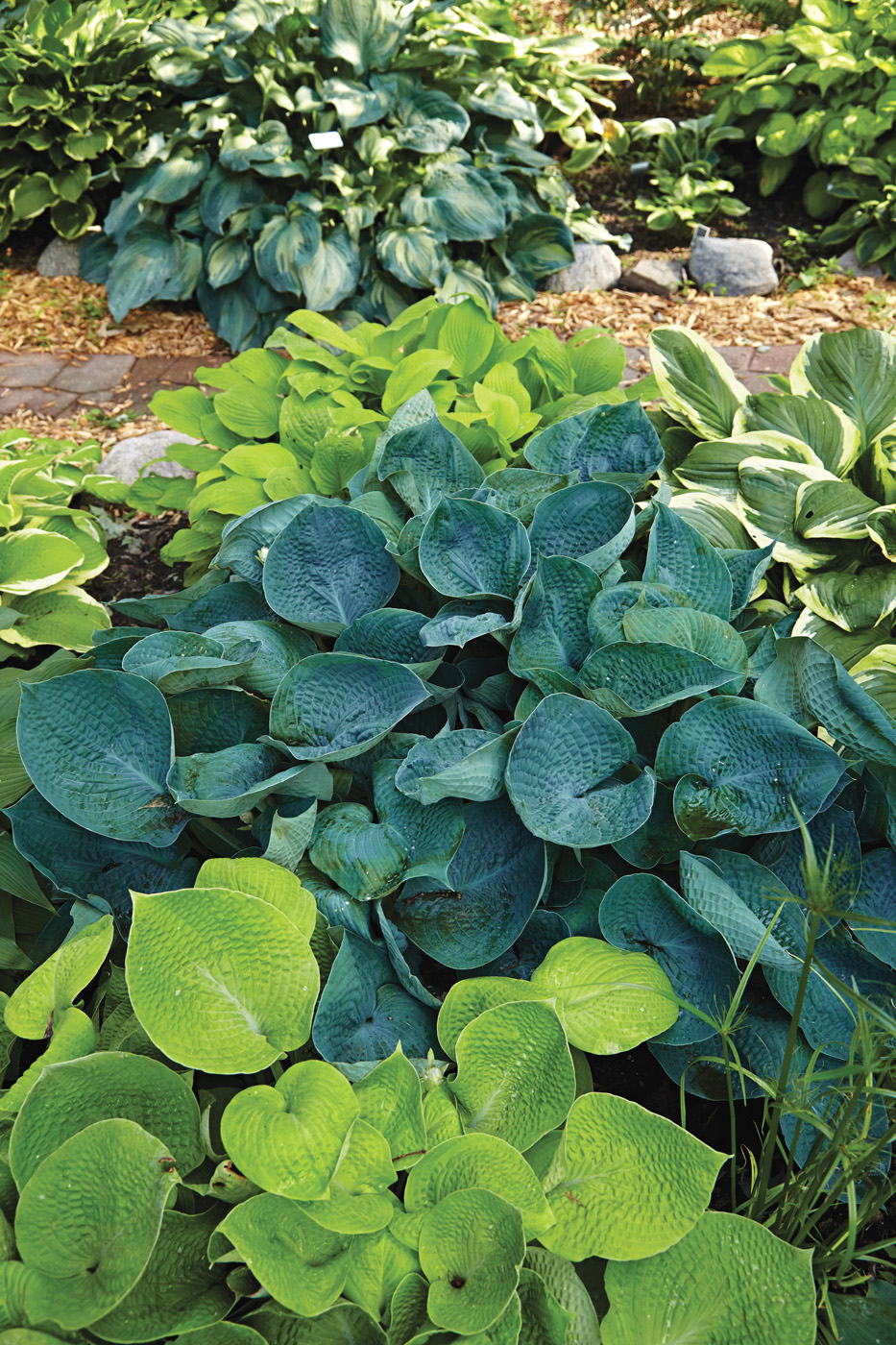
‘Abiqua Drinking Gourd’ hosta
2014 Hosta of the Year
With deep blue-green leaves nearly a foot across and cupped up to 3 inches deep, ‘Abiqua Drinking Gourd’ lives up to its name by collecting water from rain or overnight dew. Indeed, I once had an elderly cat who would make his morning rounds through the hosta plants, licking water off the leaf tips and stopping for a refreshing sip from this plant’s foliar pools in particular. Not only are the leaves significantly cupped, they are also thick and heavily seersuckered, giving this plant added slug resistance. White flowers held just above the foliage draw hummingbirds in early summer.
Grow this variety as a specimen plant
‘Abiqua Drinking Gourd’ needs a prominent place in the garden — grow it as a specimen plant to highlight its unique texture alone near an entryway or in a large container. Or surround it with shade-loving ground covers, such as hakonechloa, whose spiky chartreuse foliage is a striking contrast to the blue-green hosta. ‘Rozanne’ perennial geranium makes another fine companion: It has violet-blue flowers and mounding foliage that turns red in the fall.
Type: Perennial
Features: Large dark blue-green cupped leaves with heavy seersuckering and white flowers in early summer
Size: 18 to 24 in. tall (22 in. in bloom), 36 to 48 in. wide
Hardiness: Cold hardy in USDA zones 3 to 8
Shade companion plants:
- Hakonechloa (Hakonechloa macra)
- Perennial geranium (Geranium hybrid)
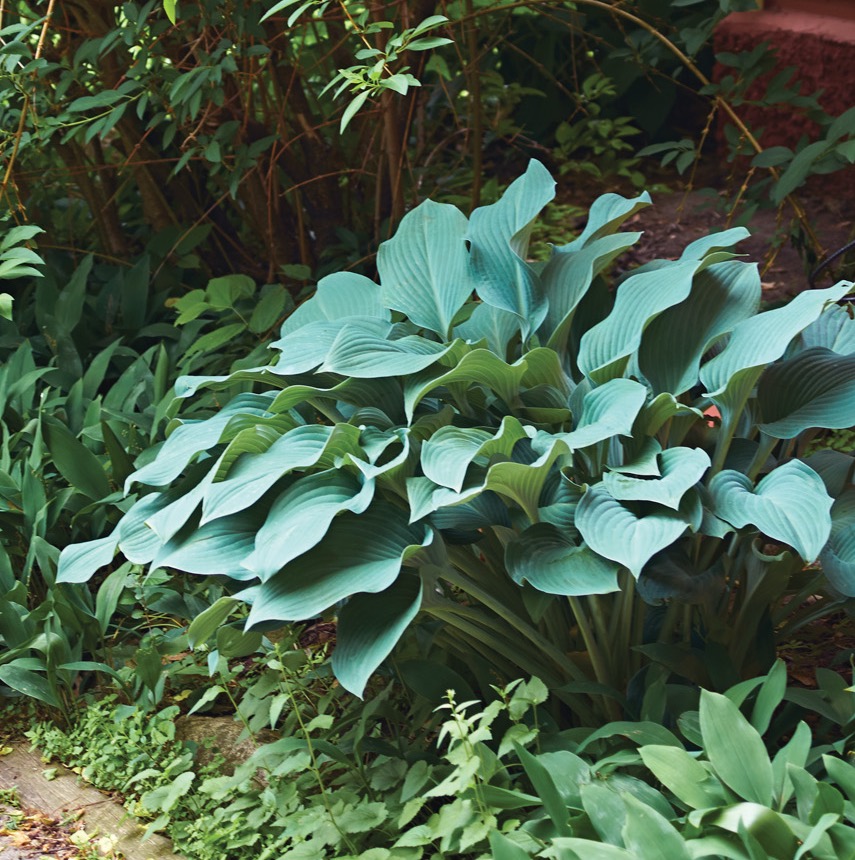
‘Krossa Regal’ hosta
‘Krossa Regal’ is outstanding when it blooms — its lavender flower scapes literally stand several feet above the 3-foot-tall foliage. Once those flowers are spent, cut them back so you can appreciate its unusual vase-shaped habit. Leaves are a frosty blue-green, aging to dark green as the summer heats up and often turning yellow to orange in fall. They are slightly wavy and show off deep veins.
With its unique shape, ‘Krossa Regal’ makes a perfect specimen — plant a single clump in a container alone or in the center of a shady island bed with a colorful Japanese painted fern at its base to highlight this large hosta. Site it in the back of the border with smaller variegated hostas to add color and promote the differences in habit and texture. Goat’s beard’s smaller, finer-textured foliage makes it a nice companion.
Type: Perennial
Features: Wavy blue-green leaves with a vaselike habit, lavender flowers on tall scapes in mid- to late summer
Size: 30 to 36 in. tall (60 to 72 in. in bloom), 36 to 72 in. wide
Hardiness: Cold hardy in USDA zones 3 to 8
Pairs well with:
- Goat’s beard (Aruncus dioicus)
- Japanese painted fern (Athyrium niponicum var. pictum)
You Might Also Like:
Different Types of Garden Ferns
How to Deal With Common Hosta Problems
Colorful Shade Garden Perennials
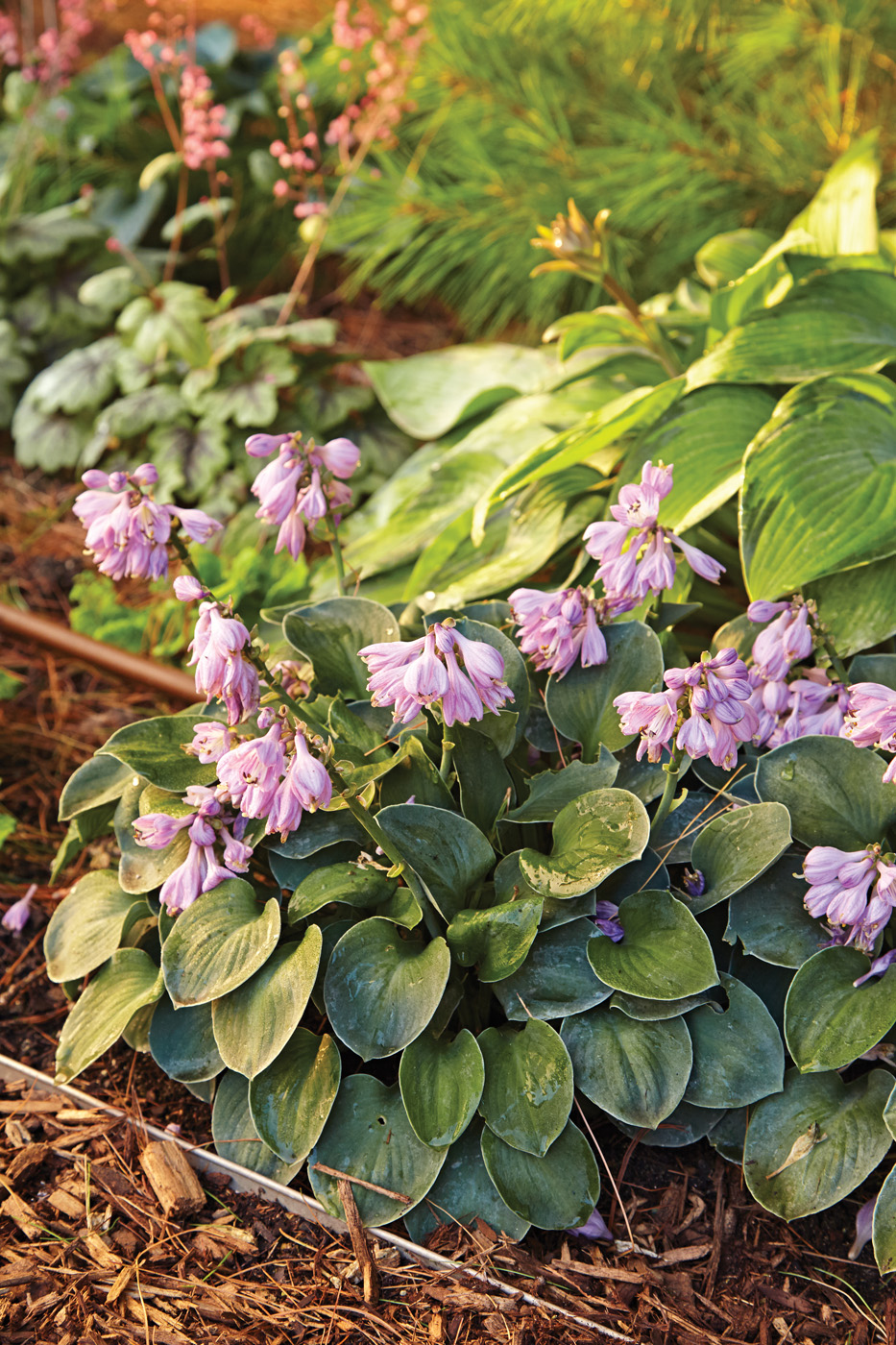
‘Blue Mouse Ears’ hosta
2008 Hosta of the Year
Like a baby bunny, ‘Blue Mouse Ears’ is sweet and adorable. But unlike the bunny, you’ll want this hosta in your garden. Growing just 6 to 8 inches tall in compact, mounded clumps of perfectly rounded leaves, it catches your eye by its shape as well as the frosty gray-green to blue-green color. The almost rubbery foliage is usually not appealing to slugs. In mid- to late summer, flower scapes rise just above the foliage and form balloon-like buds along the stem that pop open into tiny, dangling lavender bells that bees and hummingbirds love.
Use this miniature hosta in the front of the border or containers
With its petite stature, ‘Blue Mouse Ears’ can get lost in the garden, so plant with that in mind. Set it at the front of the border in a small mass planting near low-growing companions, such as corydalis or lilyturf. It tolerates dry shade, so try it in a woodland bed with epimedium. Tuck it into a sparsely planted shady rock garden, where its whorls of leaves will look lush and soft compared to a stone background. ‘Blue Mouse Ears’ is terrific in containers, either in combination with shade-loving annuals or alone as a table centerpiece. Pop a potful in the garden to fill a space where spring bulbs have gone dormant.
Type: Perennial
Features: Rounded blue leaves in petite mounds with lavender bell-shaped flowers in mid- to late summer
Size: 6 to 8 in. tall (12 in. in bloom), 10 to 12 in. wide
Hardiness: Cold hardy in USDA zones 3 to 8
Grows well with:
- Corydalis (Corydalis lutea)
- Epimedium (Epimedium spp. and hybrids)
- Lilyturf (Liriope muscari)
‘Blue Perfection’ hosta
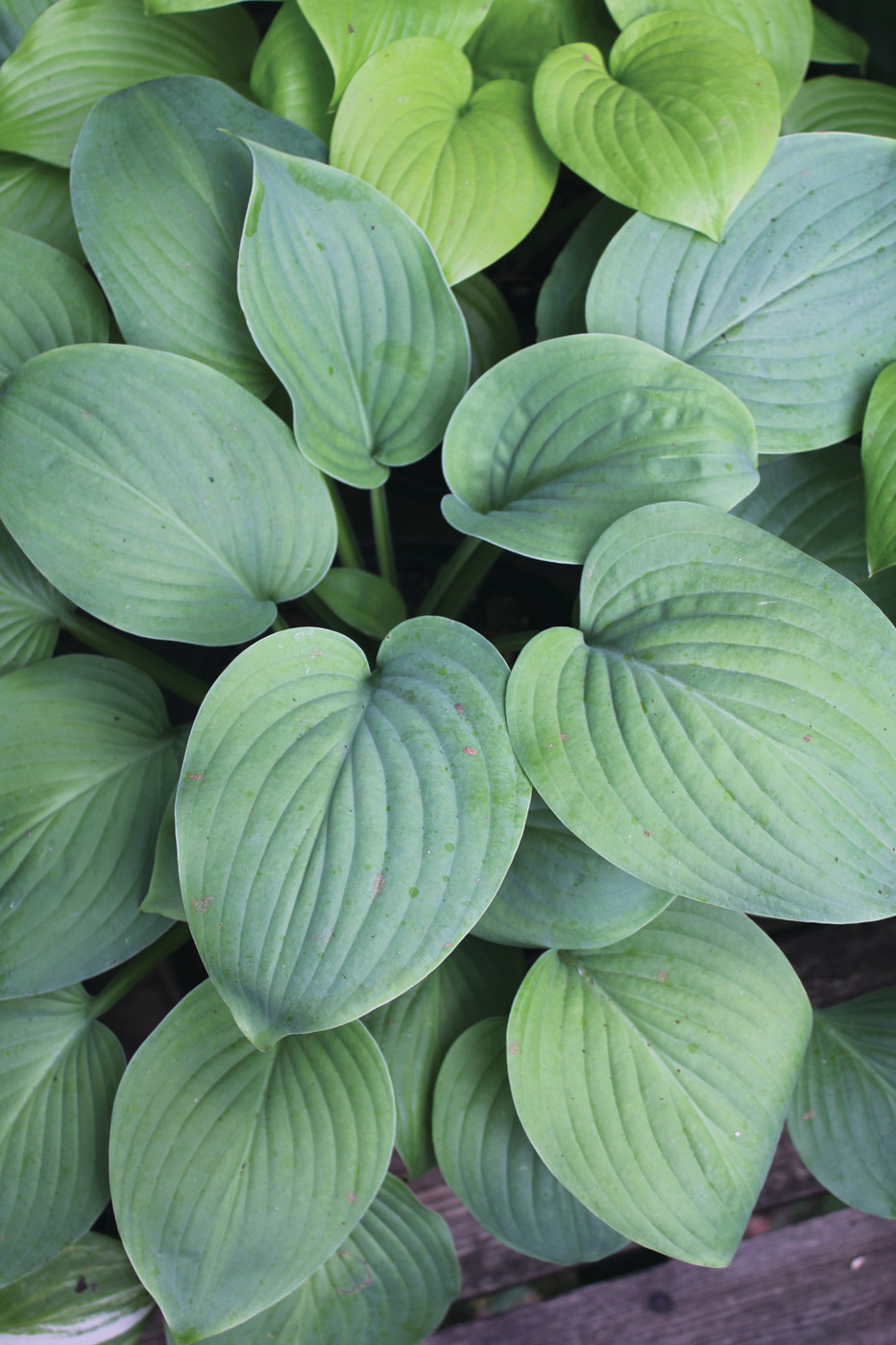
While most hostas have minimal scent, ‘Blue Perfection’ has H. plantaginea (often referred to as fragrant hosta) in its genealogy, so its light lavender flowers will be a delight to your nose. Unlike other hostas, ‘Blue Perfection’ keeps producing new foliage through the growing season: There are always new blue leaves to keep the color showing, even in hot summers.
So you can enjoy the fragrance, plant ‘Blue Perfection’ around a patio or just below a raised deck where the scent can waft up to the seating area on a summer evening. A fast-growing hosta, it is a good choice for a mass planting, especially if you need it to fill in quickly. Plant it mid-border with lacy cinnamon ferns in back and a skirt of red or bronze heucherellas, such as ‘Redstone Falls’, for contrast in texture and color.
Type: Perennial
Features: Blue foliage ages dark green with fragrant light lavender blooms in late summer
Size: 18 to 24 in. tall (41 in. in bloom), 48 to 54 in. wide
Hardiness: Cold hardy in USDA zones 3 to 9
Grows well with:
- Cinnamon fern (Osmundastrum cinnamomeum)
- Heucherella (Heucherella hybrids)
‘Skylight’ hosta
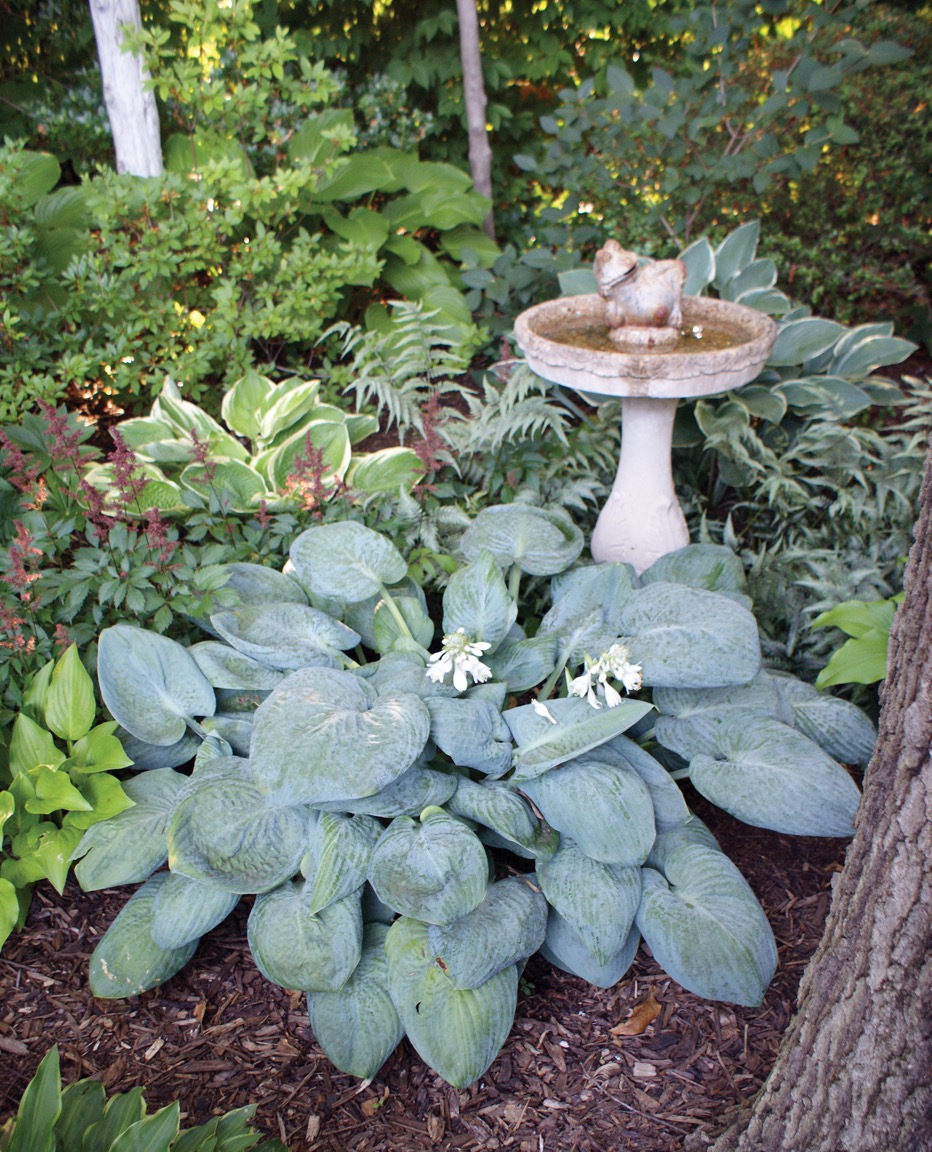
An extra waxy coating on its thick, slightly puckered leaves gives ‘Skylight’ its particularly light baby blue color. It also provides more slug resistance than other hostas. Growing 16 inches tall, it spreads up to 40 inches across, filling in a shady border with a luminescent glow.
Plant ‘Skylight’ in the shade of a similarly hued blue spruce. Contrast the light blue with bright orange flowers of annual Beacon® Orange impatiens for a striking combination. Coral bells make nice companions — try peachy-orange ‘Paprika’ for a warm, spicy combo, or cool it down with ‘Obsidian’, which has near-black foliage. Enter for a chance to win a ‘Skylight’ hosta plant from NH Hostas here!
Type: Perennial
Features: Light baby blue–colored leaves with lavender flowers in early summer
Size: 16 in. tall (24 in. in bloom), 40 in. wide
Hardiness: Cold hardy in USDA zones 3 to 8
Grows well with:
- Colorado blue spruce (Picea pungens)
- Coral bells (Heuchera hybrids)
- Impatiens (Impatiens walleriana)
‘Halcyon’ hosta
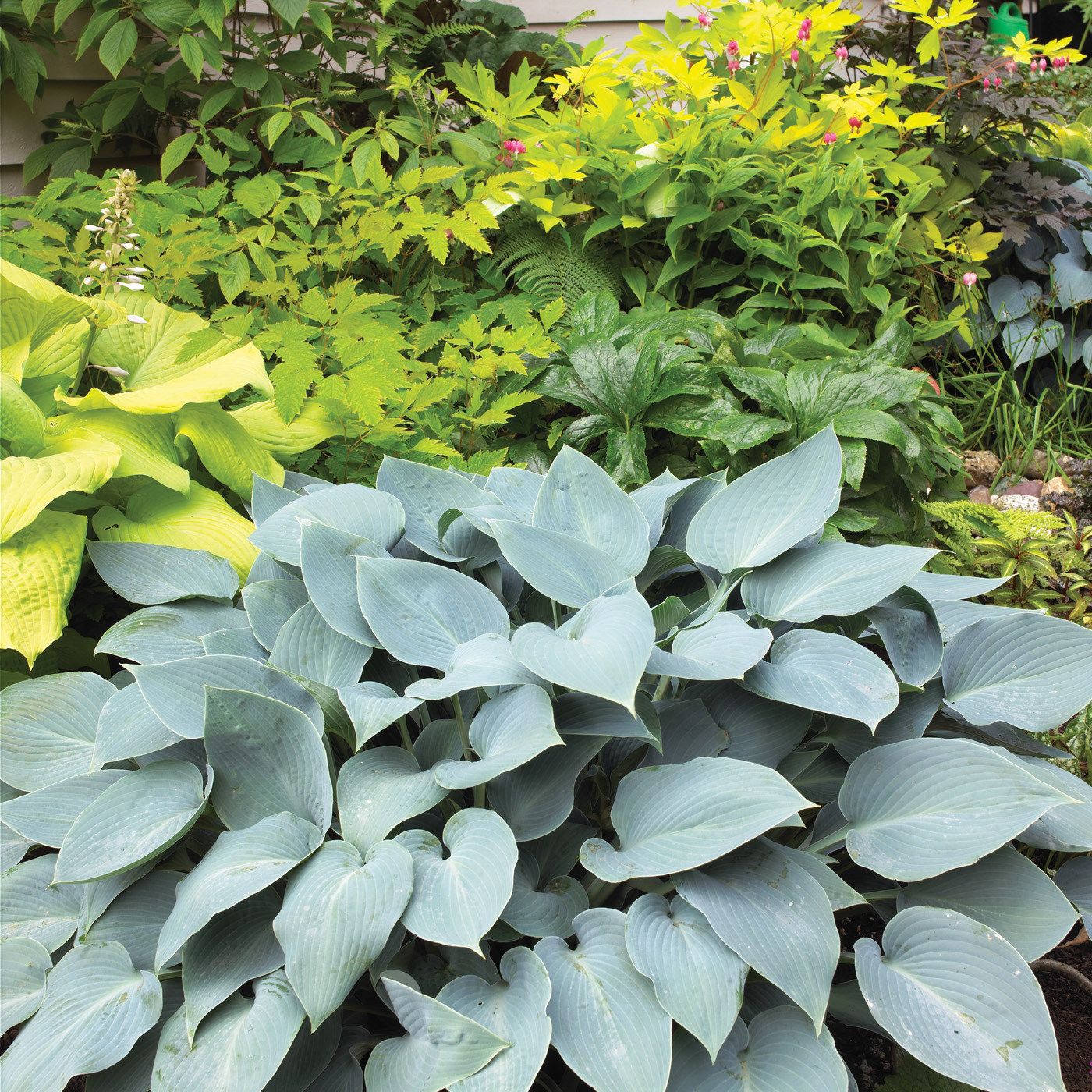
The word “halcyon” signifies calm, peaceful happiness, and a garden with ‘Halcyon’ hosta can give that feeling. Its frosty blue-green foliage is cool and serene. The spear-shaped leaves are ribbed, hold their color long into the summer and are relatively slug resistant. Hummingbirds like the lavender flowers that appear in summer as well.
Long a favorite with gardeners, ‘Halcyon’ performs admirably in mass plantings under shade trees to lighten the understory. Pair it with chartreuse ‘Sun King’ aralia or lady’s mantle to give a dark corner a wow factor.
Sports of ‘Halcyon’ have gone on to become popular cultivars. A sport is a naturally occurring genetic mutation. Through tissue culture and division, these little surprises were multiplied, all with the notable blue color but often with striking variegation. ‘First Frost’ and ‘June’ are two such introductions.
Type: Perennial
Features: Frosty blue-green, spear-shaped, ribbed leaves with lavender flowers on long scapes in summer
Size: 18 to 24 in. tall (28 in. in bloom), 24 to 36 in. wide
Hardiness: Cold hardy in USDA zones 3 to 8
Grows well with:
- Aralia (Aralia cordata)
- Lady’s mantle (Alchemilla mollis)
‘Silly String’ hosta
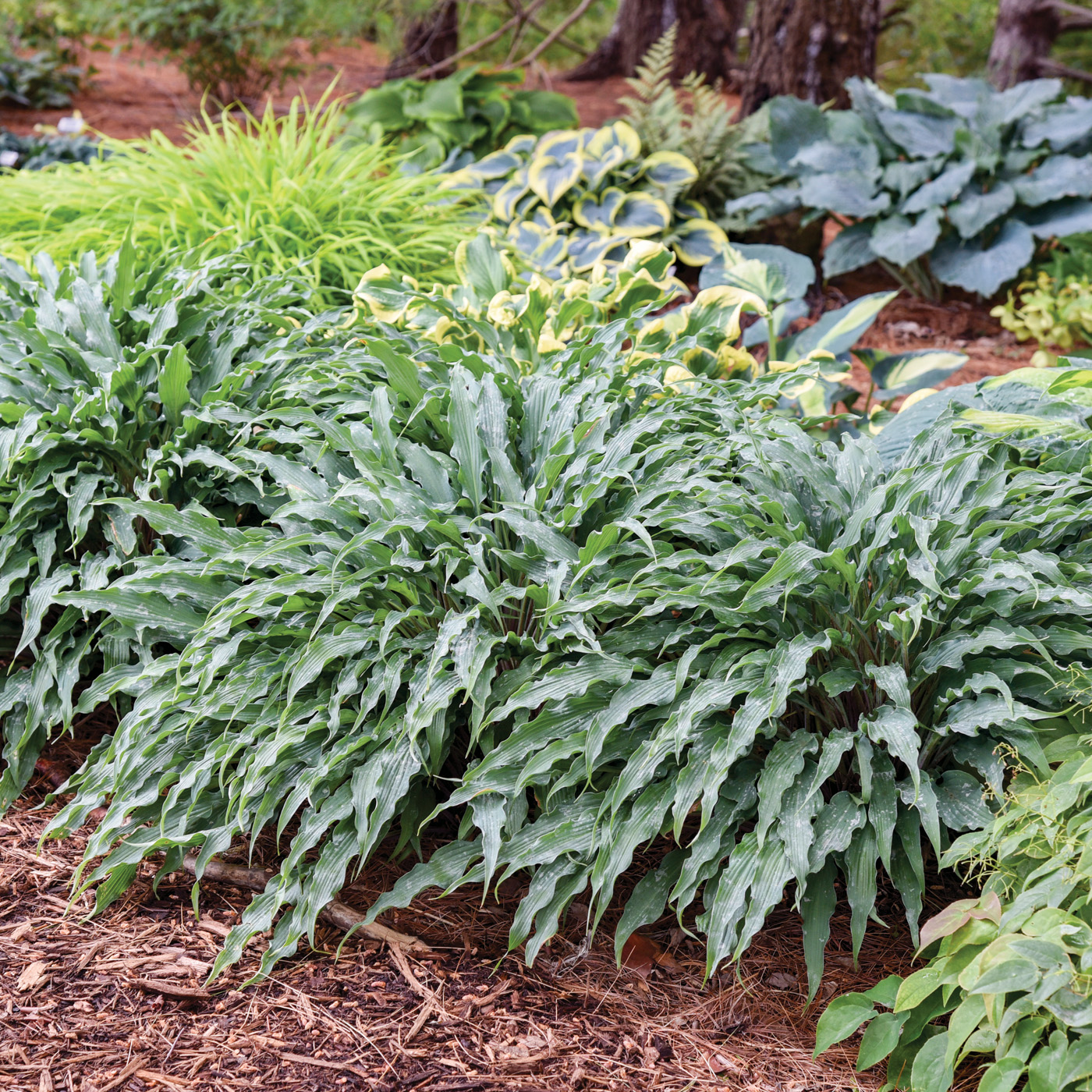
In the garden, ‘Silly String’ hosta has just the kind of dynamic foliage to start a party! Distinctive narrow, wavy leaves burst from compact clumps to give an electric vibe. Intense powder blue leaves become sedate blue-green later in the summer, topped by lavender flowers. Trim those off if you want to get the most visual appeal of the foliage texture, but leave them standing if you want visits from pollinators and hummingbirds.
With its unique foliage, this hosta makes a great container plant or specimen. Plant one in a tall, skinny container to emphasize its lines, rising from a bed of ligularia or male fern. Create an easy-care bed of all hostas that is a study in texture by pairing it with large-leaved dark green cultivars and small, mounding chartreuse varieties. Or grow a colorful bed by grouping ‘Silly String’ with variegated hostas, such as ‘Sagae’, which has enormous blue-green leaves edged in cream, or ‘Patriot’, which features dark green foliage with white margins.
Type: Perennial
Features: Long, narrow blue leaves with lavender to purple blooms in midsummer
Size: 14 in. tall (17 to 27 in. in bloom), 28 in. wide
Hardiness: Cold hardy in USDA zones 3 to 9
Grows well with:
- Ligularia (Ligularia dentata)
- Male fern (Dryopteris filix-mas)
‘First Frost’ hosta
2010 Hosta of the Year
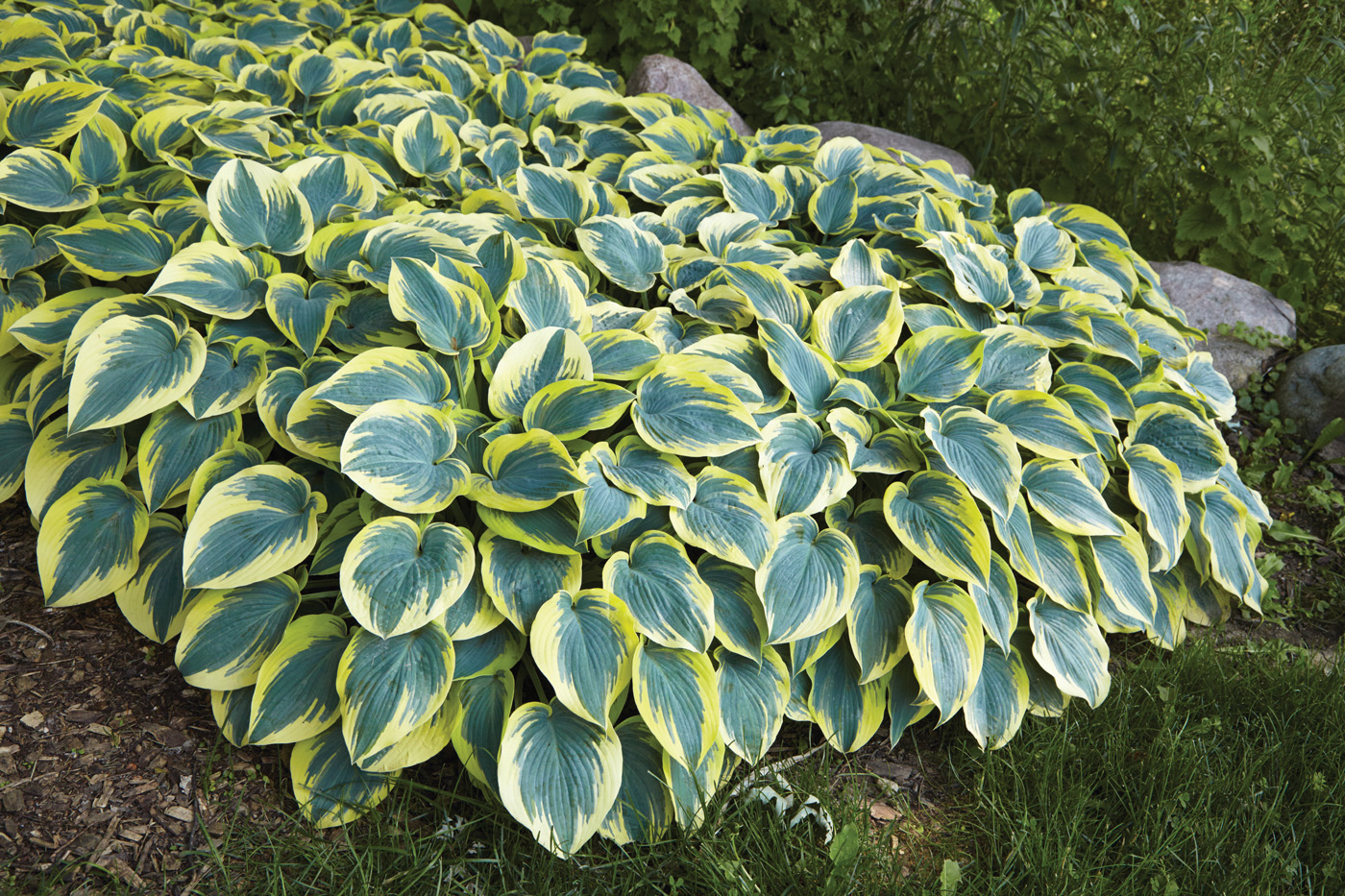
A sport of ‘Halcyon’, ‘First Frost’ glows in the shade with leaves that emerge bright yellow on the margins with deep blue centers in spring. As summer progresses, the yellow lightens to a creamy white. Tight, dense mounds make this hosta look tidy all year, with or without its lavender midsummer blooms.
Pair ‘First Frost’ in the middle of the border with its parent, ‘Halcyon’, to appreciate its color contrast. Highlight the blue center with a blue-flowered pulmonaria. A bit of morning sun keeps the foliage color brighter, where it will show off a cheerful spring display with blue-flowering brunnera or yellow ‘City of Haarlem’ hyacinths.
Type: Perennial
Features: Yellow leaf margins around blue centers with light lavender flowers in
midsummer
Size: 14 to 16 in. tall (28 in. in bloom), 36 in. wide
Hardiness: Cold hardy in USDA zones 3 to 9
Grows well with:
- Brunnera (Brunnera macrophylla)
- Hyacinth (Hyacinthus orientalis)
- Pulmonaria (Pulmonaria spp. and hybrids)
You Might Also Like:
Easy Plant Combo for Shady Spots
Perennials Flowers for Shade
Charming Shade-Container Planting Ideas
‘Skywriter’ hosta
2025 Hosta of the Year
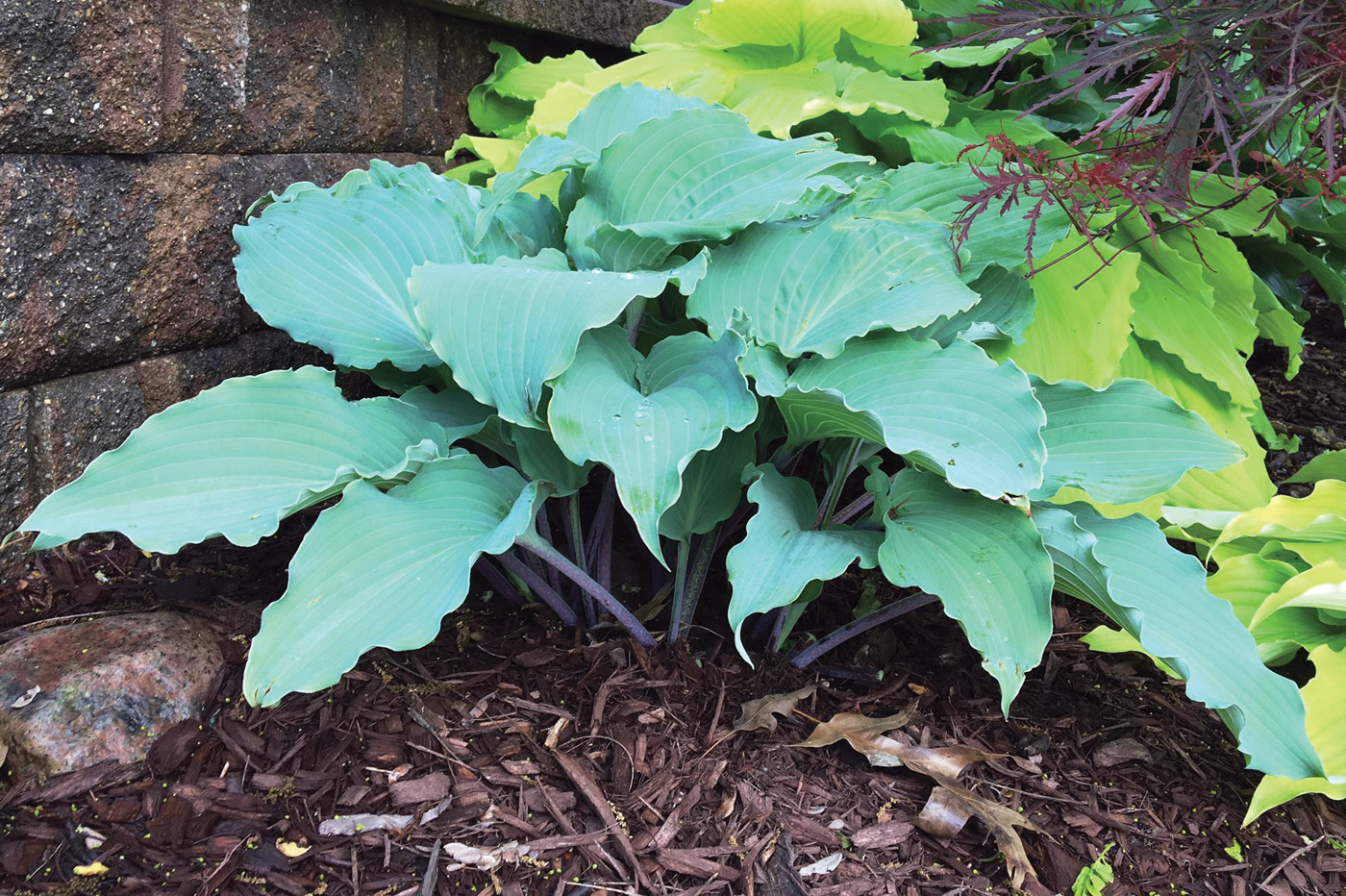
Not only is the foliage of ‘Skywriter’ an eye-catching steel blue, but the wide leaves have silvery undersides exposed by the wavy edges, with purple stems visible through the loose, upright habit. In summer, purple scapes hoist lavender flowers aloft to complete the look.
Plant ‘Skywriter’ as a focal point in a shade vignette to draw attention to its unique color. Highlight the purple stems with a carpet of Black Scallop bugleweed. In a spot with morning sun, combine ‘Skywriter’ with honeybush, blue fescue and a blue-flowering bigleaf hydrangea, such as ‘Nikko Blue’, to create a monochromatic border filled with dramatic texture.
Type: Perennial
Features: Steel blue leaves with silvery undersides and purple petioles, blooms are lavender on purple scapes in midsummer
Size: 14 to 16 in. tall (30 in. in bloom), 30 in. wide
Hardiness: Cold hardy in USDA zones 3 to 9
Grows well with:
- Bigleaf hydrangea (Hydrangea macrophylla)
- Blue fescue (Festuca glauca)
- Bugleweed (Ajuga reptans)
- Honeybush (Melianthus major)
‘June’ hosta
2001 Hosta of the Year
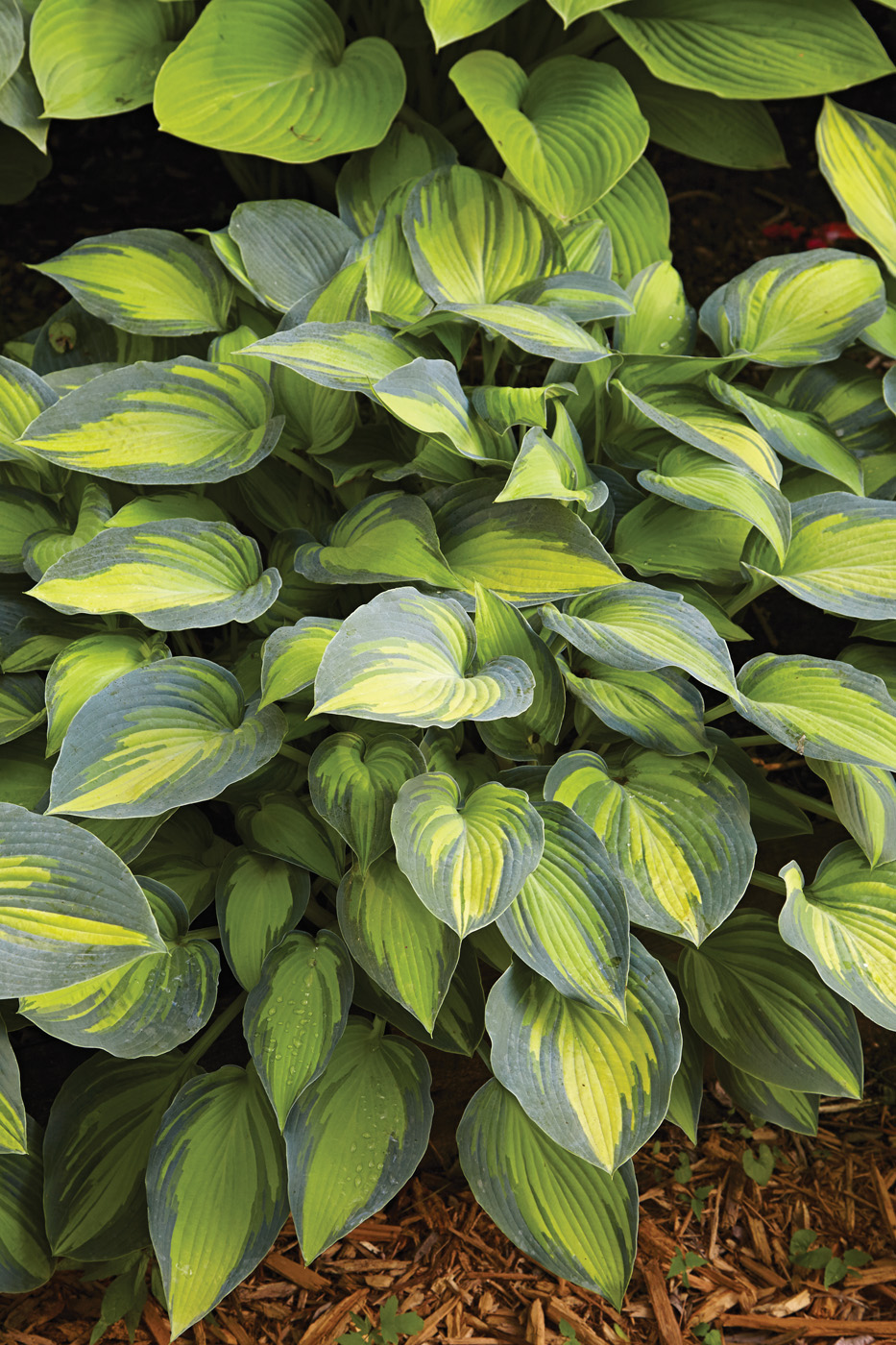
‘June’ is another popular sport of ‘Halcyon’, with unusual variegated leaves whose blue-green margins bleed into a light yellow-green before brightening to golden yellow in the center. Each leaf has colorful streaks that create excitement and invite close inspection. Light lavender flowers appear in midsummer.
As with many variegated hostas, more light will give this plant better color, but avoid planting where it will be exposed to hot midday sun. Highlight its gold leaf centers by planting with yellow-flowering golden spur columbine or a low skirt of yellow archangel.
Type: Perennial
Features: Leaves have blue-green edges that progress to yellow-green then to golden yellow in the center with pale lavender blooms in midsummer
Size: 12 to 15 in. tall (20 in. in bloom), 24 to 30 in. wide
Hardiness: Cold hardy in USDA zones 3 to 8
Grows well with:
- Golden columbine (Aquilegia chrysantha)
- Yellow archangel (Lamium galeobdolon)
Blue hosta plant sources
- Bluestone Perennials, bluestoneperennials.com, 800-852-5243
- Garden Crossings, gardencrossings.com, 616-875-6355
- NH Hostas, nhhostas.com, 603-879-0085