


Why should you grow lisianthus?
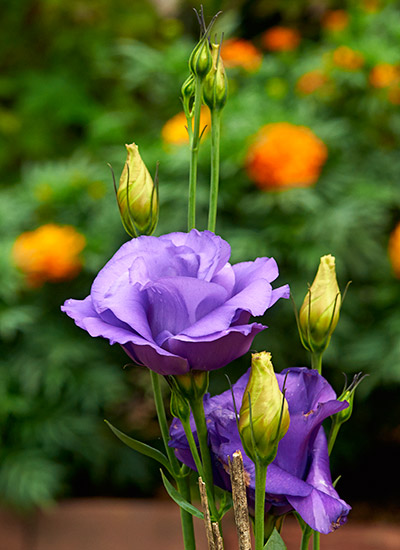
Would you be interested in a flower that looks like a rose, but is easier to grow and longer lasting in a vase? A rose by any other name might just be lisianthus.
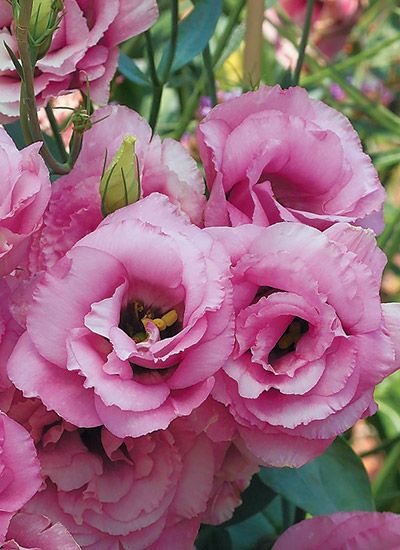
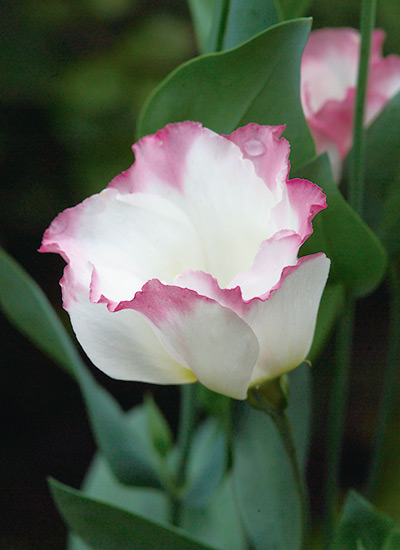
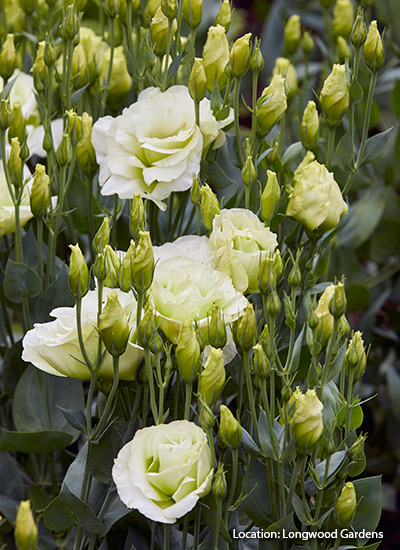
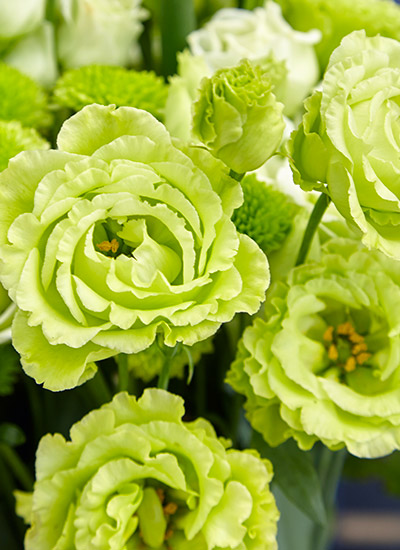
Graceful stems are loaded with blooms in a range of soft colors and bicolors in white, yellow, champagne, apricot, chartreuse, pink, blue and purple. Buds, which look like those of roses, begin to open in early to mid-summer, starting at the bottom of the stem and continuing upward. The bloom time of each lisianthus stem (and there are many stems per plant), from the first bud opening to the last, is two to four weeks. That’s a lot of flower power for such a delicate-looking plant!
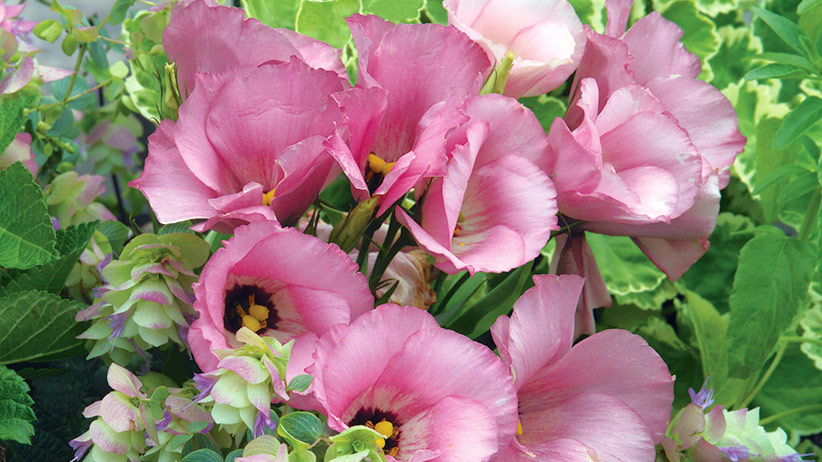
Great flowers aren’t the only thing that lisianthus has to offer. Handsome, blue-green leaves and slender stems highlight the soft-colored blooms. And the lisianthus comes in a range of sizes from the 6-inch dwarf ‘Lizzy Pink’ seen above, paired with 'Kent Beauty' ornamental oregano (Origanum hybrid), to longer-stemmed beauties that reach to 36 inches.
Designing with Lisianthus
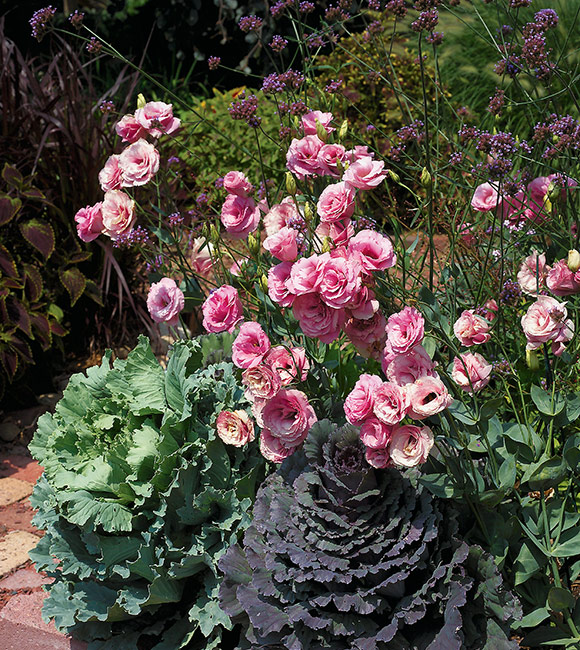
Lisianthus comes in a range of sizes that makes it easy to work into a design. Lisianthus taller than 18 inches, with their long willowy stems, may sometimes require a little support in the garden. You can see how the shorter ornamental kale (Brassica oleracea) in front of ‘Balboa Rose’ in the photo above not only echoes the shape of the flowers, but also acts as a convenient plant prop. The stiff stems of the tall purple verbena (Verbena bonariensis) behind the lisianthus add a little airy background and also lend a hand to keep the slender stems on the up and up.
Use lisianthus in garden borders
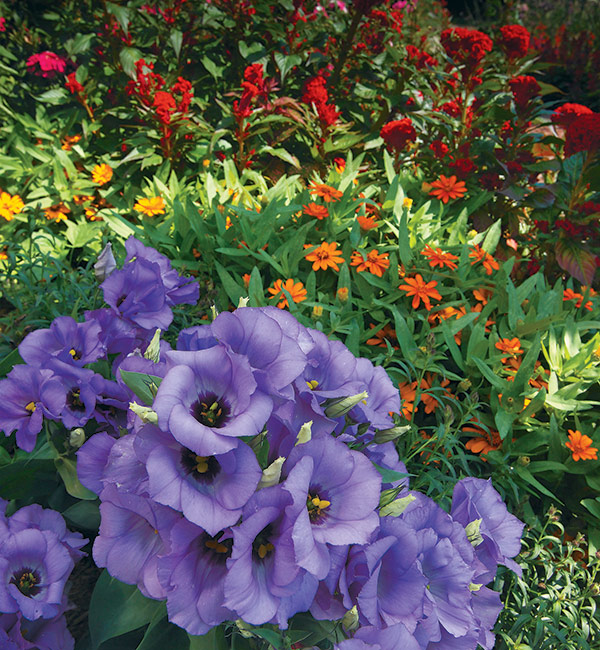
Shorter, sturdier purple ‘Ventura’ lisianthus in the photo above looks great at the front of the border, its soft blooms contrasting nicely with the daisylike zinnias (Zinnia hybrida) and coral-shaped blooms of cockscomb (Celosia argentea cristata). Group five or more plants together to give them some presence and to make a nice splash of color.
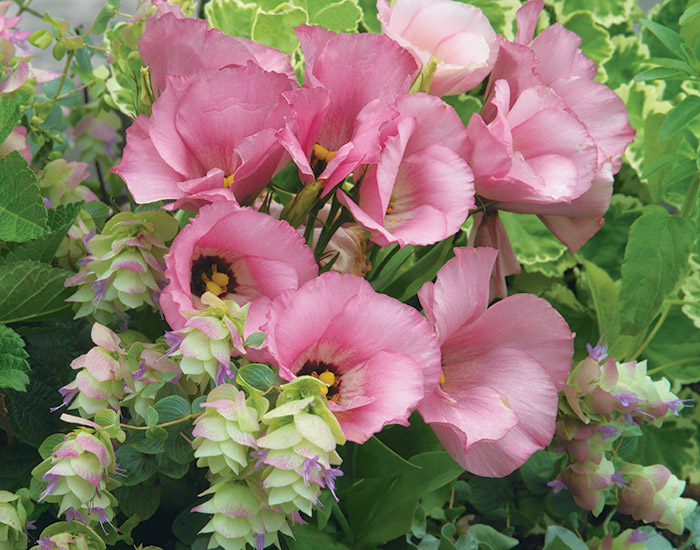
Grow lisianthus in containers
Grow shorter lisianthus in containers. The variety of colors means lisianthus is easy to combine with other flowers. Some good neighbors are dianthus (Dianthus spp. & hybrids) and tickseed (Coreopsis spp. & hybrids), since they like similar growing conditions. Lacy baby’s breath (Gypsophila hybrids) blooms provide a soft background for lisianthus. Or combine them with snapdragons (Antirrhinum majus) or ornamental oregano (Origanum hybrids) for a great flower and texture contrast.
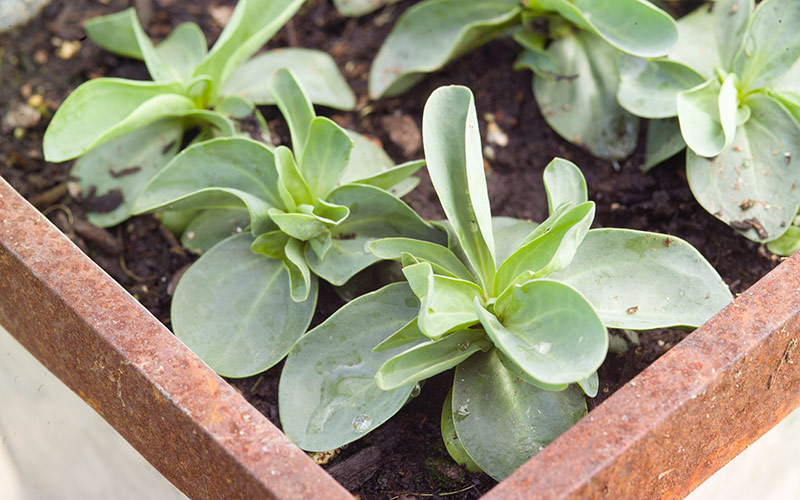
Growing lisianthus
If you’re growing lisianthus as an annual, your best bet is to plant young plants from the garden center in spring when all danger of frost has passed. Once in the garden, lisianthus is a long-bloomer and tolerates heat and drought, but not humid conditions. Lisianthus grows in full sun to part shade and well-drained, neutral to alkaline soil. It is cold-hardy in USDA zones 8 to 10.
Growing tips
- You’ll get the best foliage and the most flowers when you grow plants in full sun in moist, but not wet, soil.
- Allow the soil to dry between waterings.
- Feed your lisianthus each time you water with a balanced water-soluble fertilizer like Miracle Gro® at half-strength.
Space & stake lisianthus
Space lisianthus plants close together — 6 to 8 inches apart — so these upright plants will look better and support one another. Using wire loop stakes or single stakes and ties is a good idea for varieties taller than 18 inches. Place green stakes in early summer — they’re almost invisible in the garden.
Lisianthus is a perennial in warm zones
In zones 8 to 10 lisianthus is a perennial. In zone 7, it is marginally hardy — cut back established plants after frost in fall, and cover with row cover and a light mulch like straw to protect them until spring.
How to start lisianthus from seed
You can start lisianthus from seed if you like a challenge and have plenty of patience — it needs 5 to 6 months to produce blooms. In USDA zones 8 to 10, you can plant seeds outdoors in late summer and they’ll bloom the following spring.
Starting lisianthus seed indoors
Because lisianthus seed is so fine, you’ll usually find it pelleted so it is easier to handle. Lisianthus can be a challenge to start from seed because it’s very sensitive to temperatures over 75 degrees. Be careful to keep temperatures below this throughout the process or it will cause rosetting, or a resting stage. These resting stages can last for weeks or even months, making it hard to get young plants large enough to set out in your garden by spring.
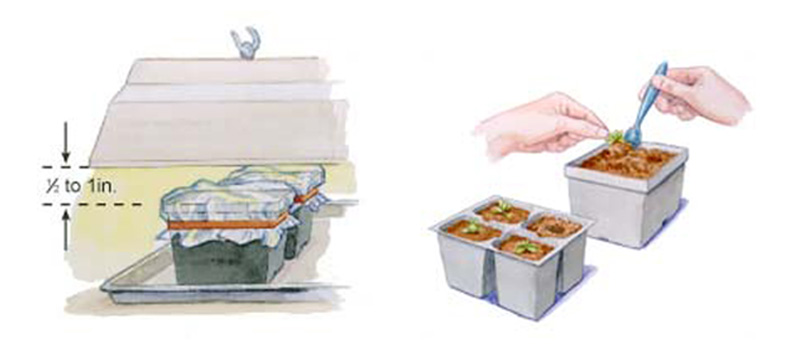
1. Sow seeds in early to mid-winter
In mid-December to January (or 16 to 22 weeks before your average last frost date), saturate a good-quality, fine peat and vermiculite-type potting medium and spread lisianthus seed on top. Cover the container with a plastic dome or a plastic wrap secured with a rubber band to hold in the moisture.
The right light and temperature
Place fluorescent or grow lights ½ to 1 inch above the container's cover. The seeds should receive 16 hours of light per day until the seedlings start to emerge, in about 2 weeks. During this time keep the temperature constant — 70 to 75 degrees. Once the seedlings start to emerge, remove the dome or plastic and adjust the lights so they’re 1½ to 2 inches above the top of the plants. Nighttime temperatures can be cooler now — 60 to 65 degrees. But don’t let them drop much below 60 degrees.
Water carefully
Water the growing medium from the bottom now and keep it moist to the touch, not saturated. Provide good ventilation. You may start feeding with a calcium-based fertilizer (13-2-13) or general-purpose fertilizer at half strength once a week now. At the end of this stage, roots and the first leaves, or cotyledons, have developed.
2. Transplant the seedlings
Transplant lisianthus seedlings into 4-packs after 7 to 8 weeks, when they have developed 2 or 3 sets of true leaves. At this stage, the lisianthus seedlings are not as prone to rosetting, so it’s not as critical to keep temperatures below 75 degrees. As you move them, grasp a leaf and use a small spoon to scoop out as much of the medium with the roots as possible, as the roots are very sensitive. Plant the seedlings so that the bottom leaves are just above the mix.
3. Prepare seedlings for outside
Continue to bottom water the containers, but increase the feeding to half-strength every watering. Let the medium dry out a little between watering now.
4. Harden off lisianthus seedlings
When they are 3 to 4 inches high and have 3 to 4 sets of true leaves (usually around the end of May or beginning of June), move lisianthus plants outside. Place them outside for gradually longer periods of time to harden them for a couple of weeks first.
5. Move seedlings out to the garden
Once lisianthus seedlings are hardened off, plant them in moist, well-drained soil where they will get at least 6 hours of sun a day.
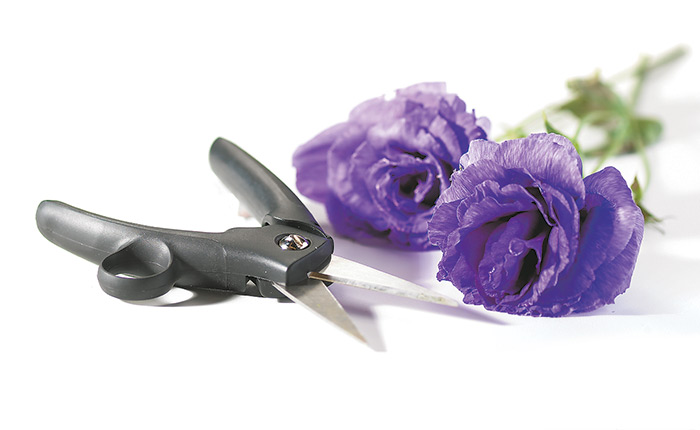
Lisianthus makes great cut flowers
Lisianthus blooms from July to frost if you keep them deadheaded. When a flower turns brown, pinch its stem off where it emerges from two leaves so new buds will open. Plants will continue to send up flower stalks most of the summer.
Lisianthus is a great cut flower, normally lasting up to two weeks in a vase. But with a few simple tips, you can easily coax it to look good as long as four weeks. Here’s how:
Cut flower tips
- Harvest early in the day when the first buds on the stem open.
- Use a clean sharp knife or scissors to cut stem above the basal foliage.
- Light-green buds gradually turn color as they unfurl until they’re a solid color when fully opened.
- Remove leaves below the water and recut stems as you arrange them.
- Replace the water every 2 to 3 days or whenever it gets cloudy.
Florist trick
- Here’s a florist’s secret for brighter color and long vase life: sugar.
- For the first day or so add ¼ cup of sugar along with flower food to a quart of water.
- Later, when you change the water, back off to 1⁄8 cup of sugar per quart. The sugar makes the buds open better and with brighter color.
- Add a few drops of bleach to help keep down bacterial growth that stops flowering.
You Might Also Like:
How to Grow a Cut Flower Garden
Save Your Peony Blooms for Later
How to Deadhead Container Plants
Lisianthus Cultivars to Try
So if you like the look of rose flowers without all the thorny maintenance, try growing lisianthus. Here's a few to add to your garden or containers. While it can take the heat as well as the toughest perennial in the garden, lisianthus adds a style and elegance all its own.